 9/4/2026
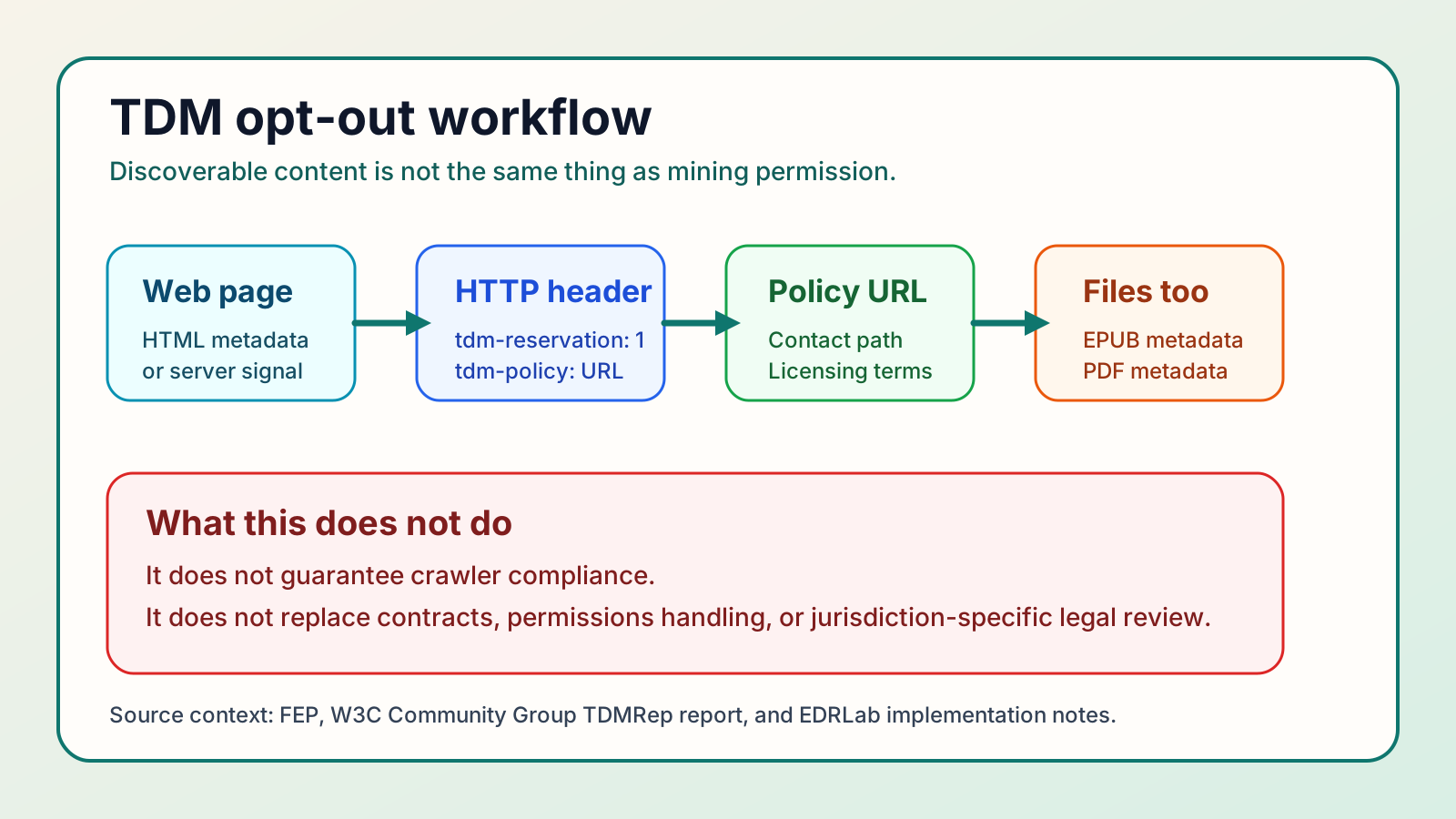
 As of Friday, September 4, 2026, FEP is urging publishers to use the machine-readable TDM opt-out protocol developed with AIE and EDRLab. For authors, translators, and rights teams, the practical question is not whether content is visible online. It is whether your web pages, EPUBs, and PDFs clearly reserve mining rights and point counterparties toward a licensing path.
 9/3/2026
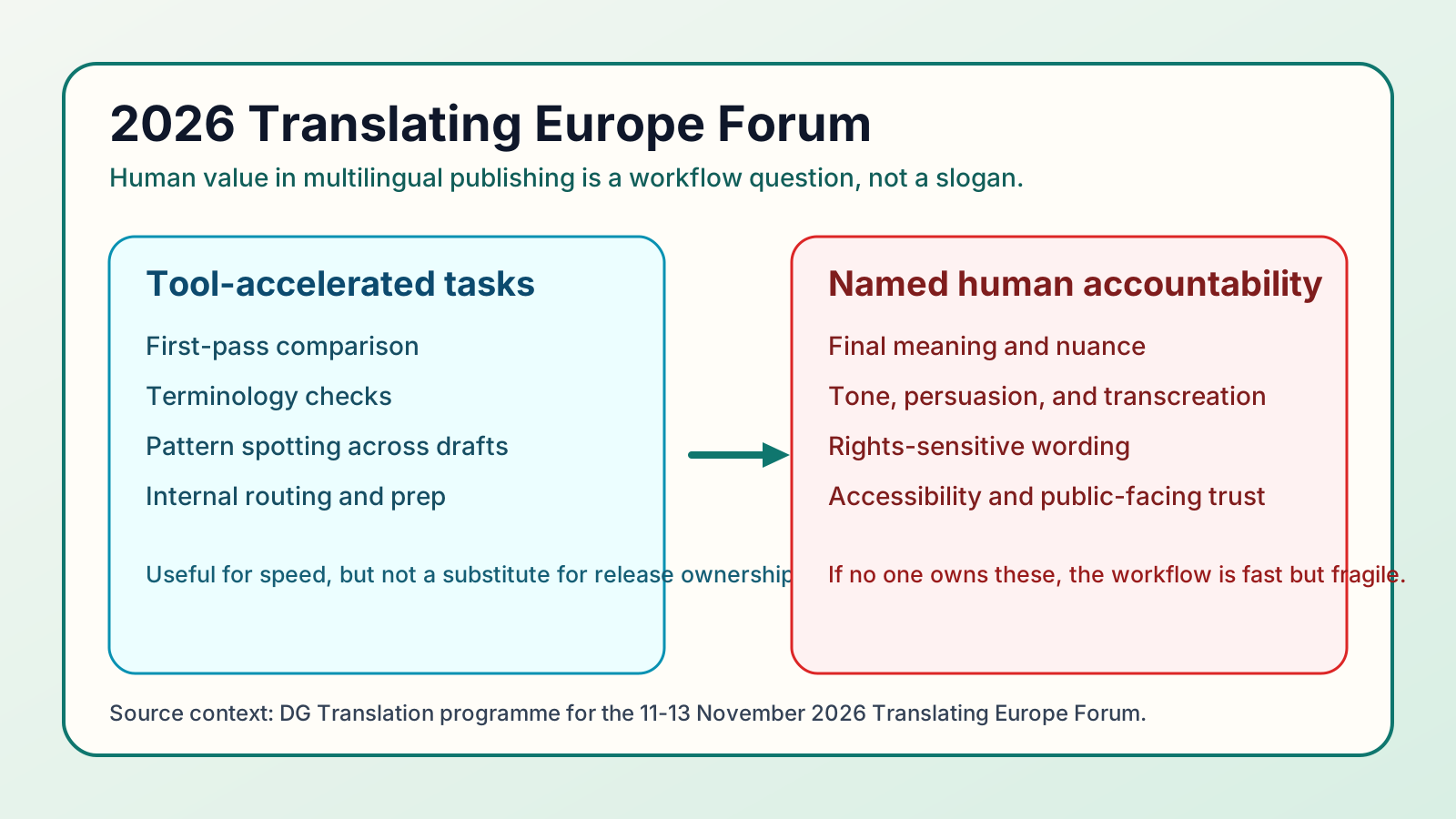
 As of Thursday, September 3, 2026, the European Commission's Translating Europe Forum is scheduled for November 11 to 13, 2026 in Brussels and online. The practical value for publishers, translators, and rights teams is not the event itself. It is the programme's blunt question about where human judgment, accountability, and hybrid skills still belong once AI tools enter multilingual work.
 9/2/2026
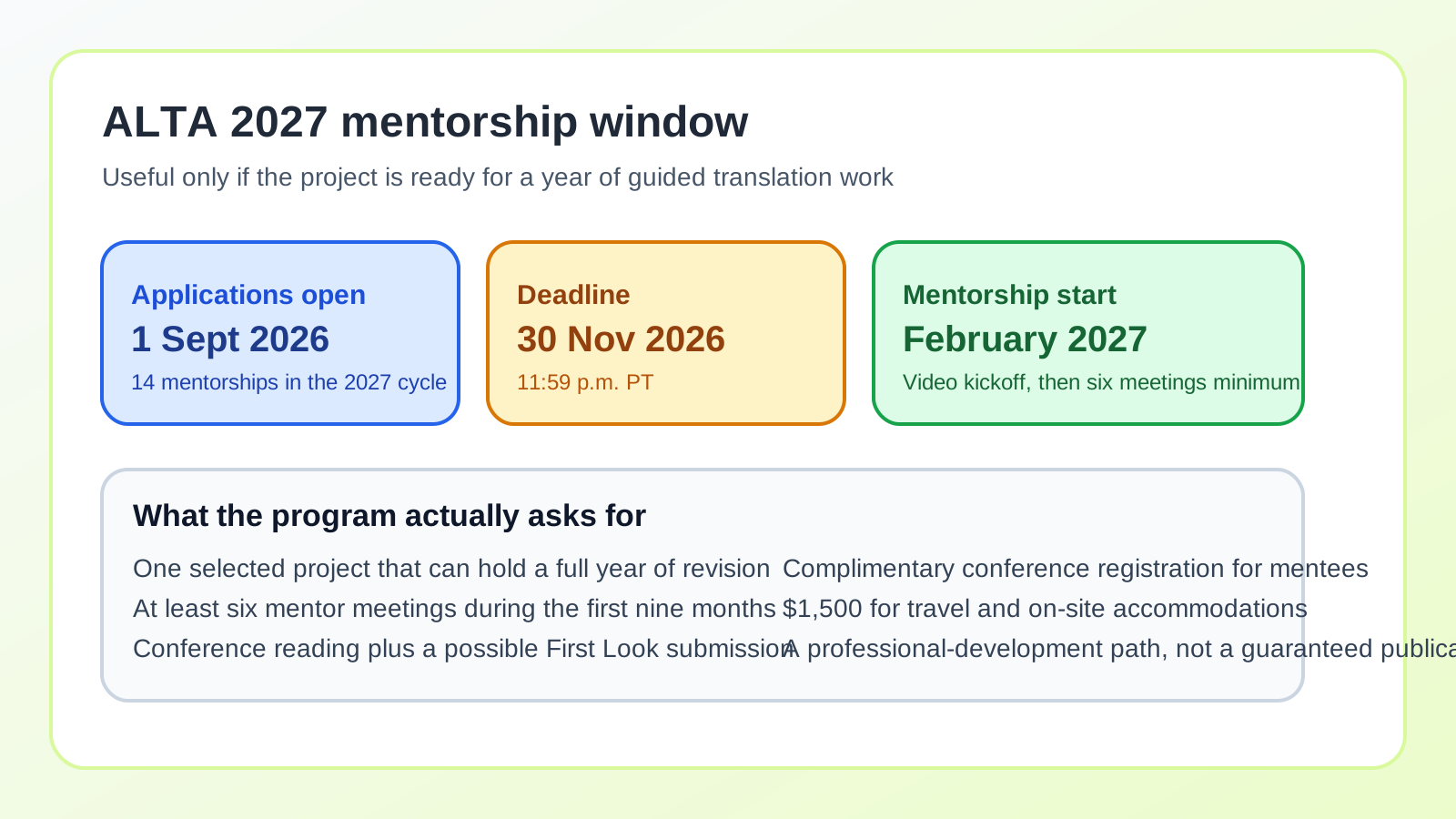
 As of Wednesday, September 2, 2026, ALTA has opened applications for its 2027 Emerging Translator Mentorship Program through November 30, 2026. The opportunity is real, but the practical question is whether an emerging translator has a project, sample, and working plan strong enough for a year-long mentorship with publication-facing expectations.
 9/1/2026
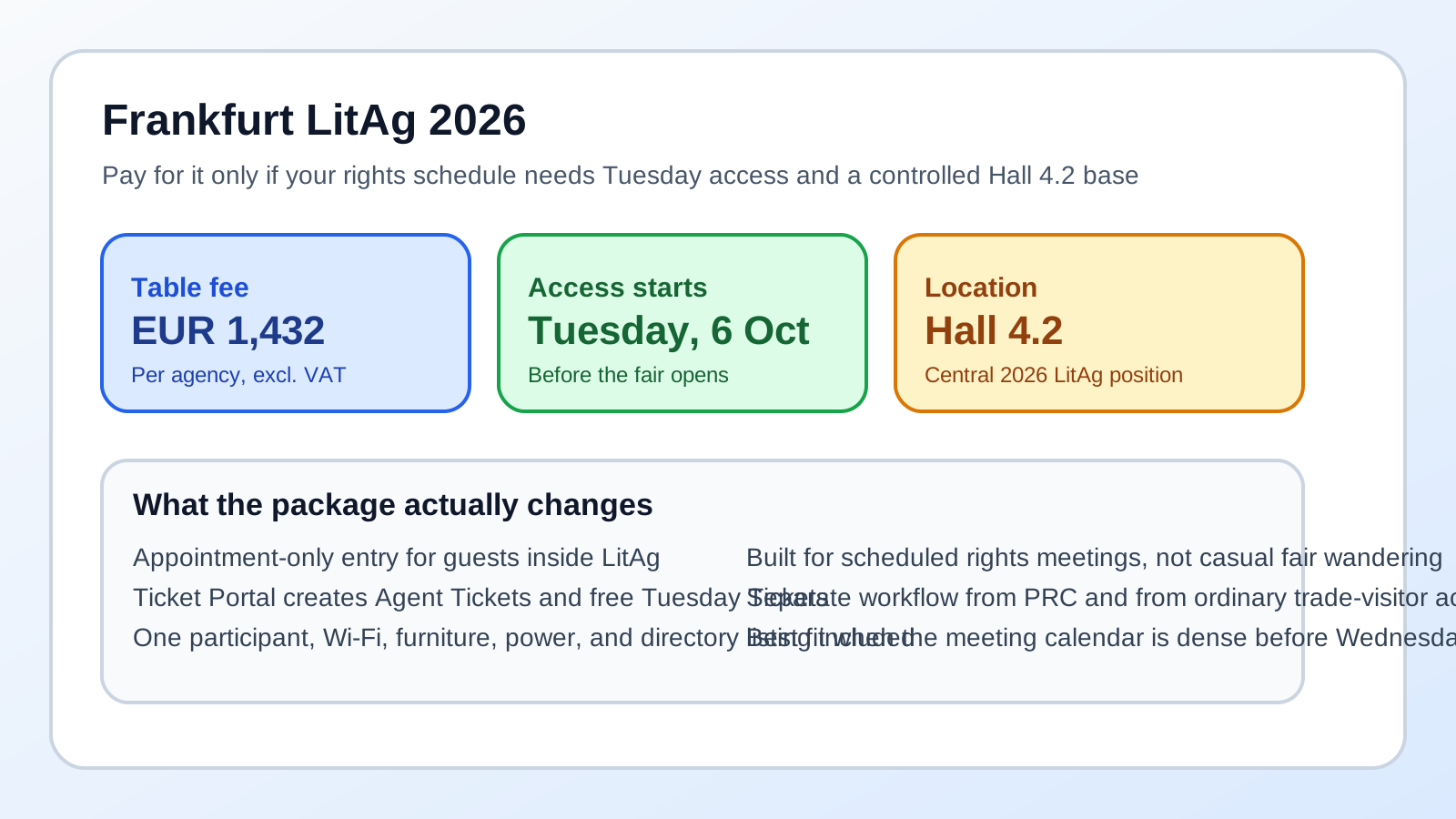
 As of Tuesday, September 1, 2026, Frankfurter Buchmesse still lists its Literary Agents & Scouts Centre in Hall 4.2, keeps the LitAg Ticket Portal live, and prices a 2026 agency table at EUR 1,432 before VAT. The practical question is not whether LitAg sounds prestigious. It is whether your agency or rights team actually needs a controlled Tuesday-through-fair meeting base rather than an ordinary trade-visitor pass.
 8/31/2026
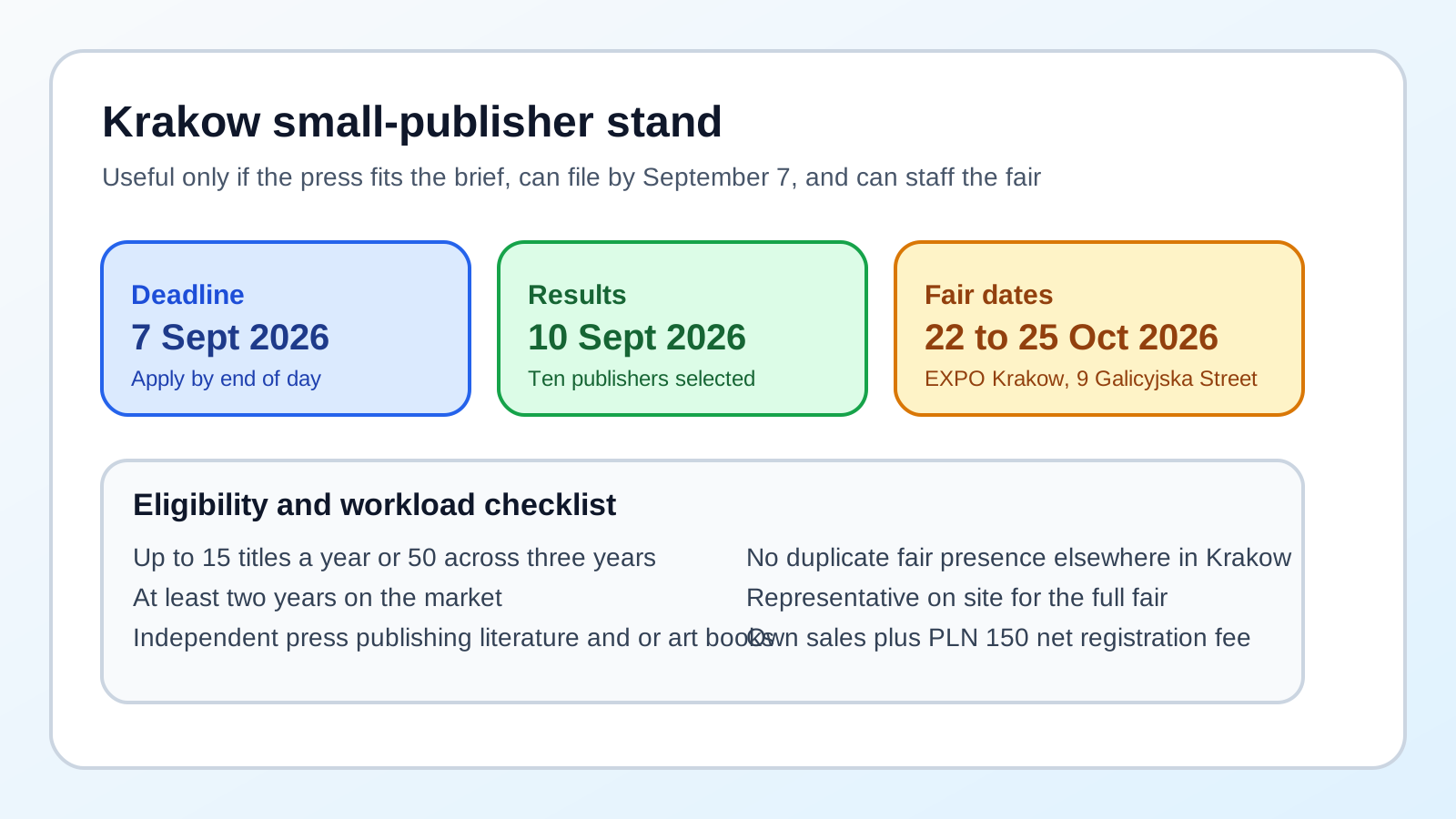
 As of Monday, August 31, 2026, Poland's Book Institute still has a live September 7 call for ten small publishers to join a collective stand at the Krakow Book Fair. The practical question is not whether the offer sounds supportive. It is whether a press actually meets the micro-publisher test, can document its case, and is ready to staff and sell through the fair.
 8/28/2026
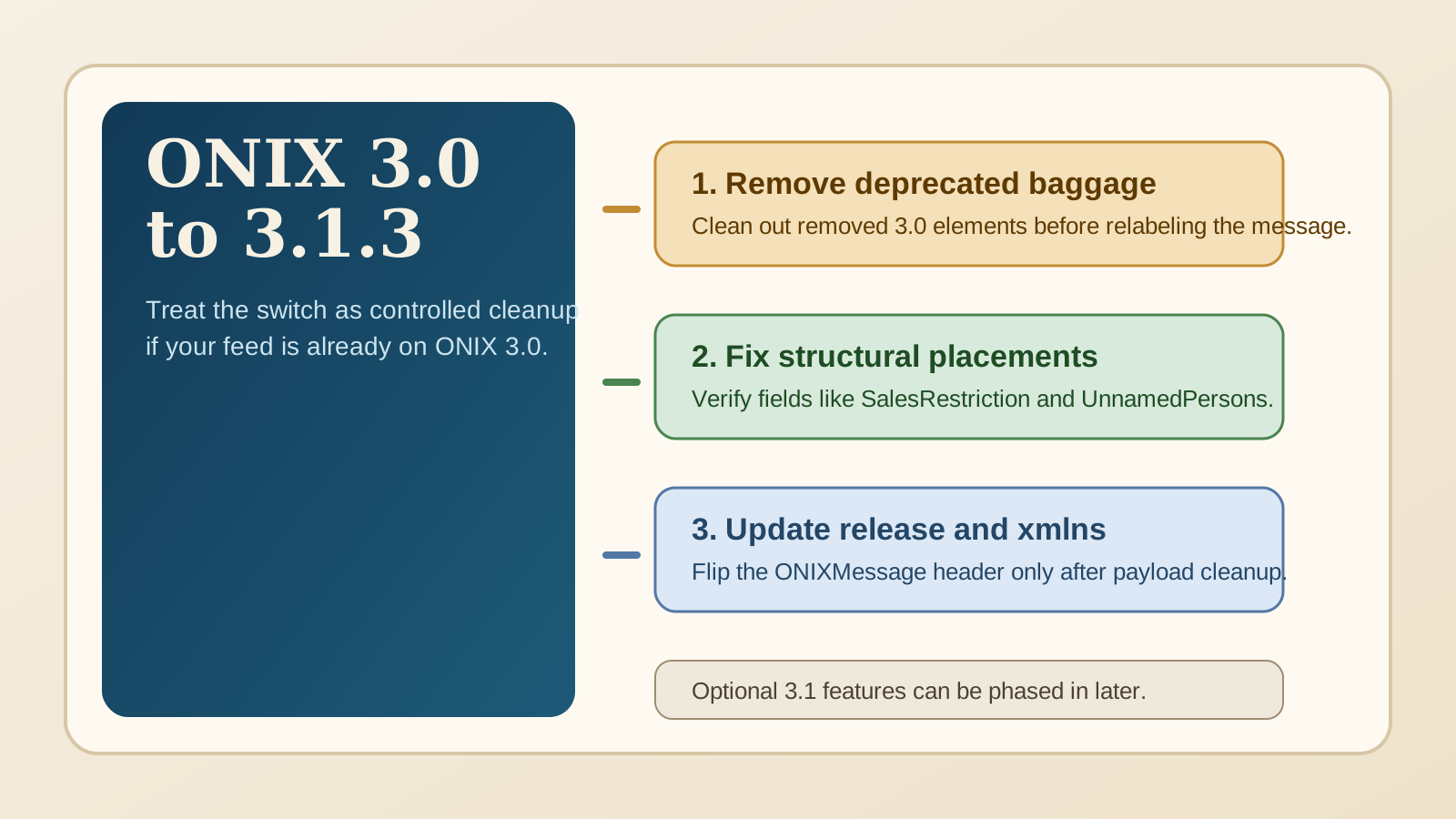
 BookNet Canada's July 24, 2026 upgrade guide and current EDItEUR release materials point to a narrow workflow: clean out removed 3.0 baggage, fix a few placements, update the message header, and leave optional 3.1 features for later.
 8/28/2026
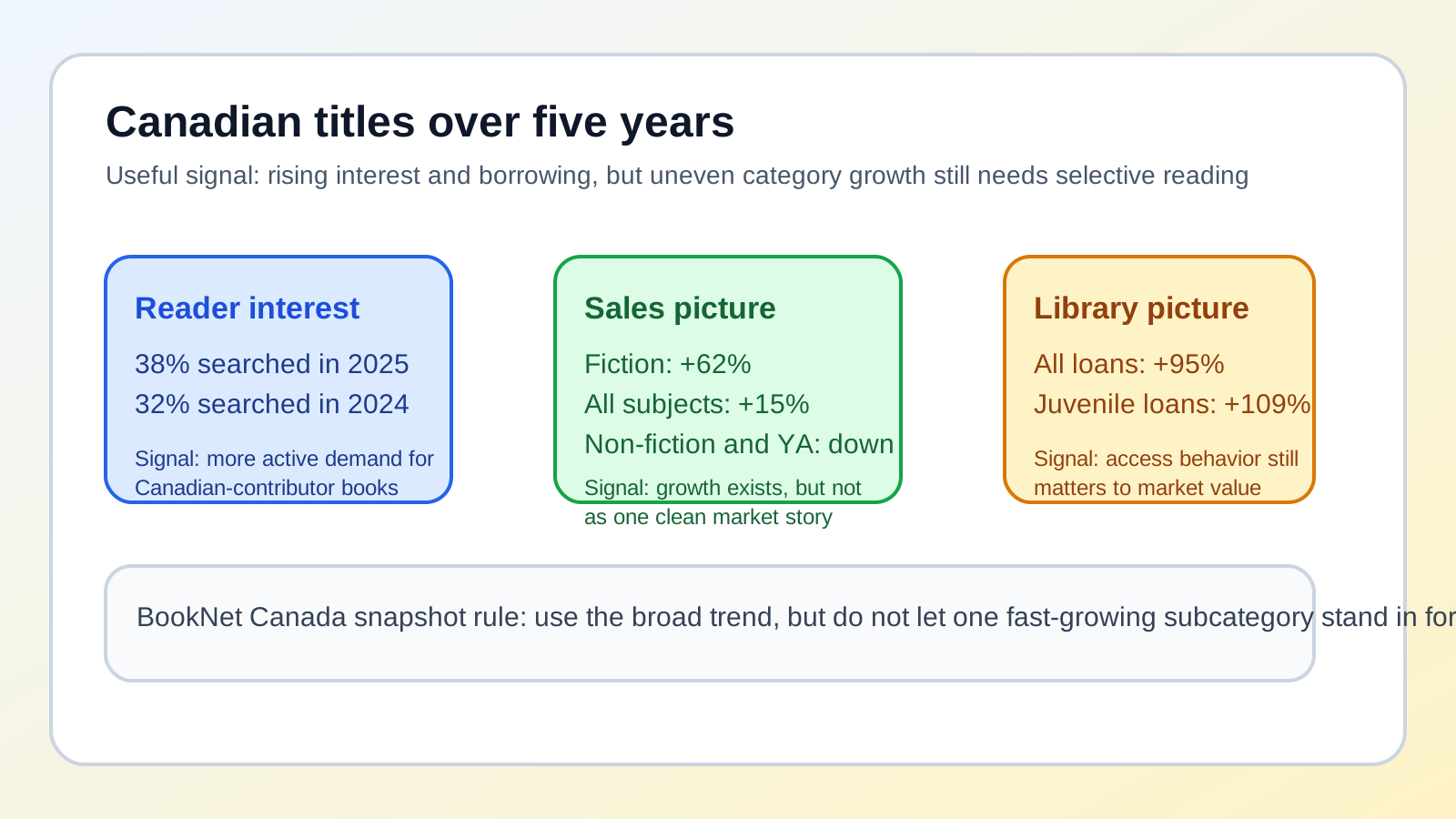
 As of Friday, August 28, 2026, BookNet Canada's July 28 five-year snapshot still offers a practical lesson for publishers and rights holders: interest in Canadian-contributor titles is rising, library borrowing remains structurally important, and the strongest category jumps are too uneven to justify a generic Canada-market story.
 8/28/2026
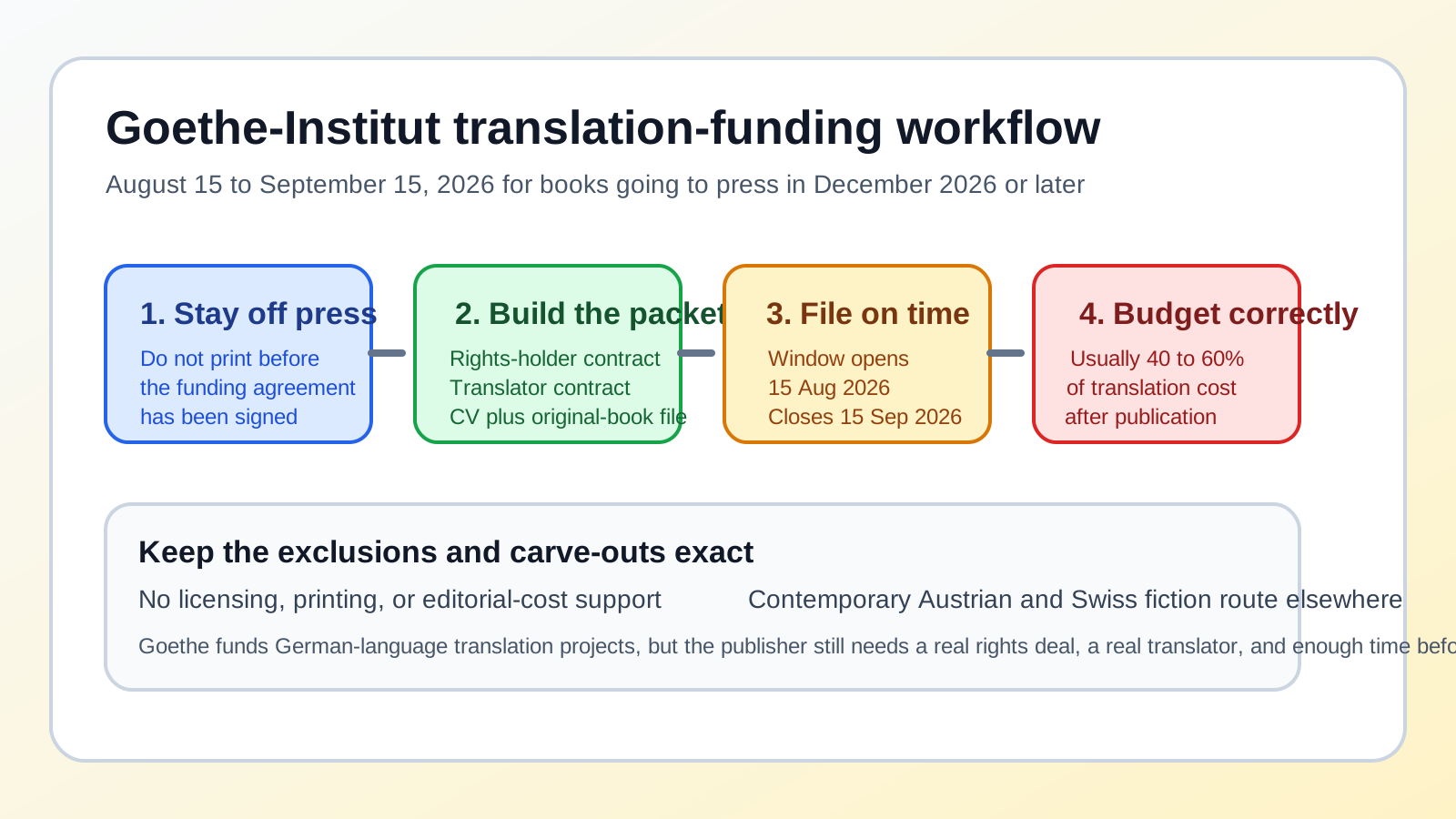
 As of Friday, August 28, 2026, Goethe-Institut's live translation-funding page still shows a September 15 deadline, requires signed rights-holder and translator contracts plus the original book file, and frames the support as post-publication reimbursement of translation cost rather than licensing or print support.
 8/27/2026
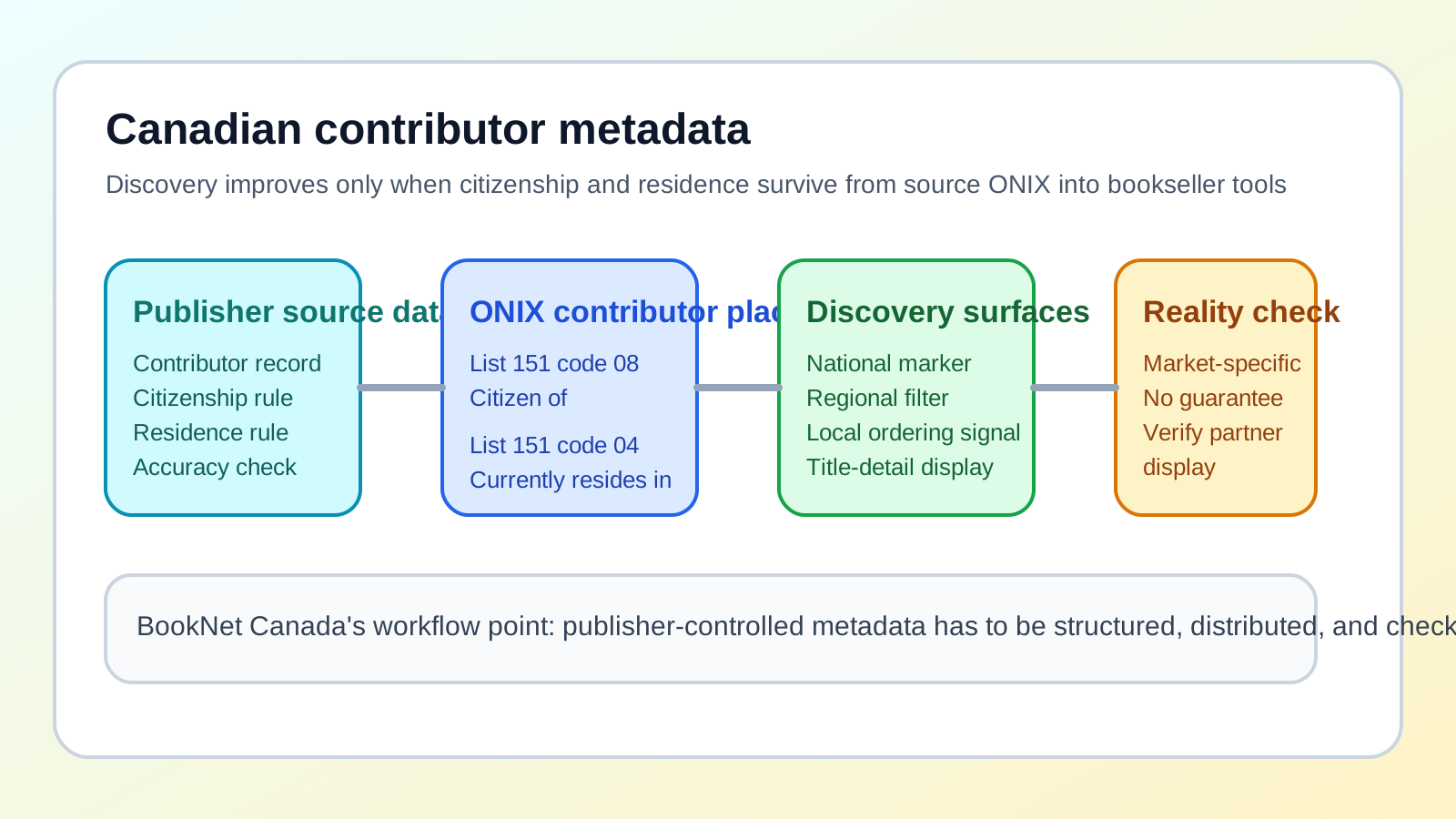
 As of Thursday, August 27, 2026, BookNet Canada still points publishers and booksellers to one practical lesson: contributor citizenship and residence metadata can improve Canadian, regional, and local discovery, but only when the source data is structured cleanly in ONIX and carried through the supply chain.
 8/27/2026
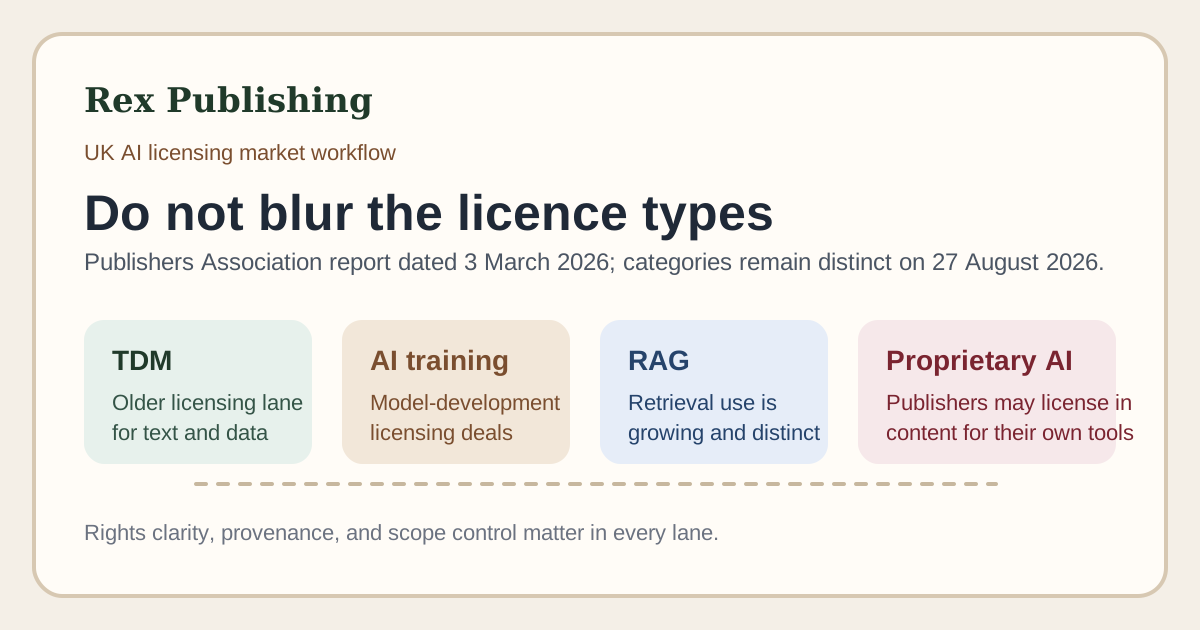
 As of Thursday, August 27, 2026, the Publishers Association's March 3 report still offers a useful warning for authors, agents, and publishers: AI licensing is already a live commercial workflow, but only if teams stop treating text and data mining, model training, retrieval-augmented generation, and in-house AI products as one blurred category.
 8/27/2026
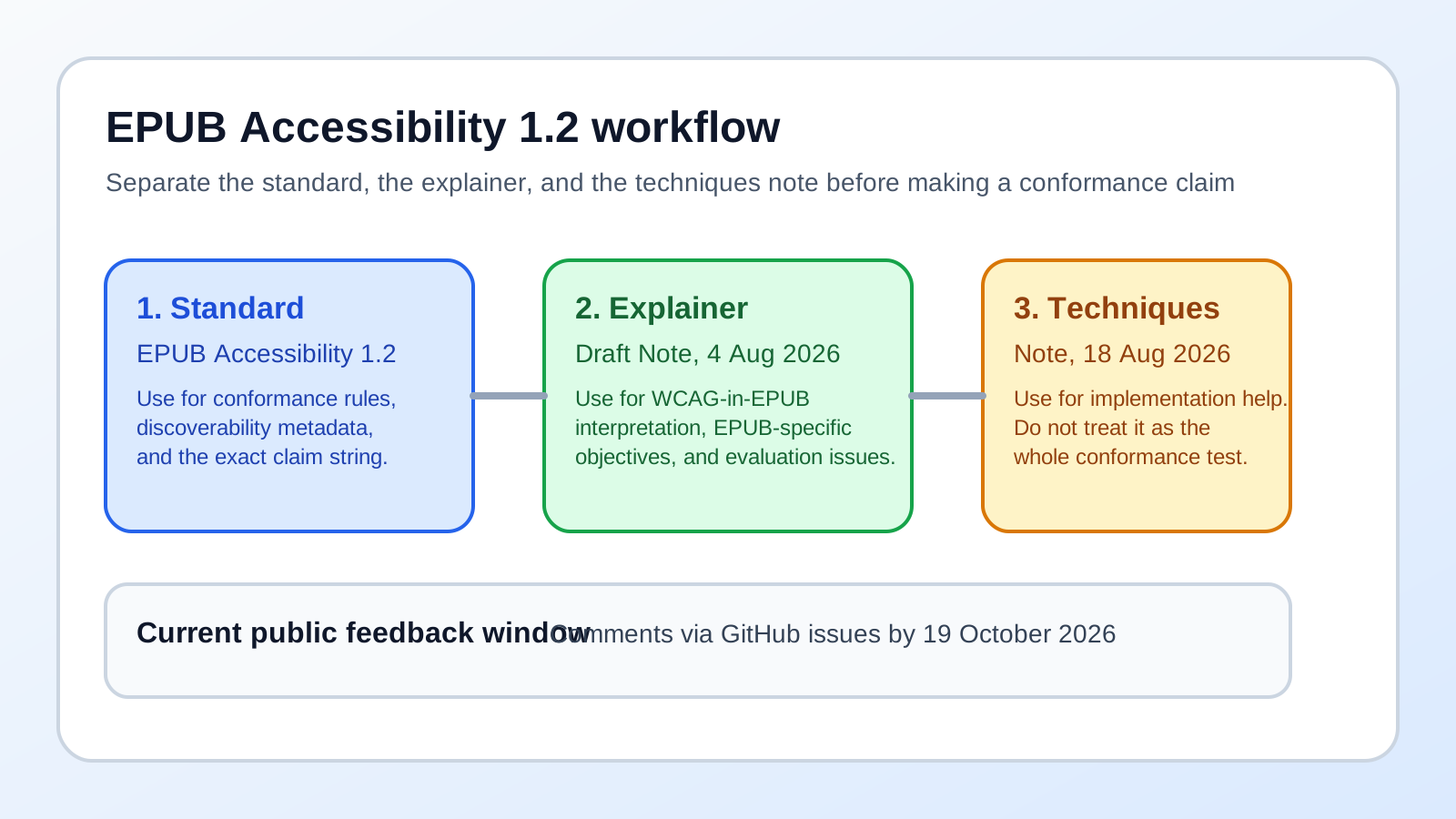
 As of Thursday, August 27, 2026, W3C lists EPUB Accessibility 1.2 as a candidate standard, the explainer as a draft note dated August 4, 2026, and EPUB Accessibility Techniques 1.2 as a note updated August 18, 2026. The practical gain is not a new rulebook. It is a clearer way to separate interpretation, implementation technique, and actual conformance claims.
 8/26/2026
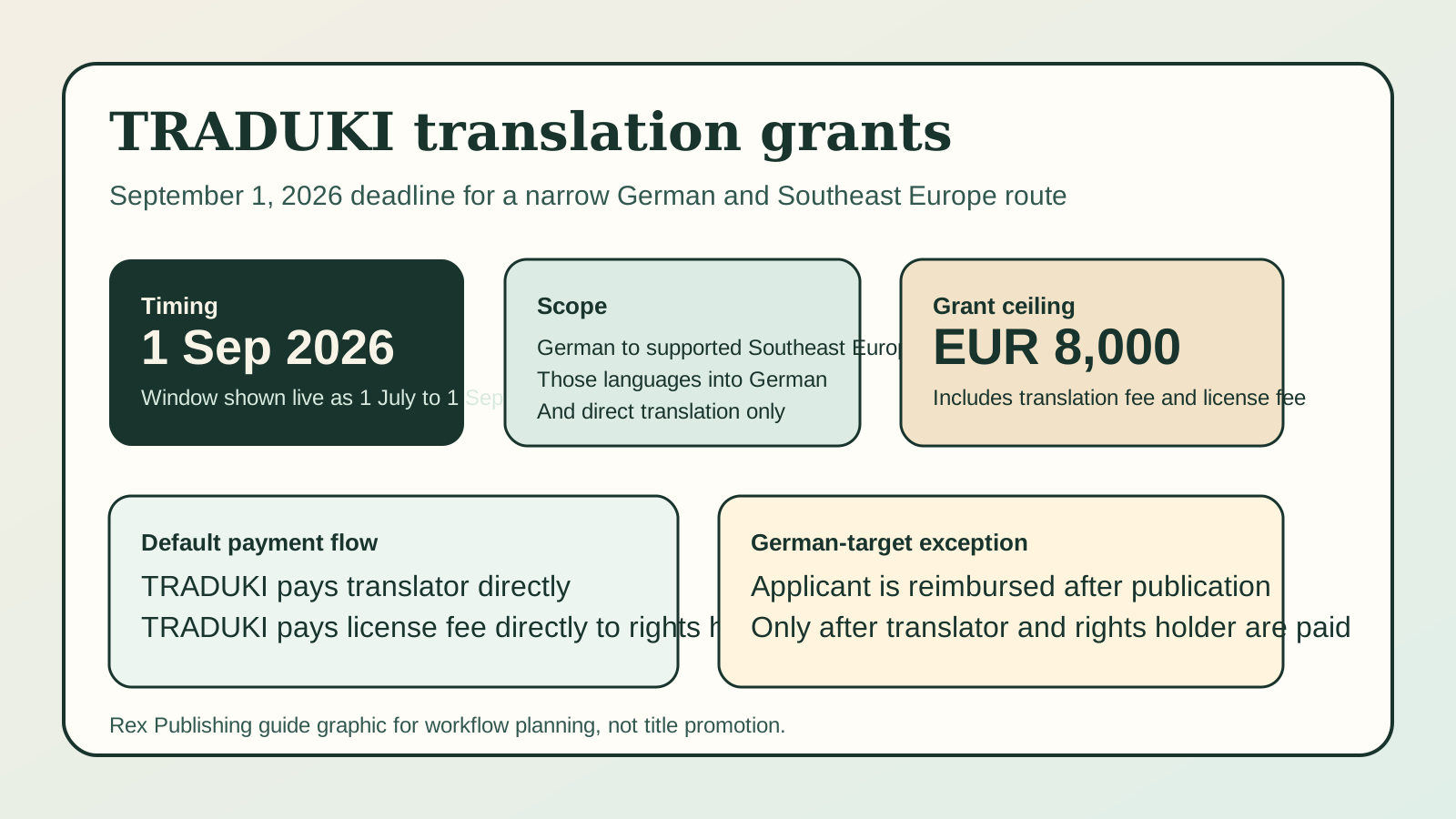
 As of Wednesday, August 26, 2026, TRADUKI still shows its translation-grants window closing on September 1, 2026. The practical question is not whether the fund sounds useful. It is whether the publisher's language pair, direct-translation path, rights paperwork, and payment expectations actually match TRADUKI's narrower German and Southeast Europe network.
 8/26/2026
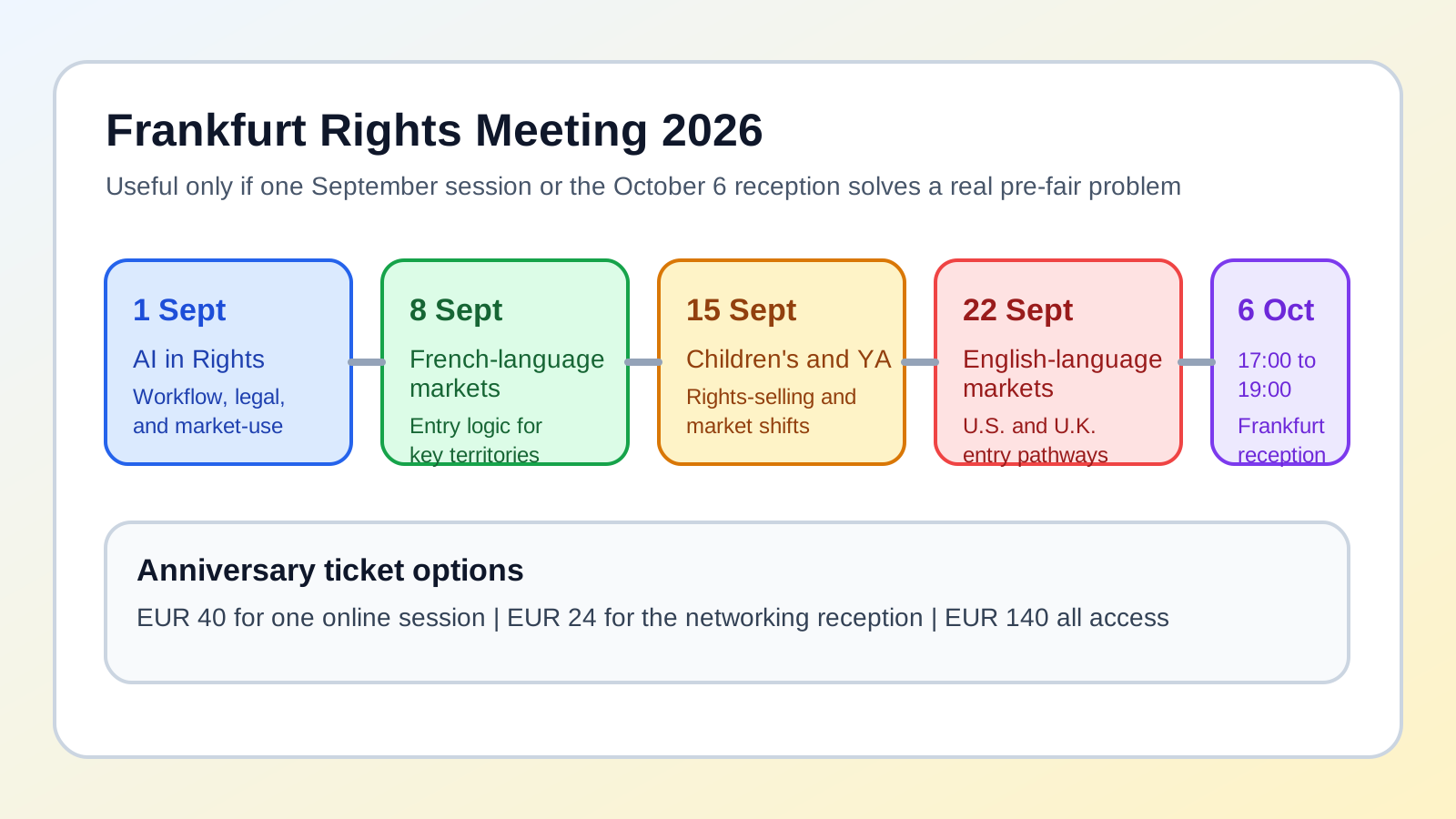
 As of Wednesday, August 26, 2026, Frankfurt Rights Meeting still offers four upcoming September sessions, a separate October 6 networking reception, and modular anniversary pricing. The practical question for rights teams is not whether Frankfurt sounds important. It is whether one specific session, or the pre-fair reception, fixes a real workflow or market-entry problem before fair week starts.
 8/25/2026
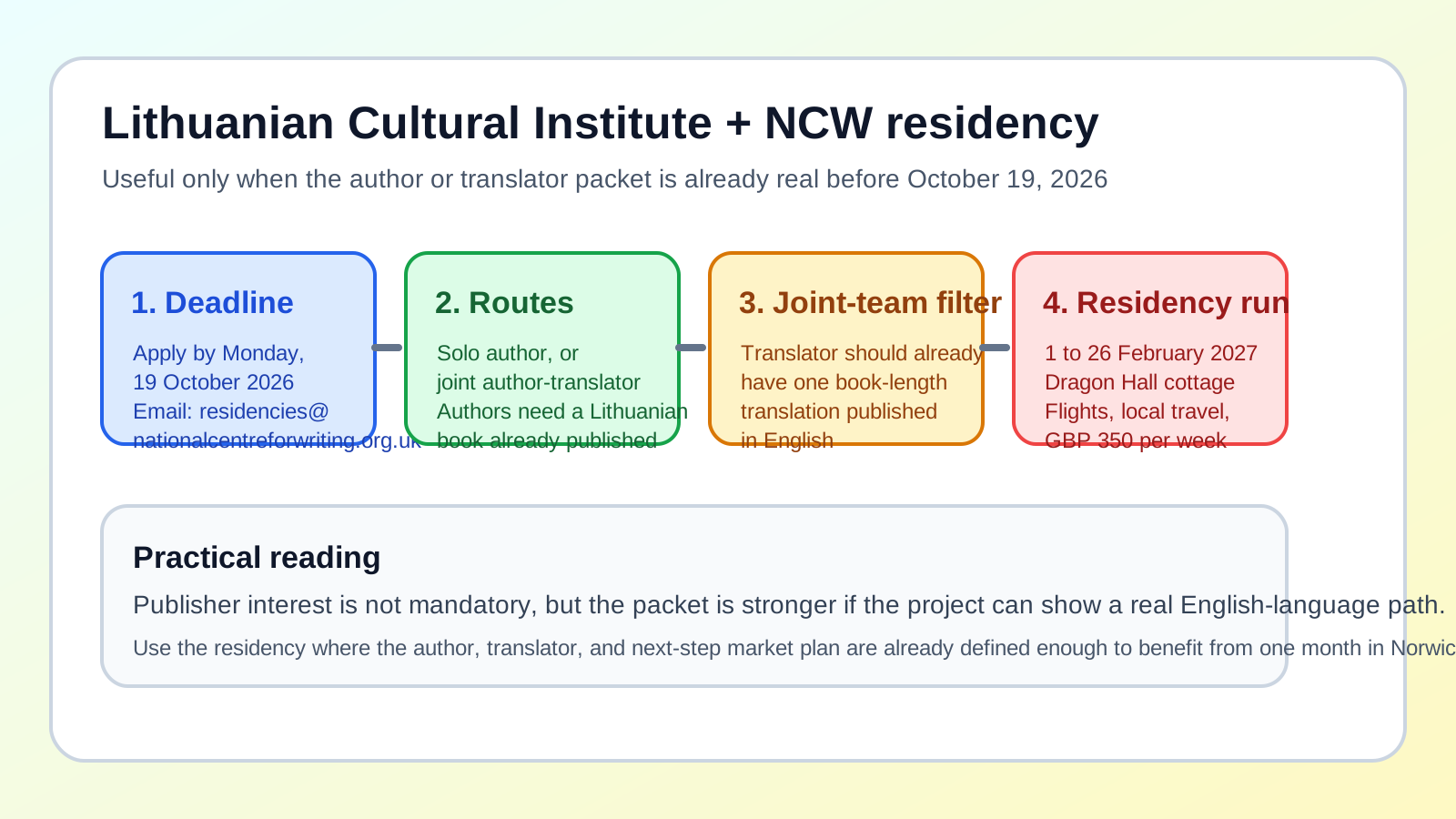
 The National Centre for Writing and the Lithuanian Cultural Institute have opened a February 2027 Norwich residency for either a Lithuanian author or a joint author-translator team. The practical issue is not prestige. It is whether the project, eligibility, and publisher-interest signal are already organized well enough to file a credible packet by October 19, 2026.
 8/25/2026
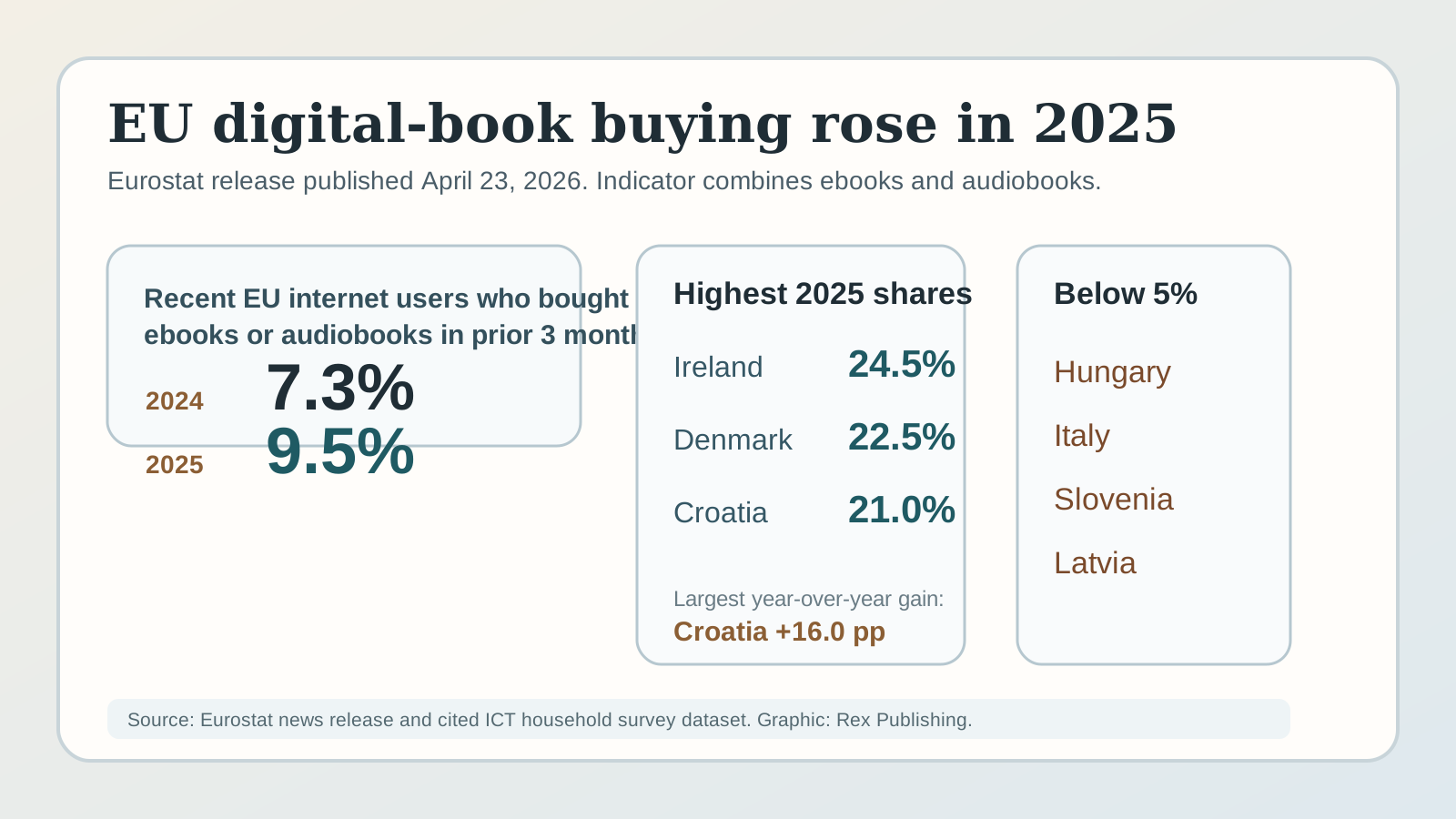
 Eurostat's April 23, 2026 release shows EU ebook and audiobook purchasing rising in 2025, but the useful signal is not a single continental trendline. It is the gap between high-demand and low-demand markets, plus the limits of what this short-window indicator can really prove.
 8/25/2026
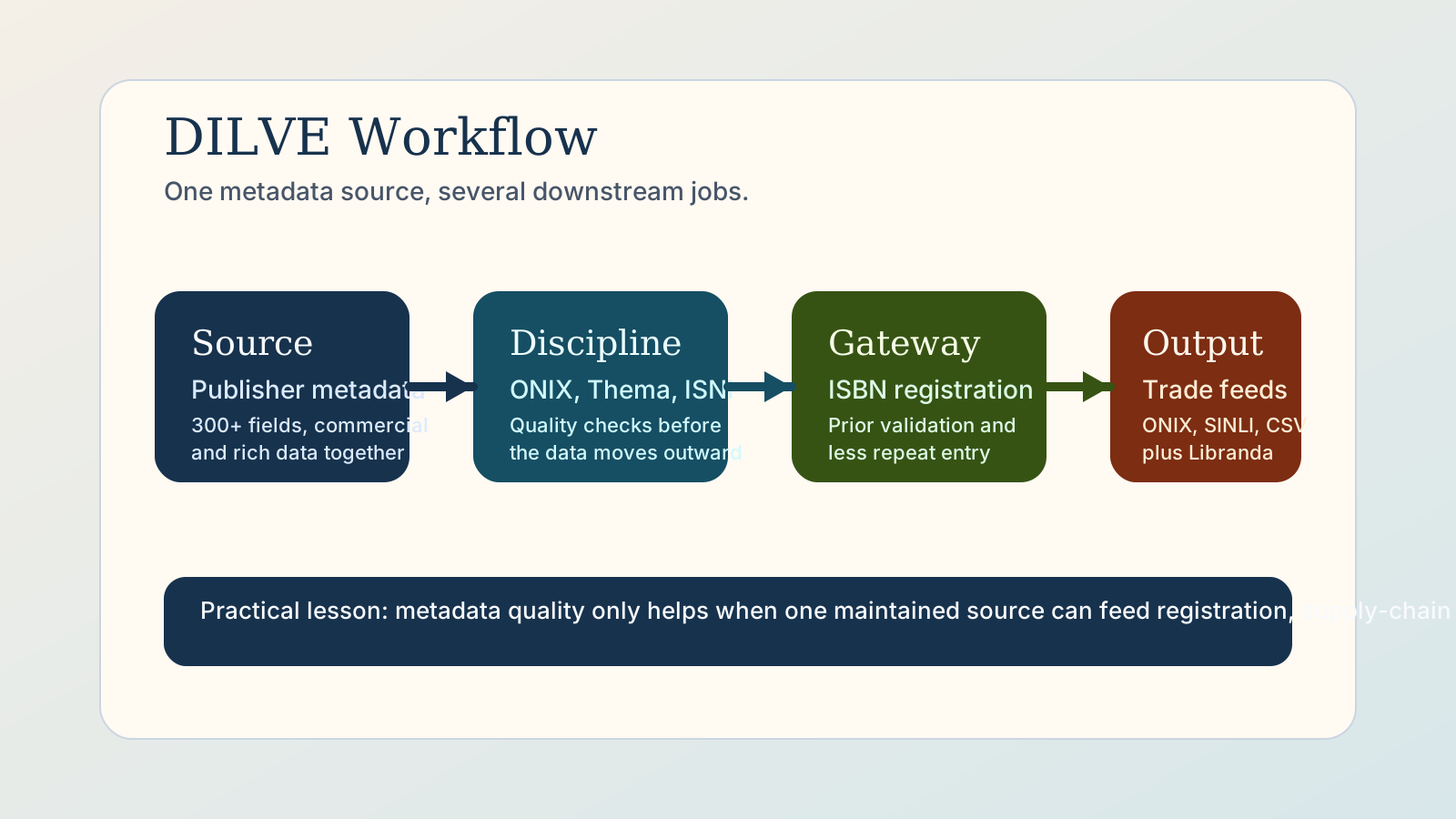
 DILVE is useful because it links metadata quality, ONIX and Thema discipline, ISBN registration, and downstream trade distribution in one Spain-centered workflow. The practical lesson is not software hype. It is how one clean source can reduce repeat entry and make metadata operations more usable across the supply chain.
 8/24/2026
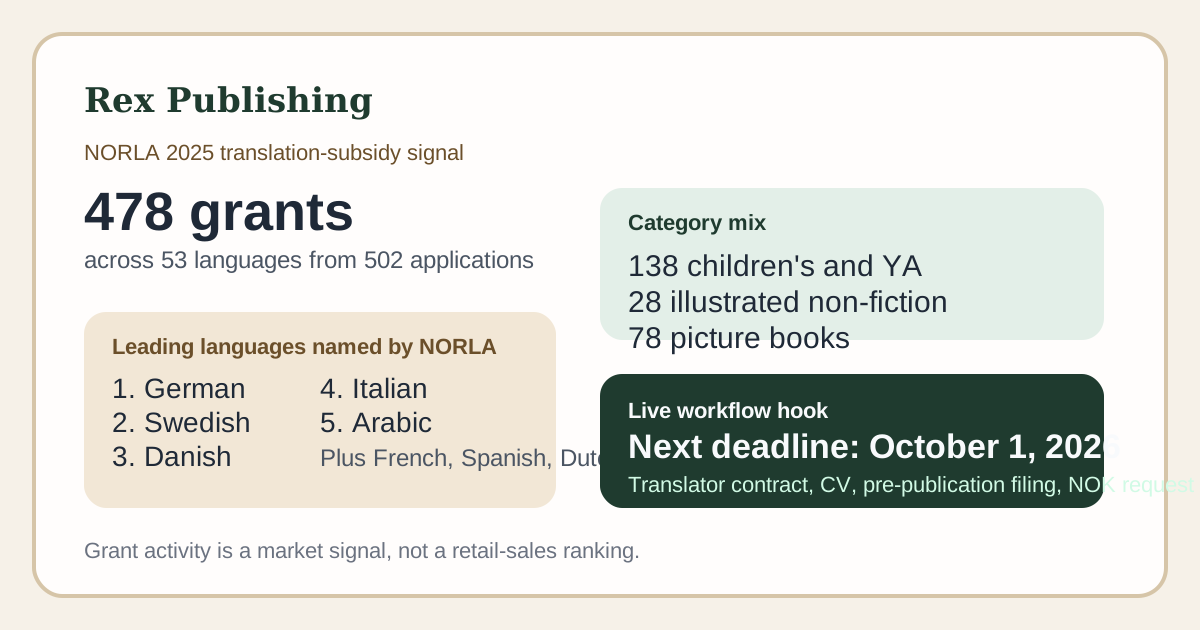
 NORLA's May 27, 2026 results show 478 funded translations across 53 languages, but the practical value is not hype about Norwegian books in general. It is a narrower export signal about which language corridors attracted funded publisher demand, how strong the children's share remained, and what applicants still need before the October 1, 2026 filing round.
 8/24/2026
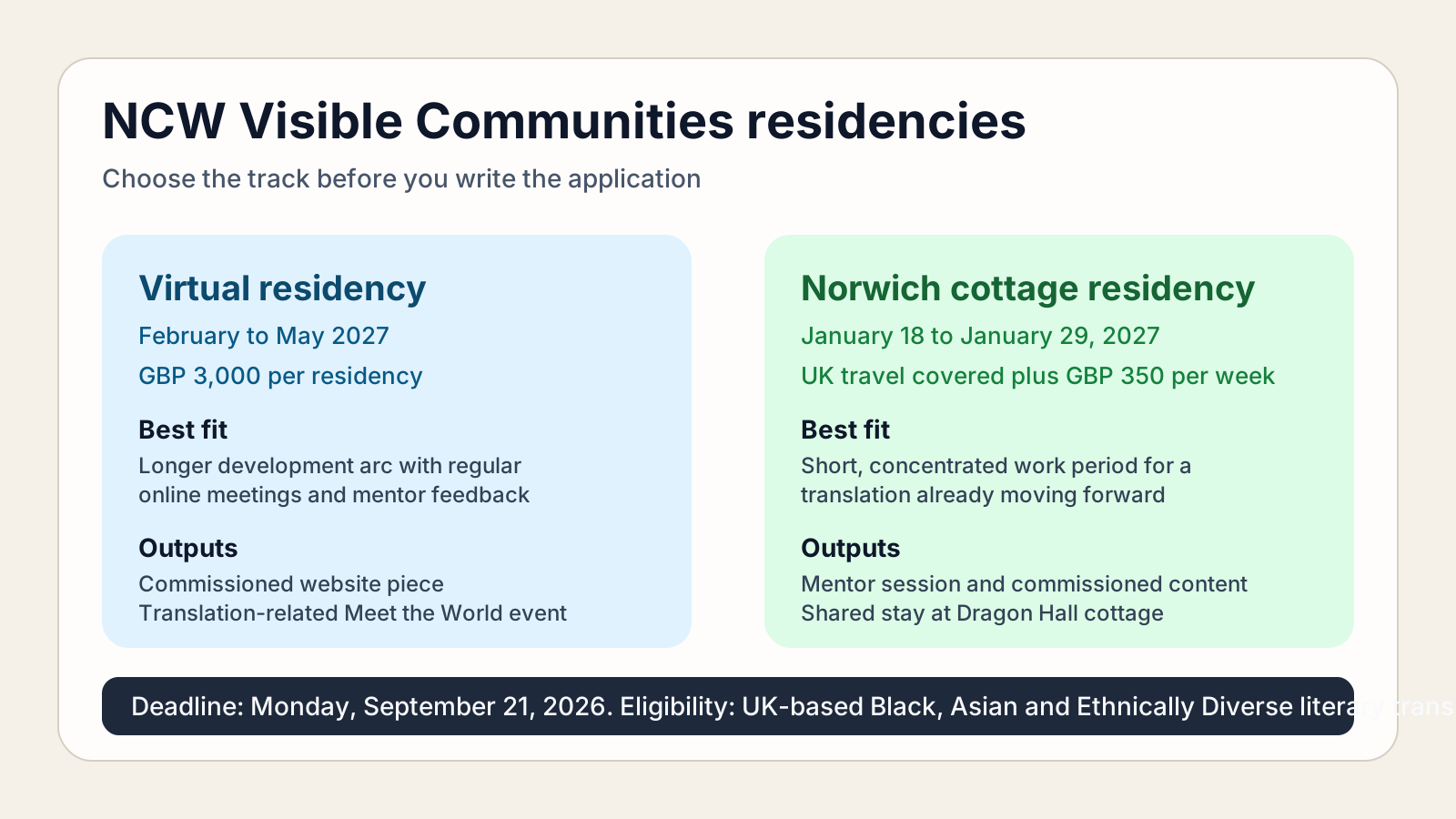
 National Centre for Writing's 2027 Visible Communities residencies stay open until Monday, September 21, 2026, but the real planning question is practical: does the applicant fit the UK-based eligibility rules, and do the virtual and Norwich residency tracks actually match the work they need to do next.
 8/24/2026
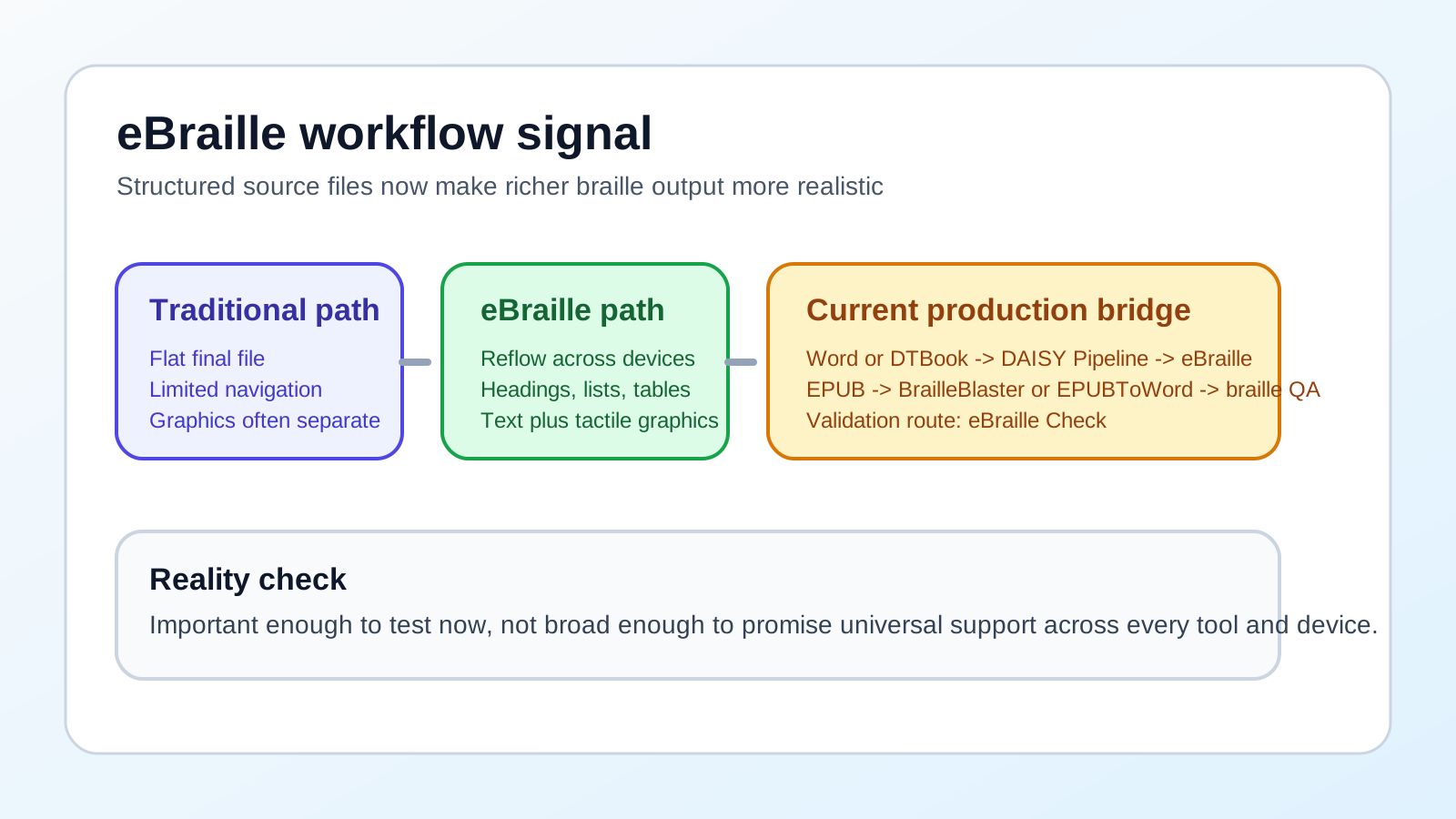
 DAISY's current eBraille materials show a format that is already real enough to test, but not mature enough to treat as universal. The practical question for publishers is whether existing EPUB, Word, and DTBook workflows can support a richer braille output path without creating false promises about current device and tool support.
 8/21/2026
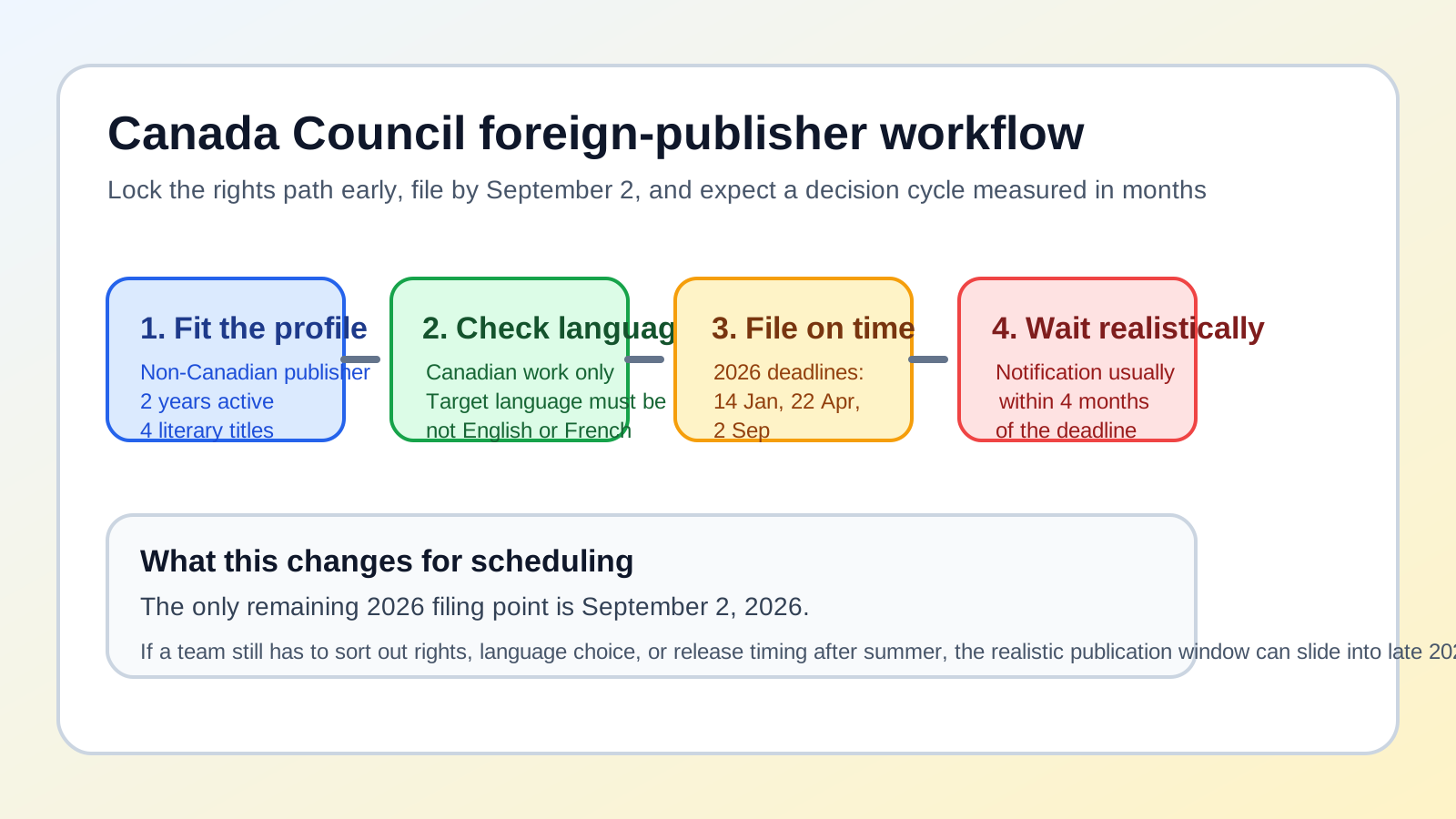
 As of Friday, August 21, 2026, the Canada Council for the Arts still shows September 2, 2026 as the remaining International Translation deadline for the year, with decisions usually taking about 4 months and foreign publishers limited to Canadian works moving into languages other than English or French.
 8/20/2026
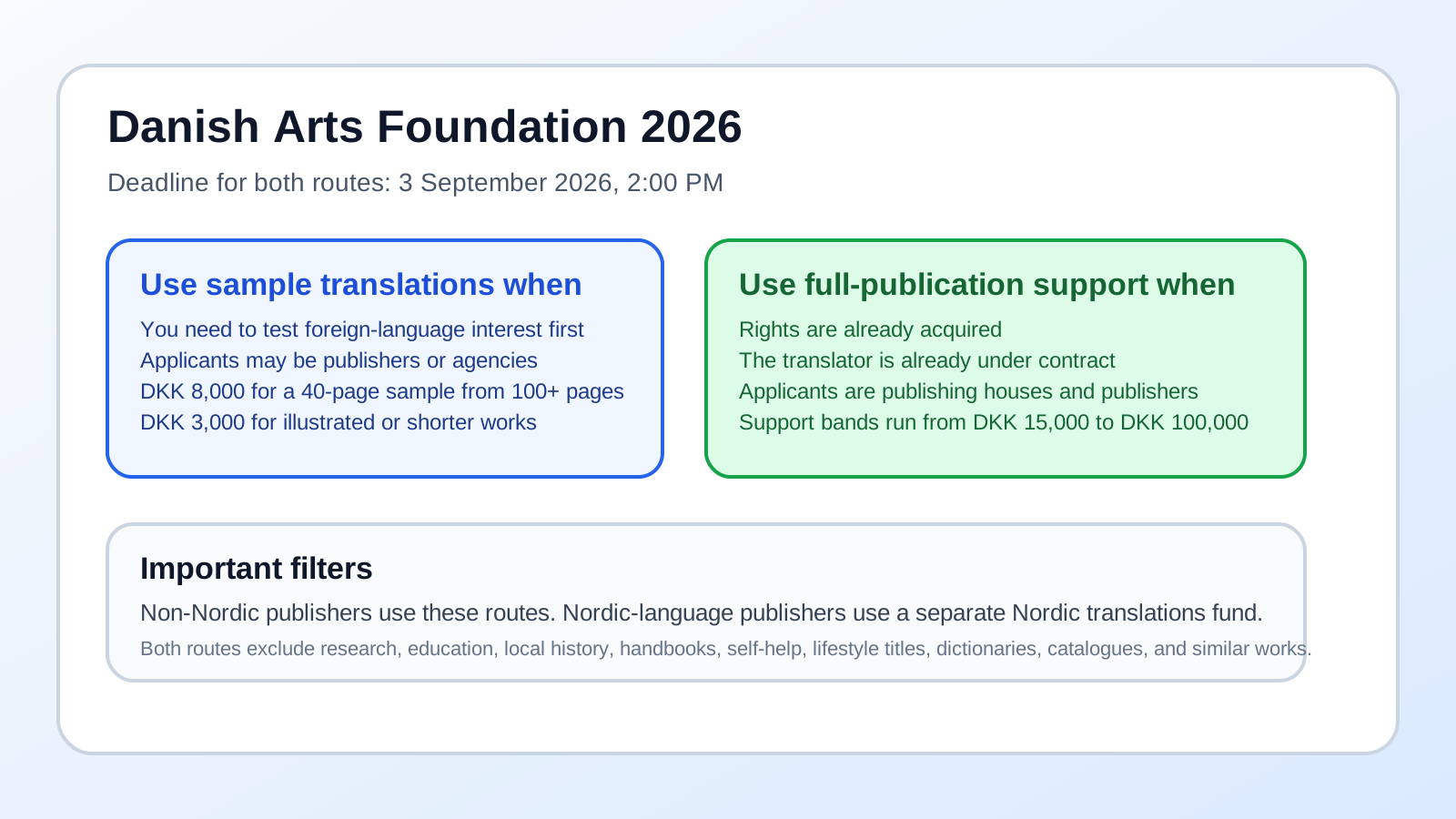
 As of Thursday, August 20, 2026, the Danish Arts Foundation still shows both its full translation-publication route and its sample-translation route closing on September 3, 2026 at 2:00 PM. The practical question is not whether Danish support exists. It is whether the project needs market-testing sample pages or a rights-cleared full-edition application.
 8/19/2026
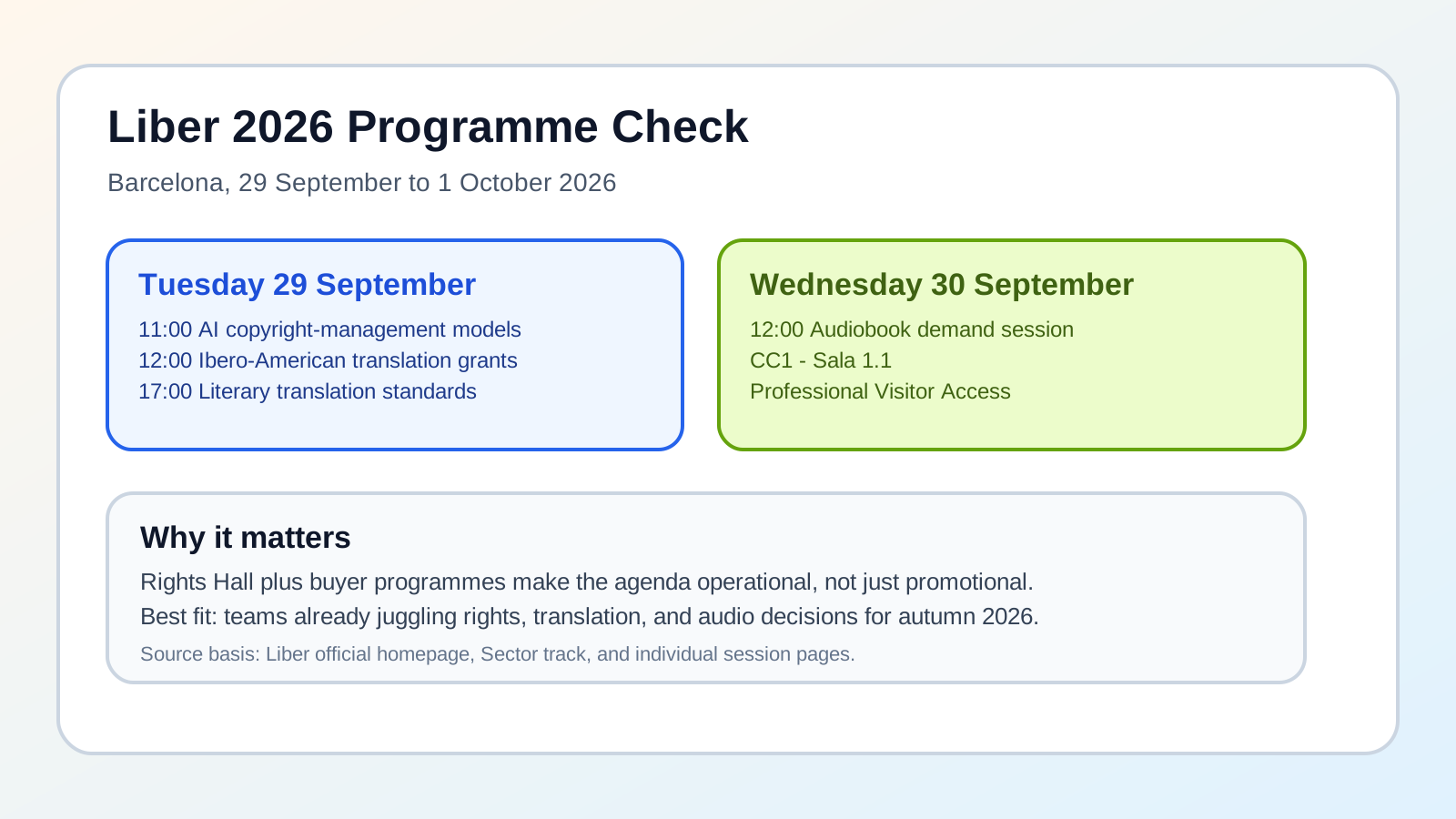
 As of Wednesday, August 19, 2026, Liber's official 2026 programme shows one Barcelona fair day clustering AI copyright management, translation-grant strategy, and literary-translation standards, with an audiobook-demand session the next day. The useful question is not whether the fair sounds busy. It is whether that posted agenda matches the actual publishing problems your team needs to solve.
 8/19/2026
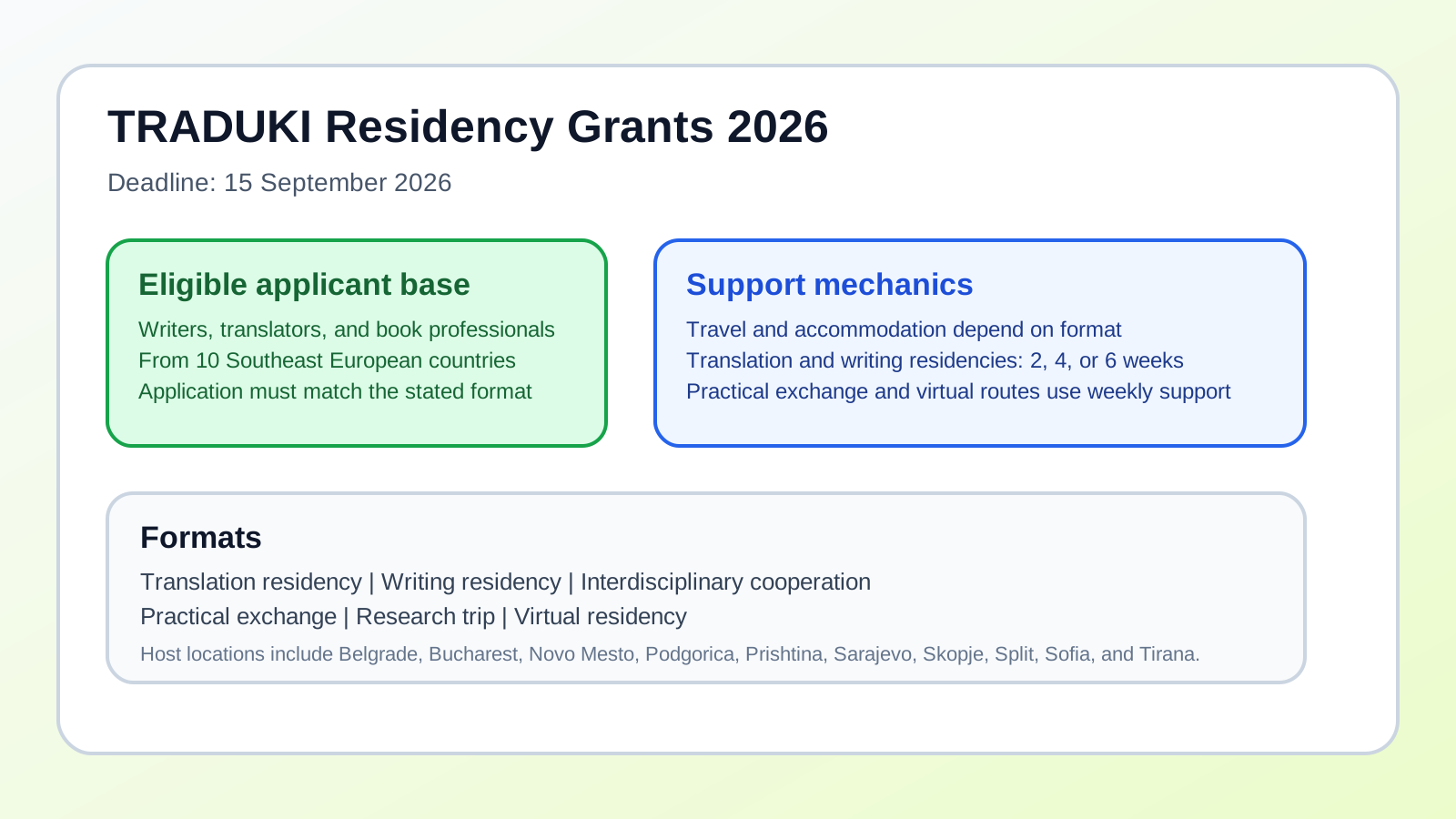
 As of Wednesday, August 19, 2026, TRADUKI's residency window is live through September 15, 2026. The useful question is not whether the network sounds attractive. It is whether the applicant comes from the eligible Southeast European countries and has a project that actually fits TRADUKI's residency formats, locations, and support rules.
 8/19/2026
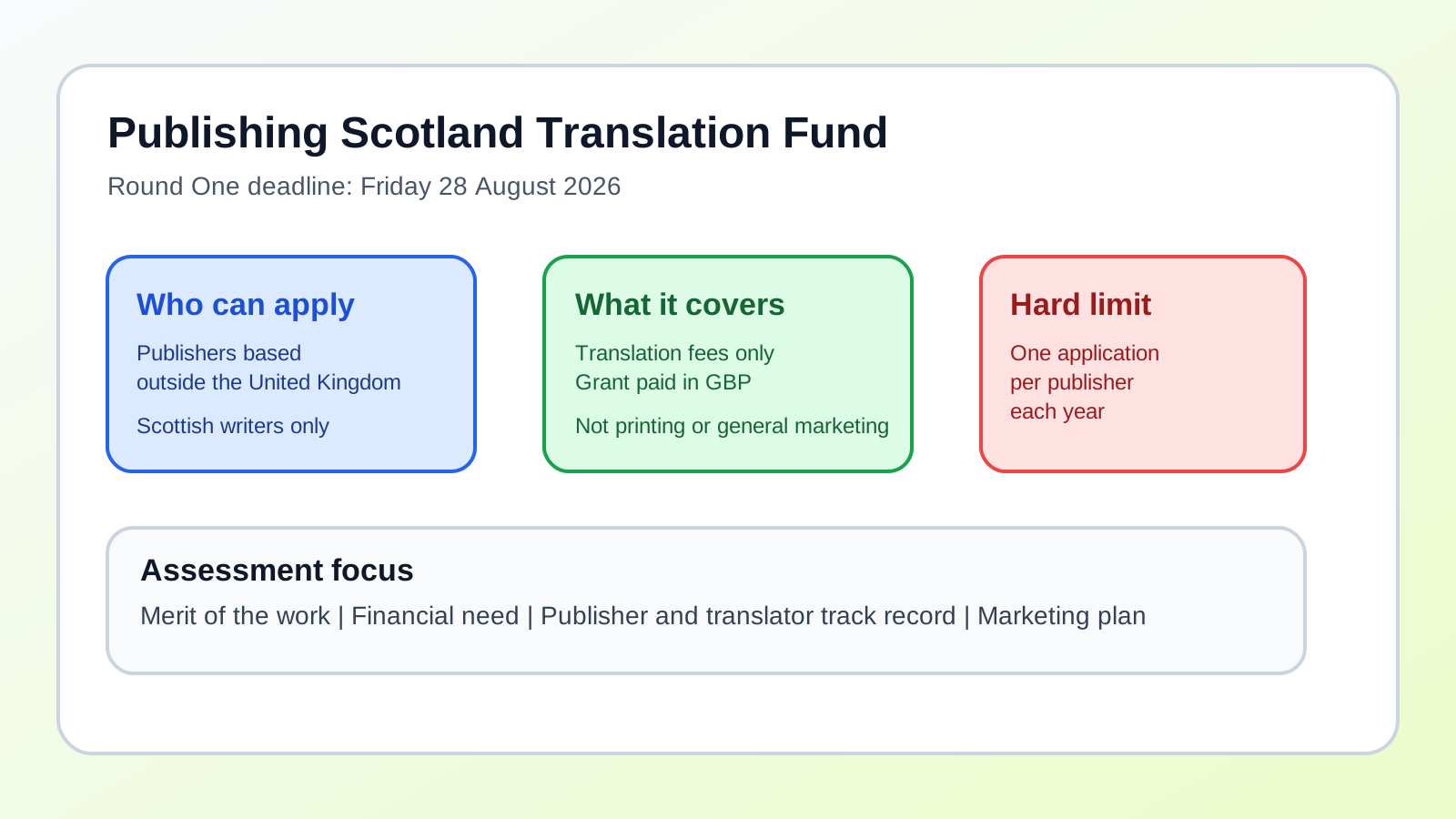
 Publishing Scotland's 2026 Translation Fund is open until August 28, 2026 for publishers based outside the UK, but the real question is practical: is the rights path, translator track record, and market case strong enough to justify a translation-fees-only application now.
 8/18/2026
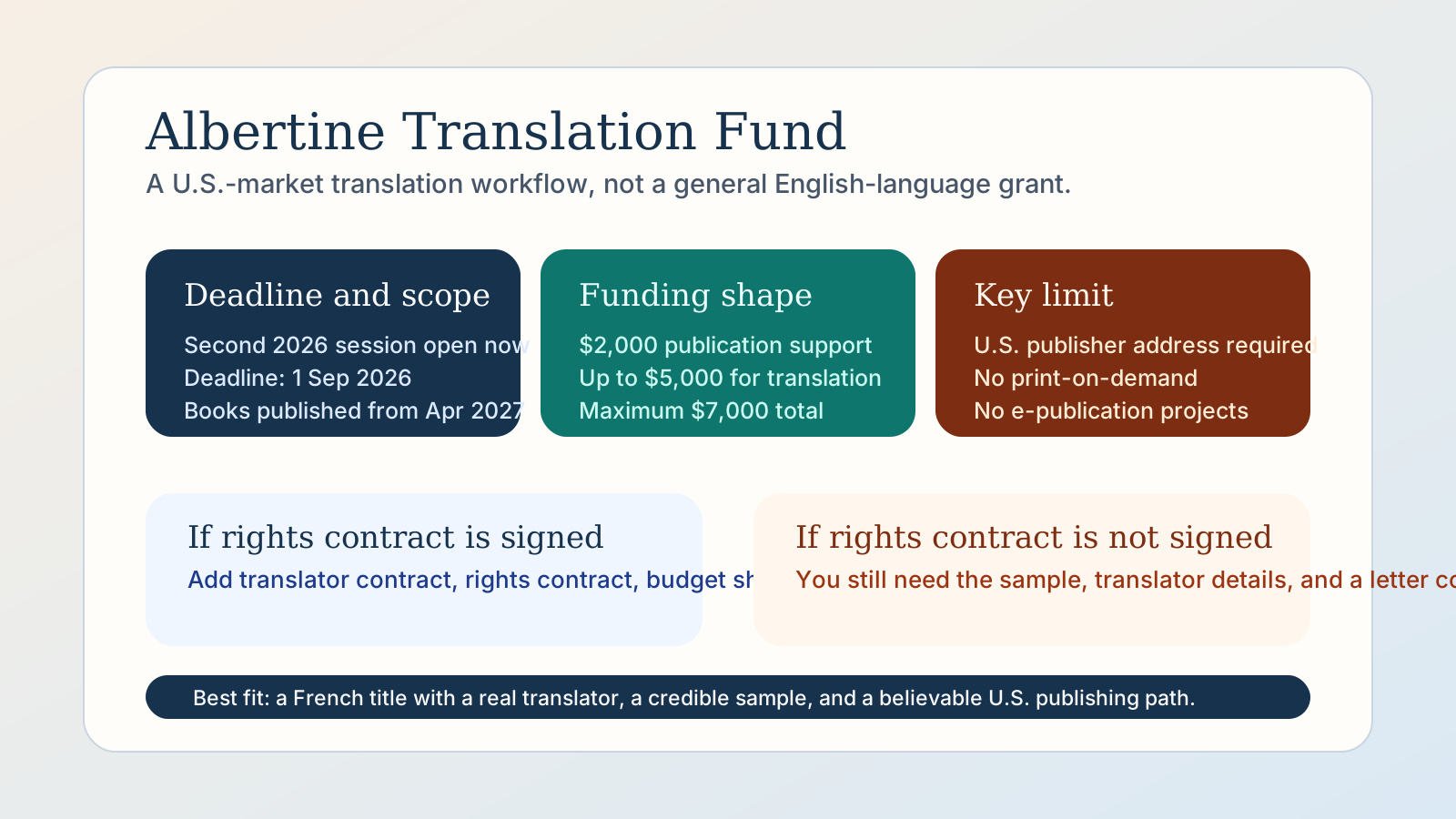
 Albertine's second 2026 translation-fund session is live through September 1, 2026. The practical issue is not French-literature prestige. It is whether the book, translator, and U.S. publishing route are real enough to survive a rights-and-sample review now.
 8/18/2026
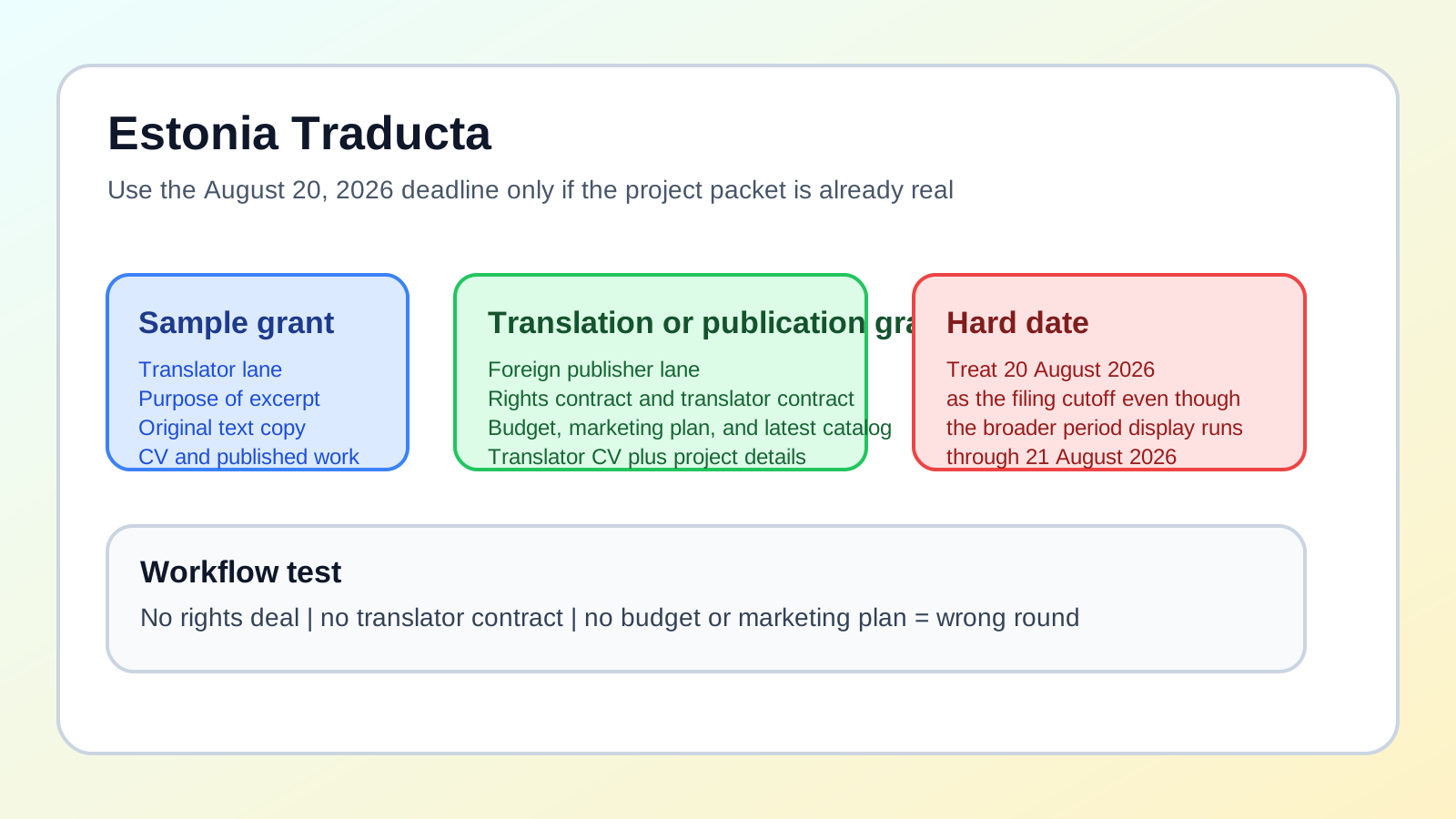
 Estonia's Traducta programme is still live on August 18, 2026, but the useful signal is procedural: foreign publishers need the rights contract, translator contract, budget, marketing plan, and catalog in hand before the August 20 filing cutoff.
 8/18/2026
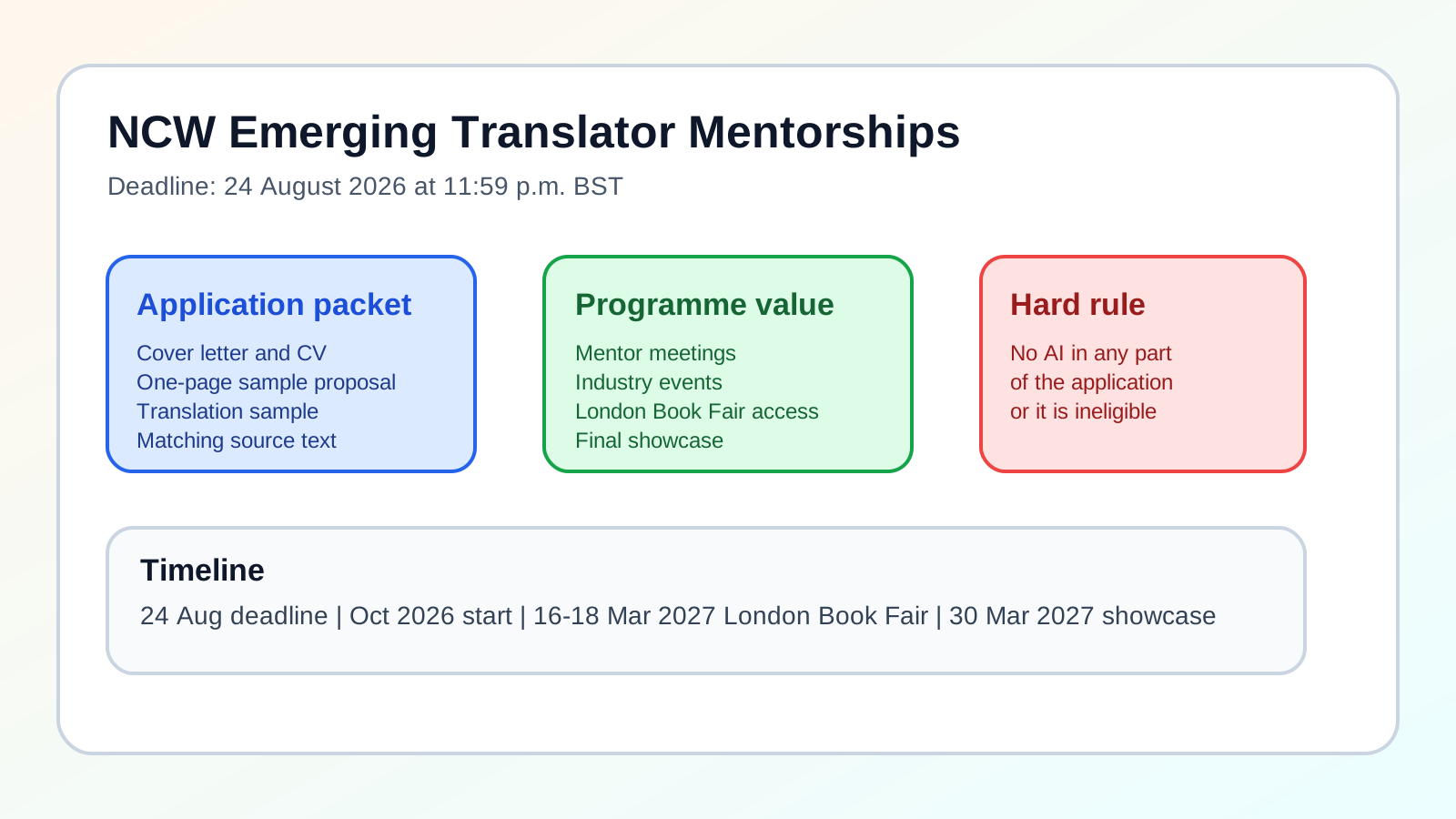
 National Centre for Writing's 2026/27 Emerging Translator Mentorships are open until August 24, 2026, but the useful test is practical: can the applicant present a credible sample proposal, a strong translation sample, and a realistic English-language case for the book now.
 8/17/2026
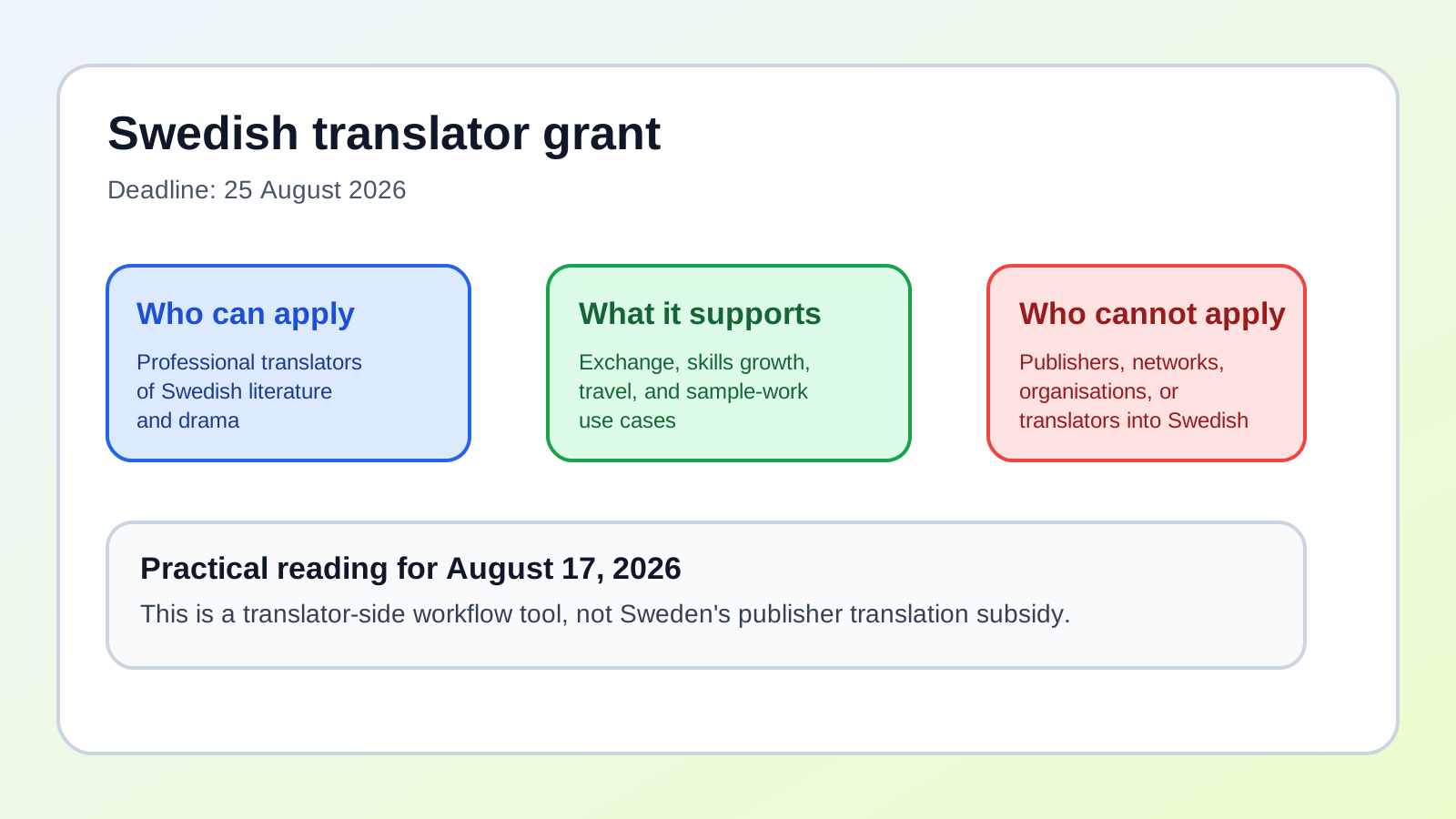
 The Swedish Arts Council's translator grant stays open through August 25, 2026, but the practical value is narrow and clear: it supports professional translators of Swedish literature and drama, not publishers, organisations, or translators working into Swedish.
 8/17/2026
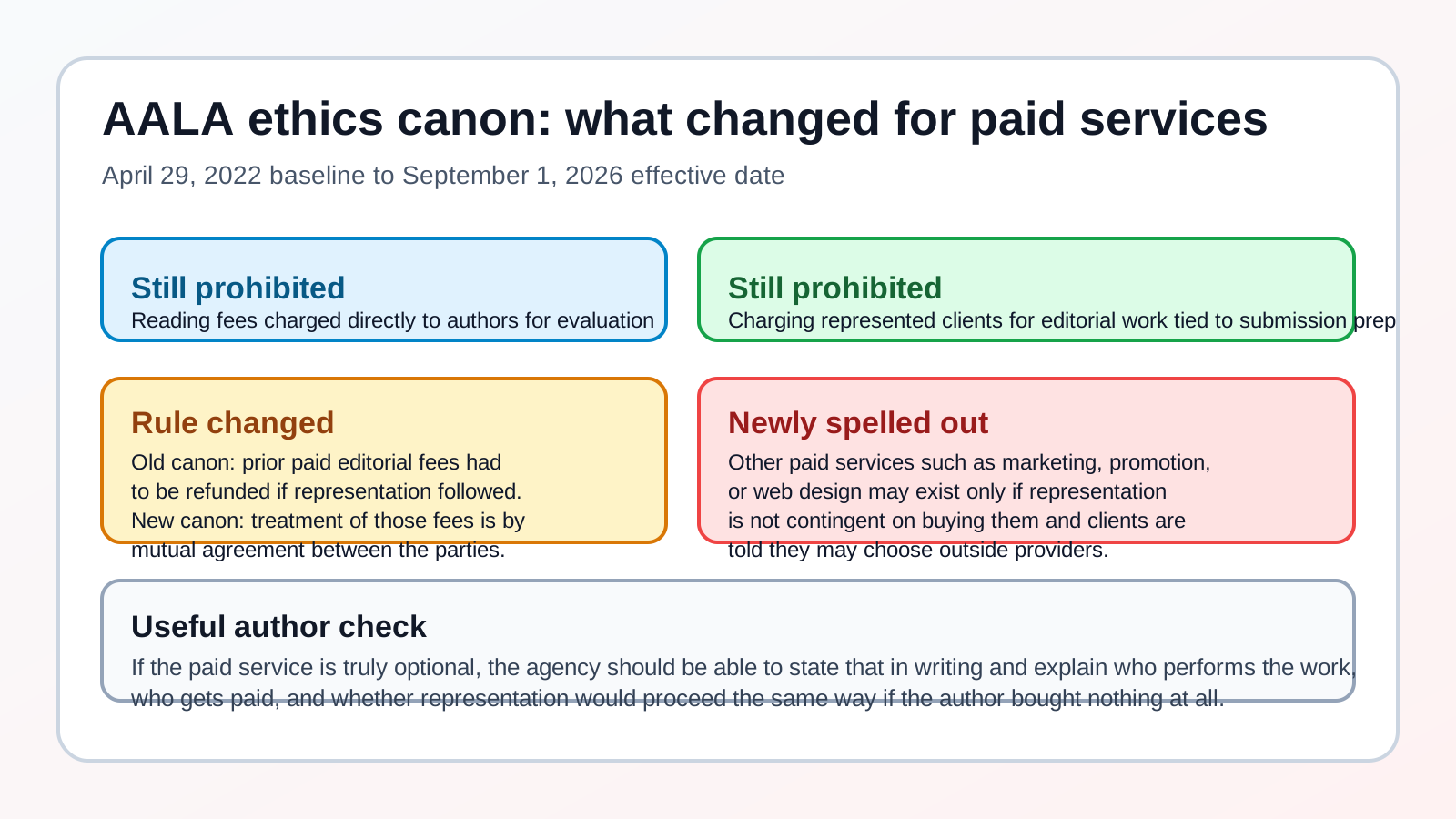
 The Association of American Literary Agents' revised canon takes effect on September 1, 2026. For authors and rights-facing teams, the practical question is not whether paid agency-linked services now exist, but whether they are optional, clearly disclosed, and kept separate from representation.
 8/17/2026
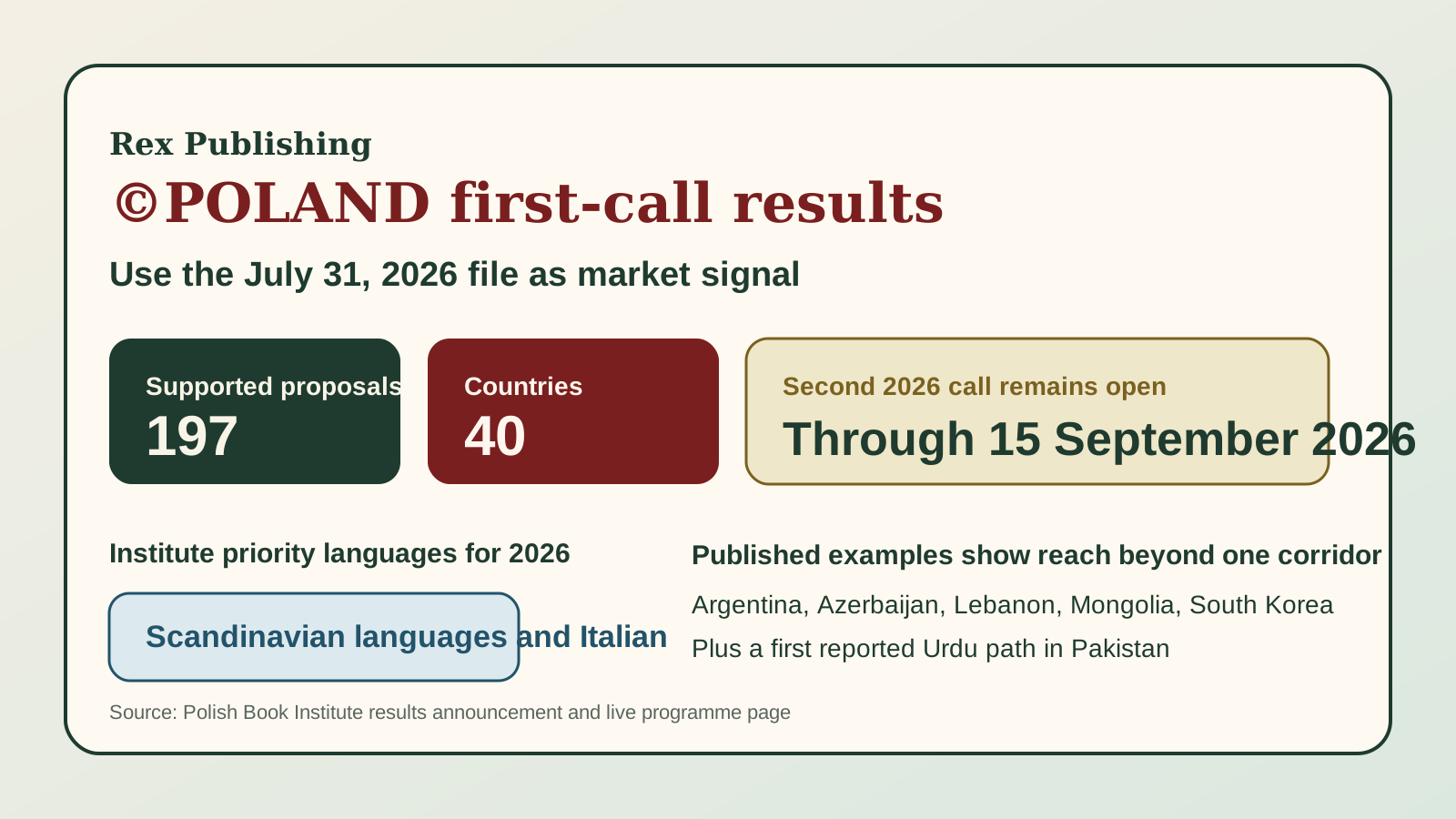
 The Polish Book Institute's July 31, 2026 first-call results matter because they show 197 supported proposals across 40 countries, but the practical value is in reading that file as translation-market signal while the second 2026 call remains open through September 15.
 8/14/2026
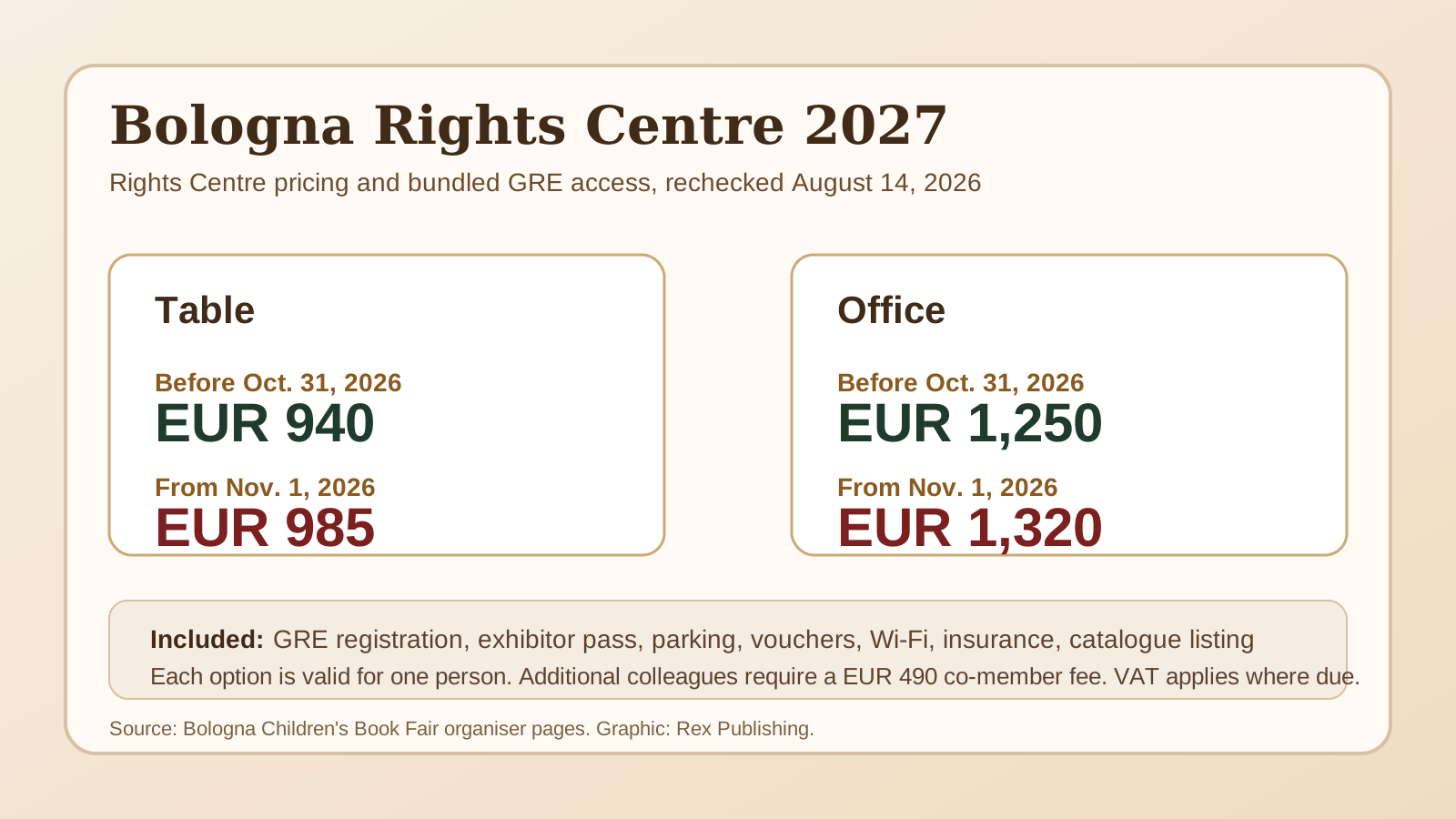
 Bologna Children's Book Fair now lists live 2027 Rights Centre pricing and bundled Global Rights Exchange access. As of August 14, 2026, the practical question is not whether Bologna sounds important. It is whether your rights team will actually use the dedicated meeting base and year-round GRE workflow before prices rise on November 1.
 8/14/2026
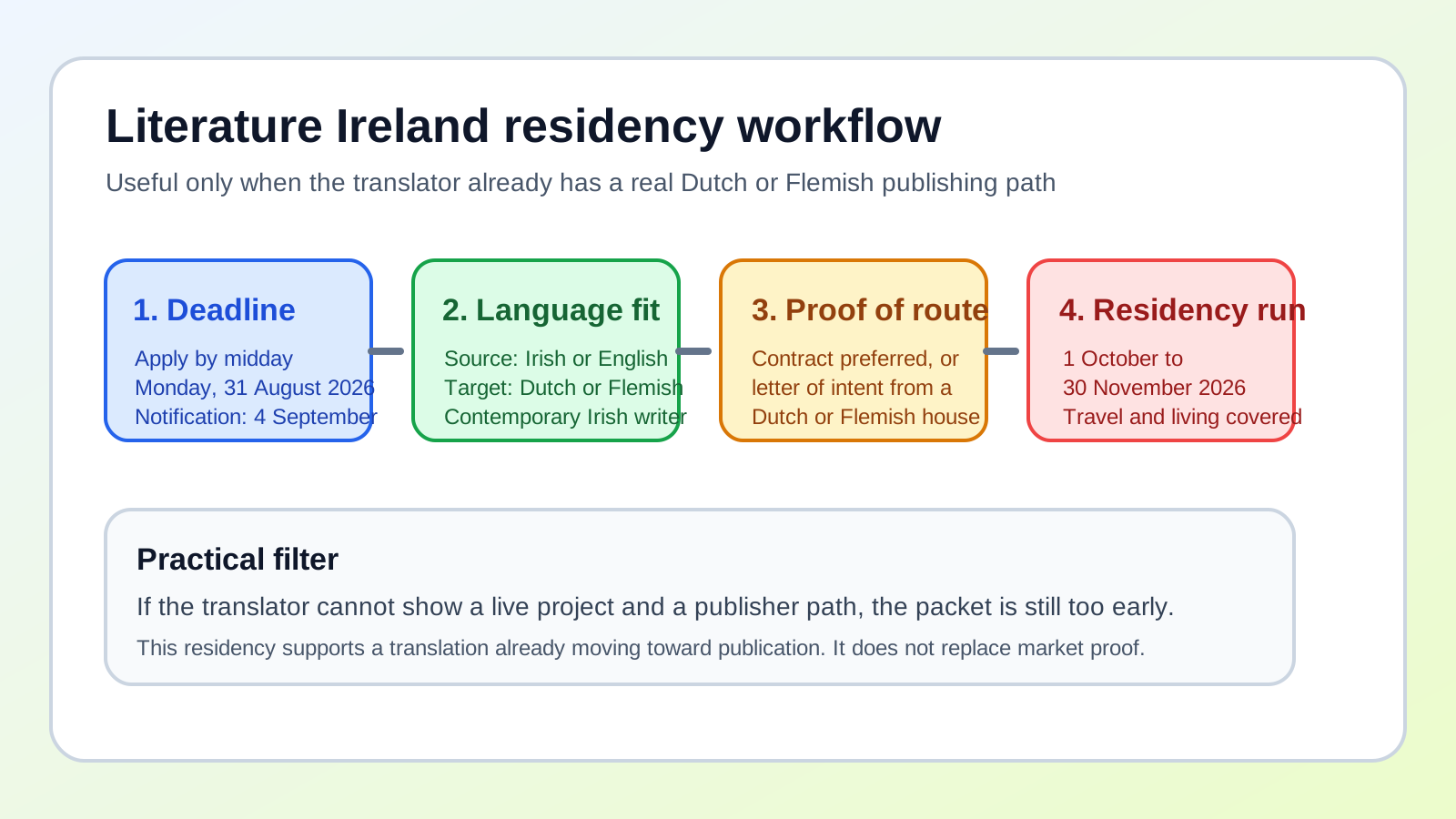
 Literature Ireland's Autumn 2026 Dublin residency for translators into Dutch or Flemish is open until midday on August 31, 2026. The practical issue is not literary prestige. It is whether the translation in progress already has a contemporary Irish source work, a Dutch or Flemish publishing route, and a usable application packet.
 8/14/2026
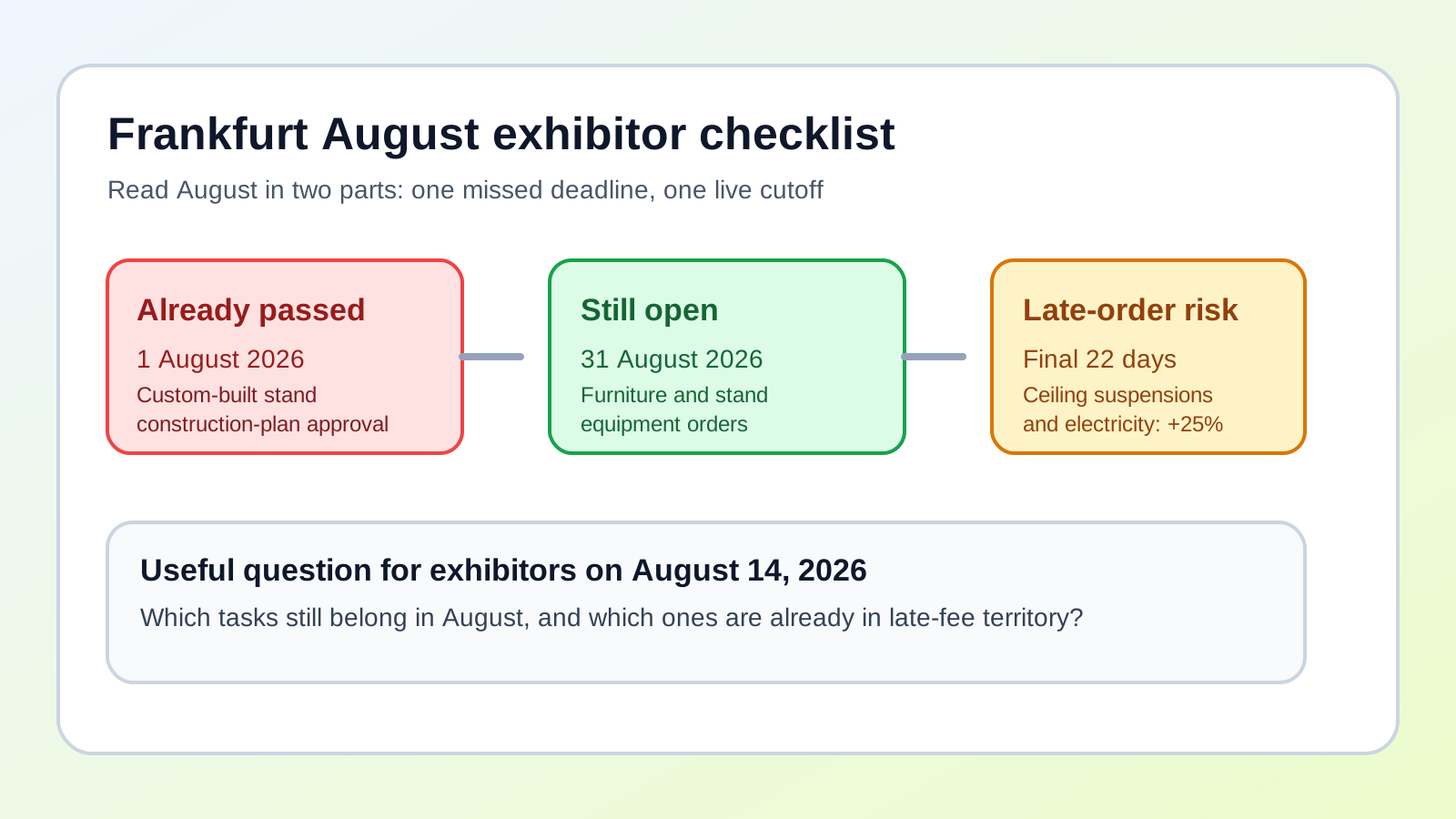
 Frankfurter Buchmesse's organizer pages still leave one meaningful August task open for exhibitors on August 14, 2026: furniture and stand-equipment orders close on August 31. The practical risk is not only the missed August 1 custom-stand deadline. It is also the late-order surcharge pressure that can raise technical costs inside the final 22 days before the fair.
 8/13/2026
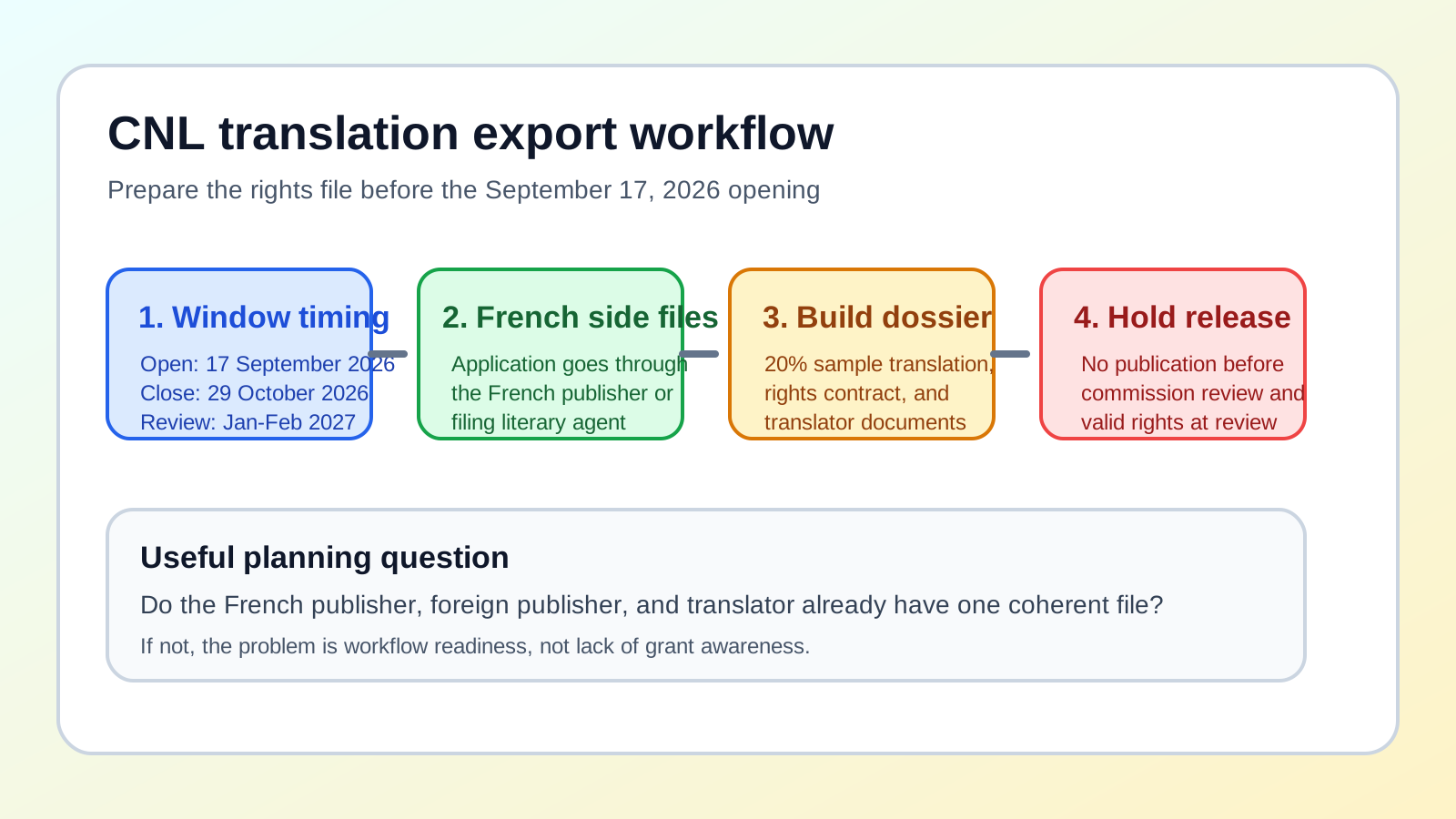
 The Centre national du livre's next foreign-rights translation grant window runs from September 17 to October 29, 2026, with review in January or February 2027. The practical issue is not whether the program exists. It is whether the French publisher, foreign publisher, and translator have assembled a clean rights file, direct-translation plan, and dossier before the window opens.
 8/13/2026
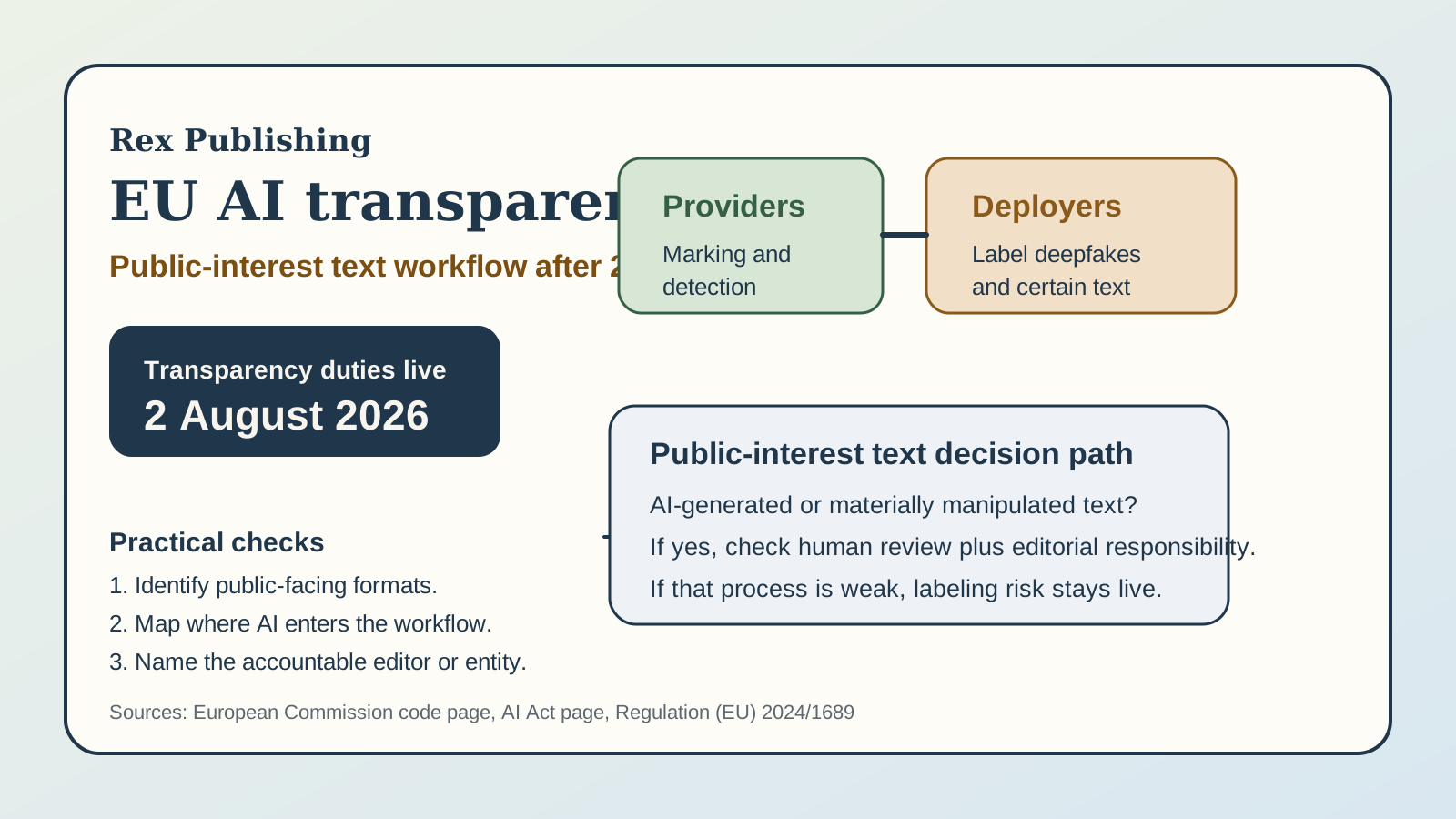
 The European Commission's AI-generated-content transparency code is now a live operational guide because the AI Act's Article 50 duties became applicable on August 2, 2026. For publishing teams, the practical work is separating provider and deployer responsibilities, identifying which public-interest text is actually in scope, and documenting when human review plus editorial responsibility is strong enough to change the labeling outcome.
 8/13/2026
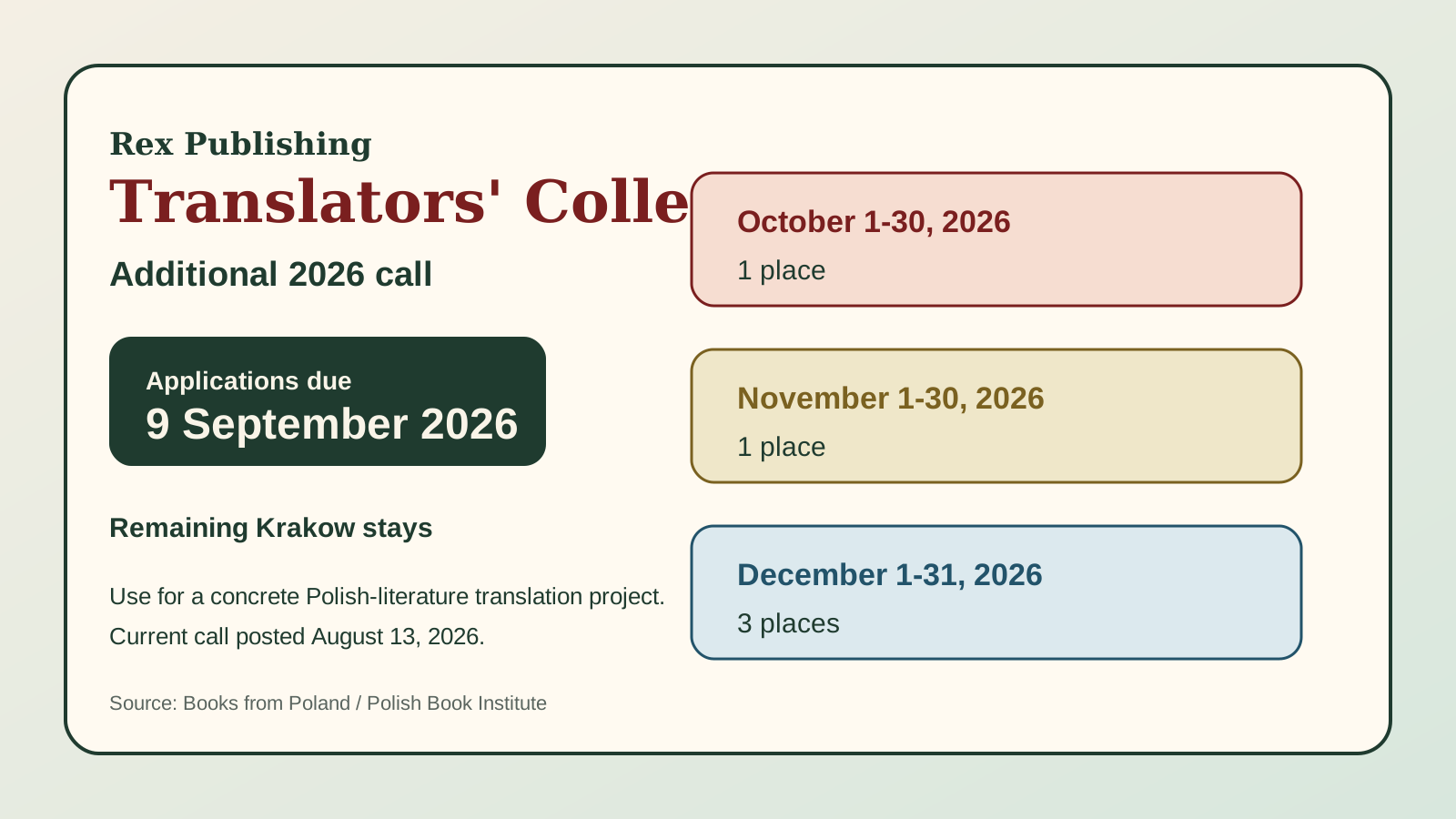
 The Polish Book Institute's additional 2026 Translators' Collegium call is a narrow late-year residency opening, not a general reopening. The practical work is checking the remaining October, November, and December Krakow slots, lining up the project packet, and filing by September 9, 2026.
 8/12/2026
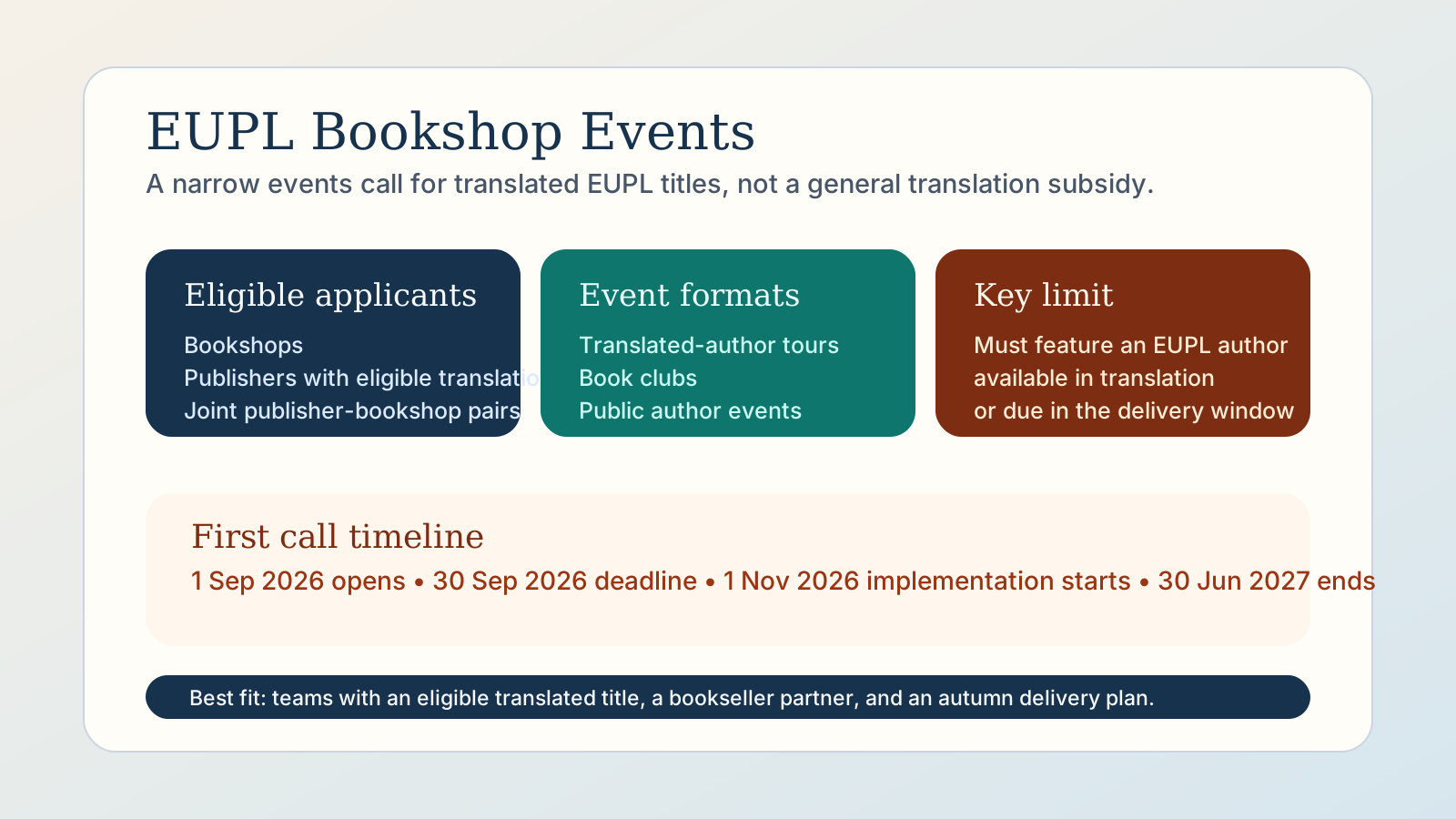
 The European Union Prize for Literature's new Bookshop Events for Translated EUPL Authors programme is not a general literary-events subsidy. It is a narrow workflow opportunity for bookshops and publishers working with translated EUPL titles, with the first 2026 application window running from September 1 through September 30.
 8/12/2026
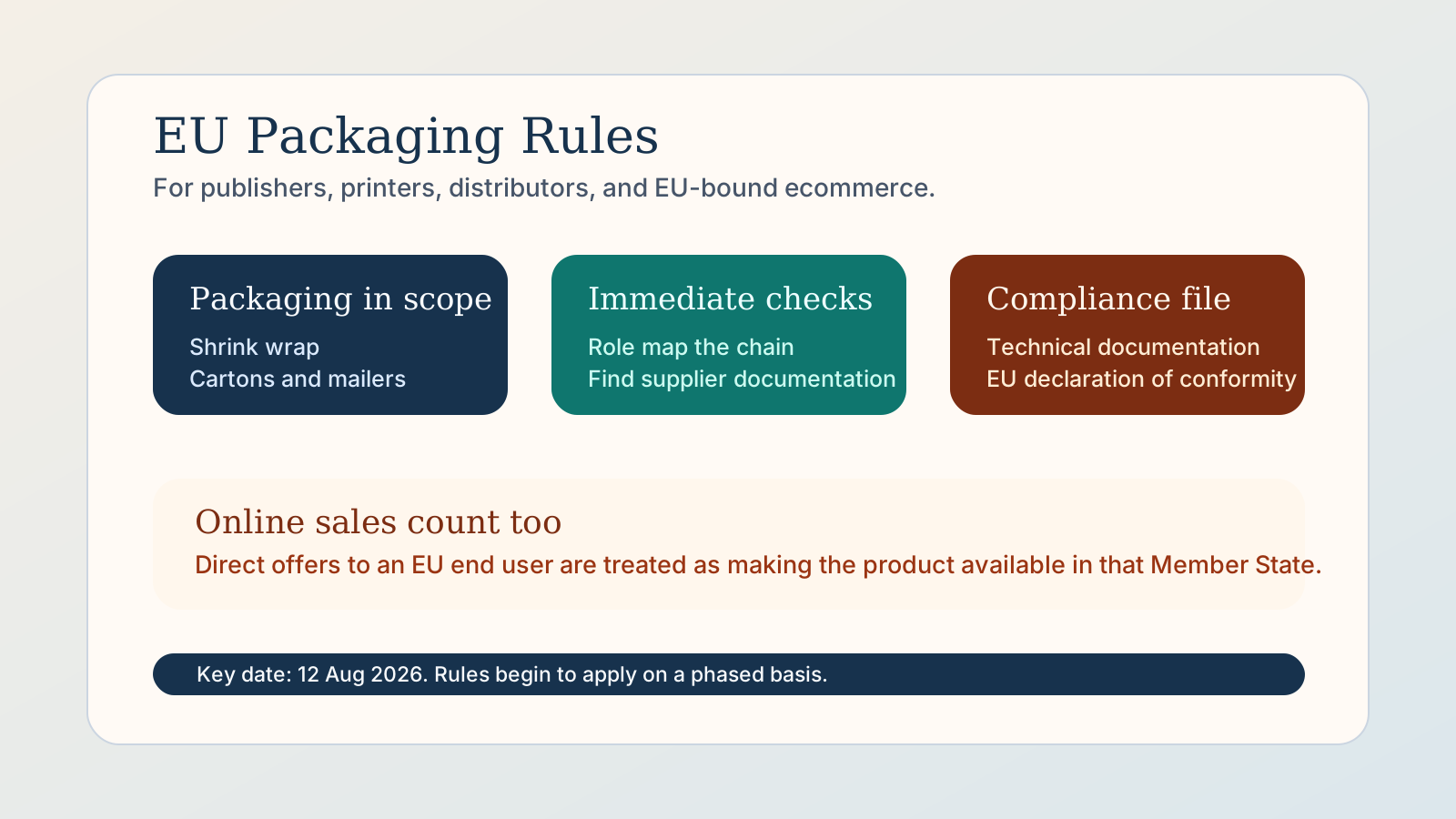
 From August 12, 2026, the EU's Packaging and Packaging Waste Regulation starts applying on a phased basis. For publishers, printers, distributors, warehouses, and booksellers shipping into Europe, the immediate task is not vague sustainability messaging. It is figuring out who is responsible for which packaging, what supplier documentation exists, and where declarations of conformity or distributor checks now belong.
 8/12/2026
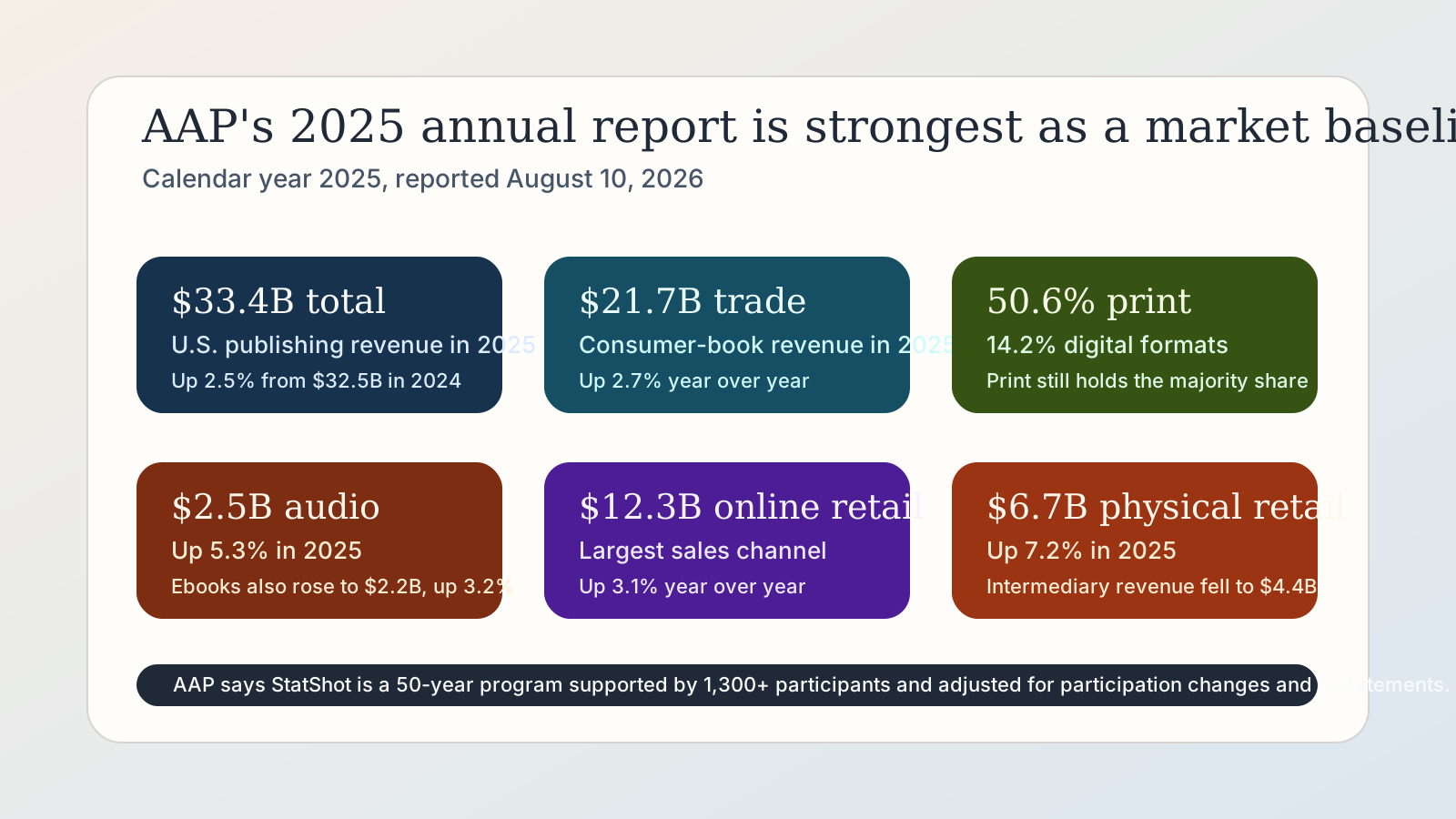
 AAP's August 10, 2026 StatShot annual report says U.S. publishing generated $33.4 billion in 2025, with print still supplying just over half of all revenue, digital audio and ebooks still growing, and online retail still leading channels. The practical value is in planning around the current mix without pretending one association report predicts every next move.
 8/11/2026
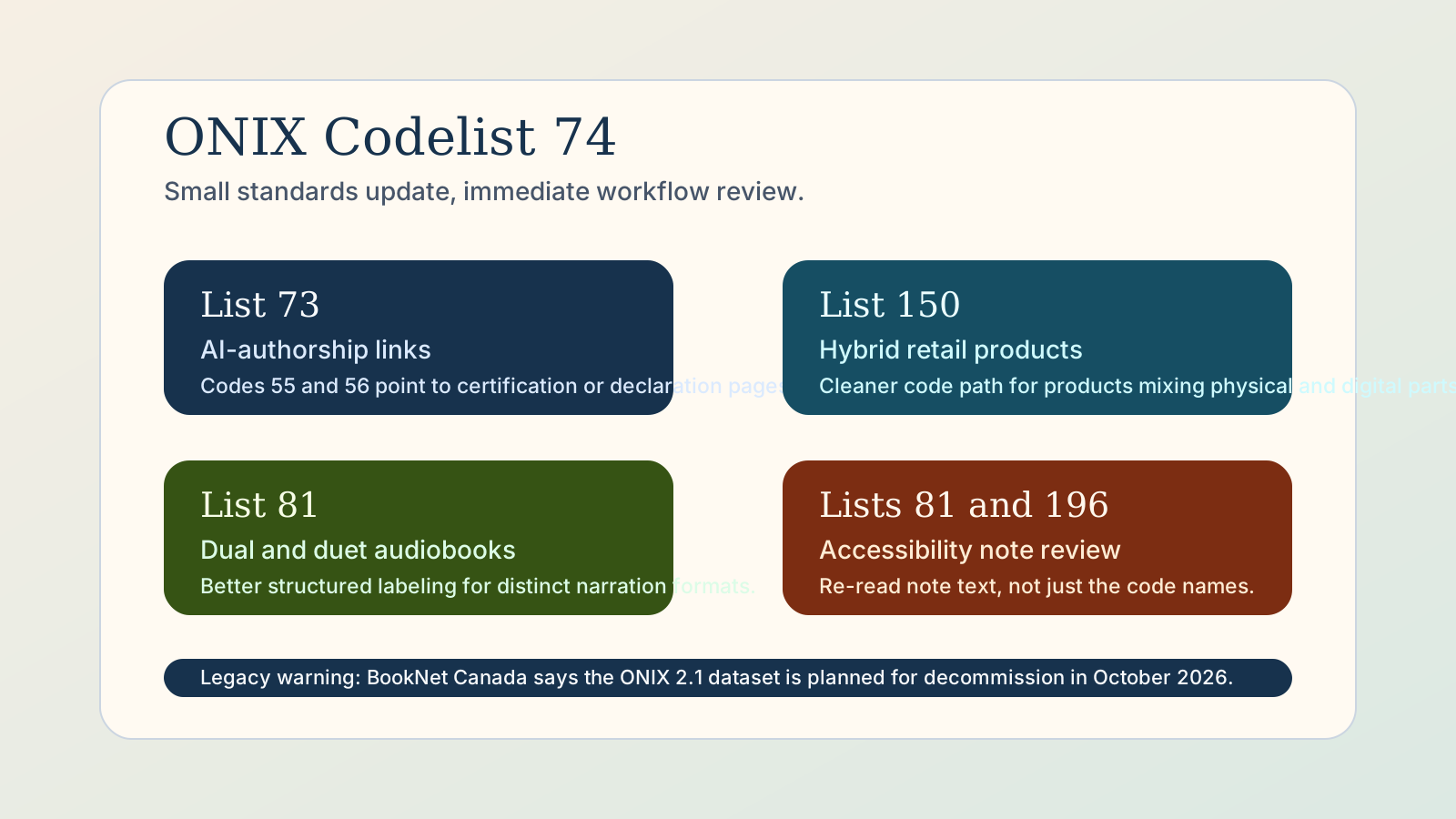
 BookNet Canada's August 10, 2026 release note and EDItEUR's updated codelists make one practical point clear: ONIX Issue 74 is small, but it creates immediate review work around human-authorship links, hybrid physical-and-digital products, audiobook labeling, accessibility notes, and any remaining ONIX 2.1 dependency.
 7/27/2026
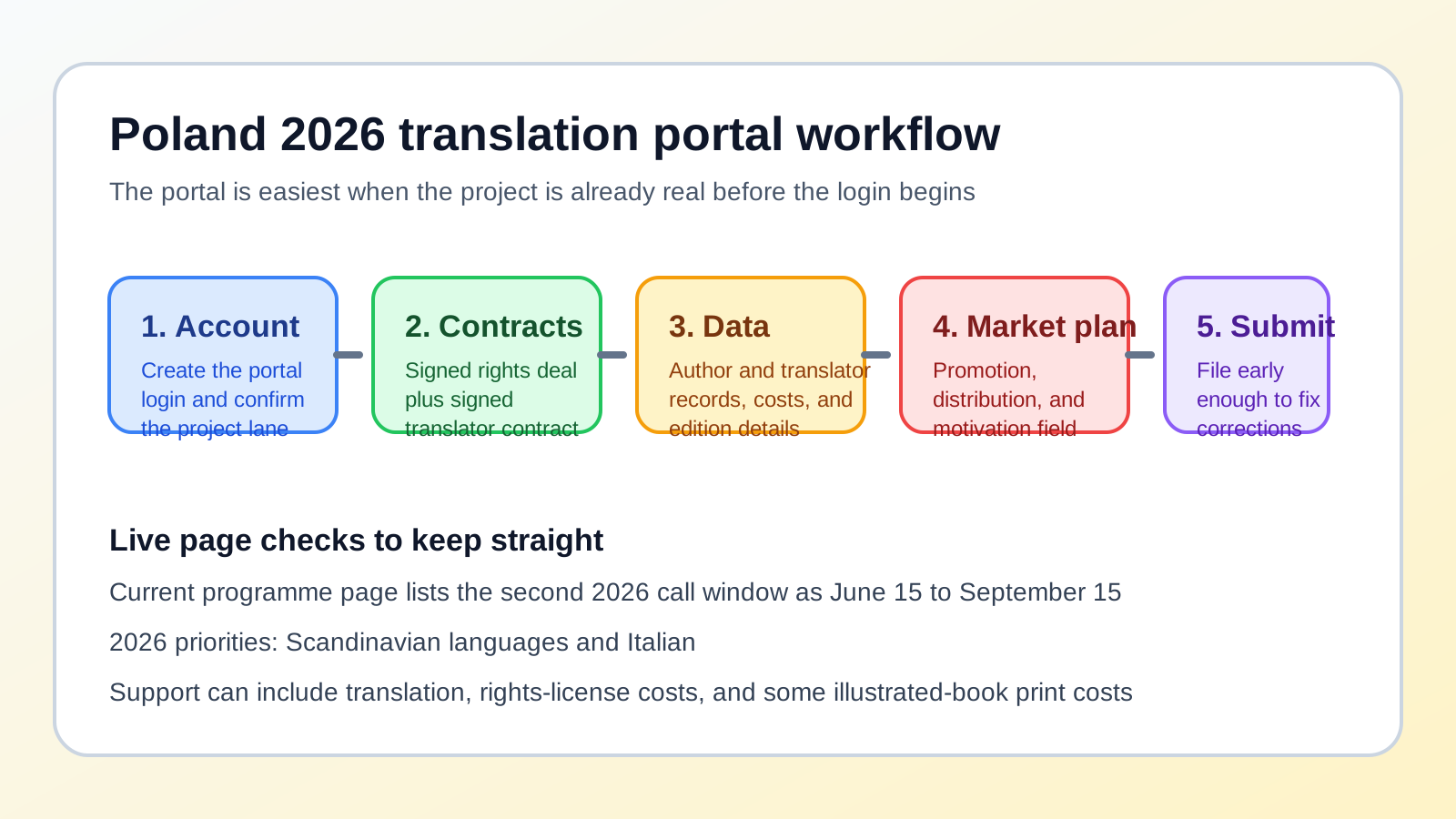
 The Polish Book Institute's current ©POLAND programme workflow is useful because it combines translation, rights, and some print-cost support, but the application only moves smoothly when the contracts, translator details, and distribution plan already exist.
 7/17/2026
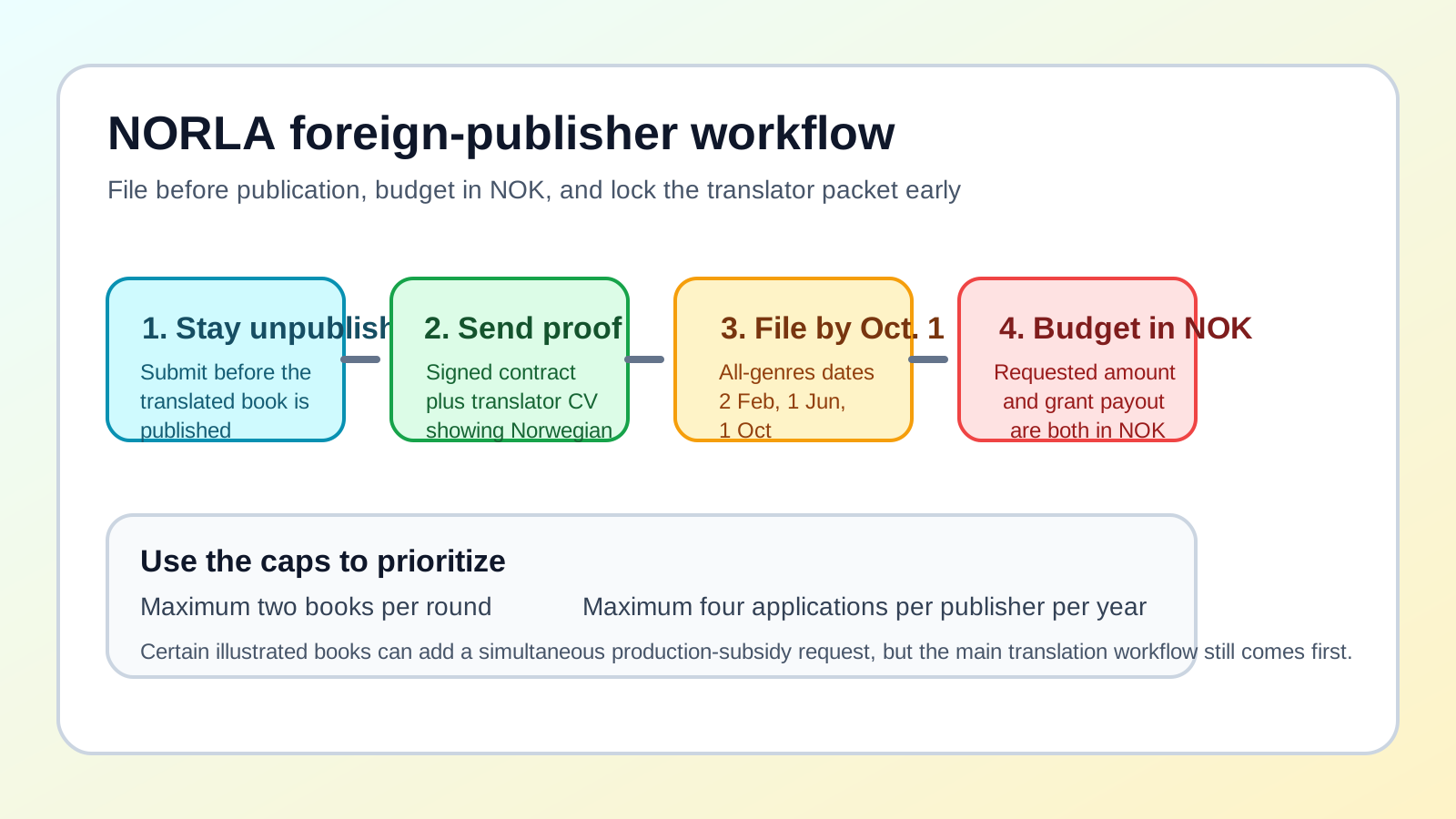
 NORLA's live translation-subsidy page is clear on the real workflow: the last all-genres deadline in 2026 is October 1, applications must be filed before publication, the translator contract and CV are mandatory, and the grant is requested and paid in NOK.
 7/17/2026
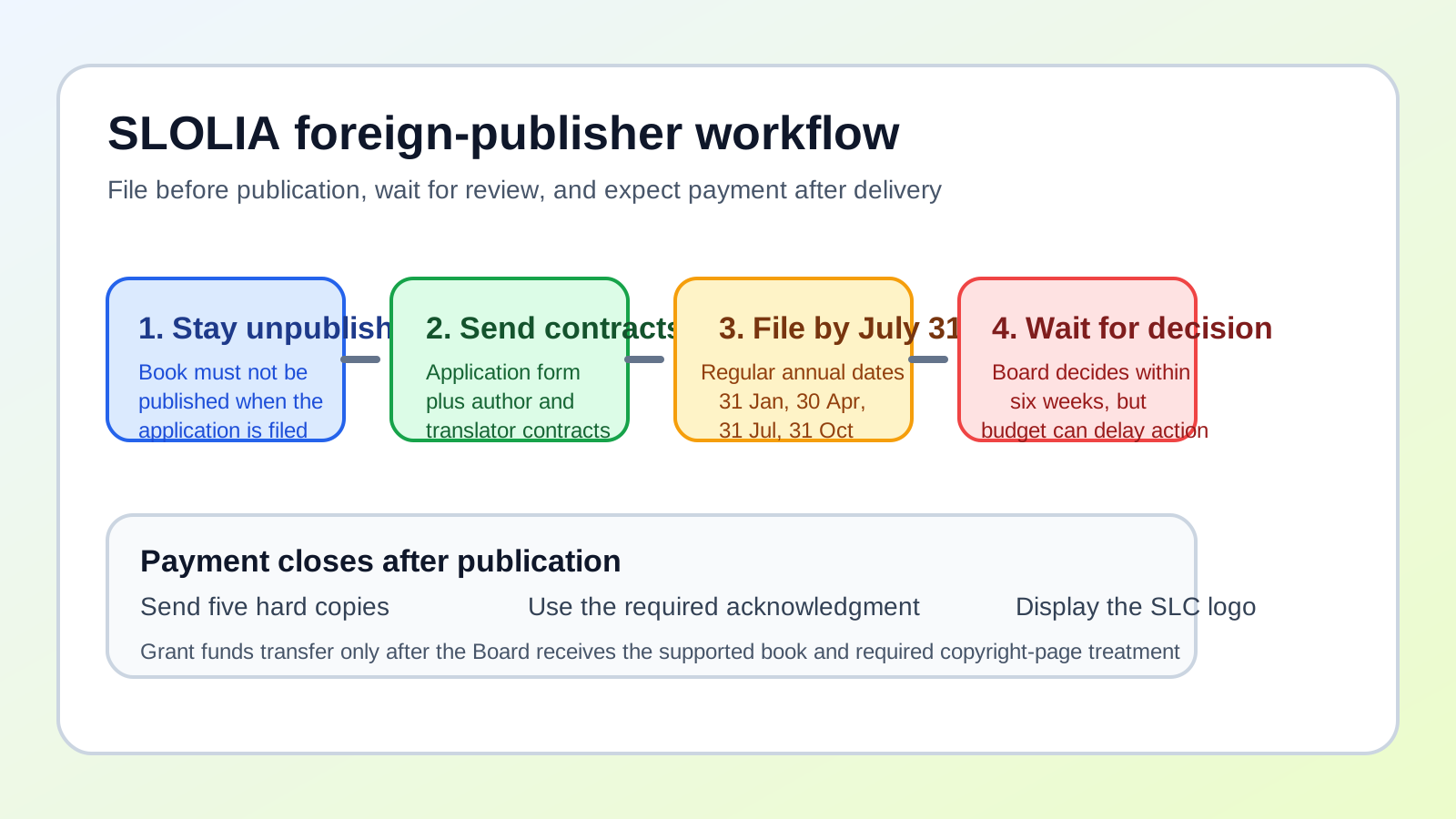
 The Slovak Literary Centre's SLOLIA rules are unusually direct: foreign publishers must file before publication, send author and translator contracts with the application, wait up to six weeks for a decision, and only receive payment after five hard copies are delivered.
 7/17/2026
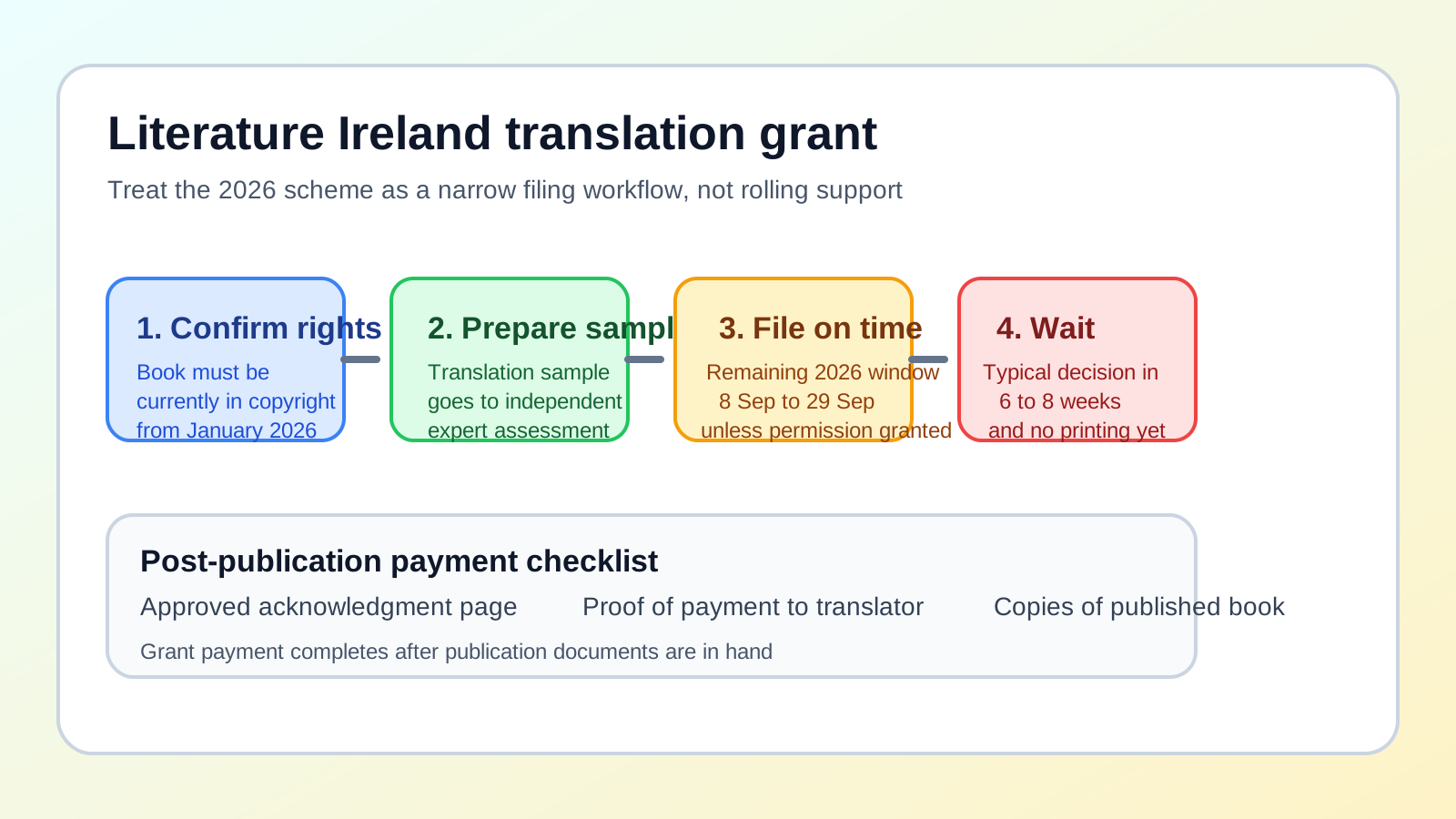
 Literature Ireland's live 2026 translation-grant page is clear on the practical constraints: only the September 8 to September 29, 2026 window remains this year, books must stay out of print until a decision is made, and payment closes only after translator proof and acknowledgment paperwork are in hand.
 7/16/2026
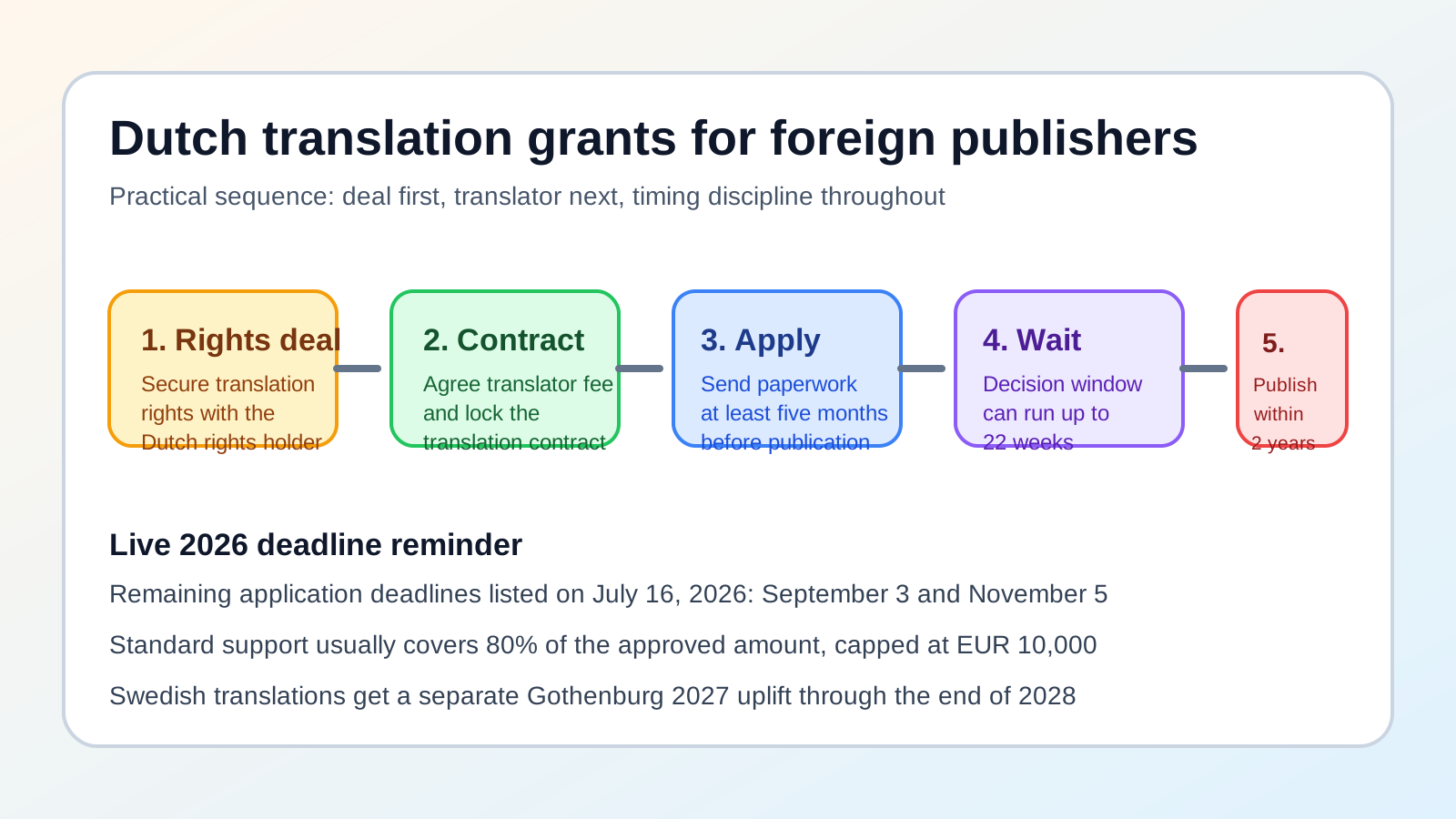
 The Dutch Foundation for Literature's live foreign-publisher grant rules are generous enough to matter, but the useful lesson is procedural: rights first, translator contract second, application timing third.
 7/16/2026
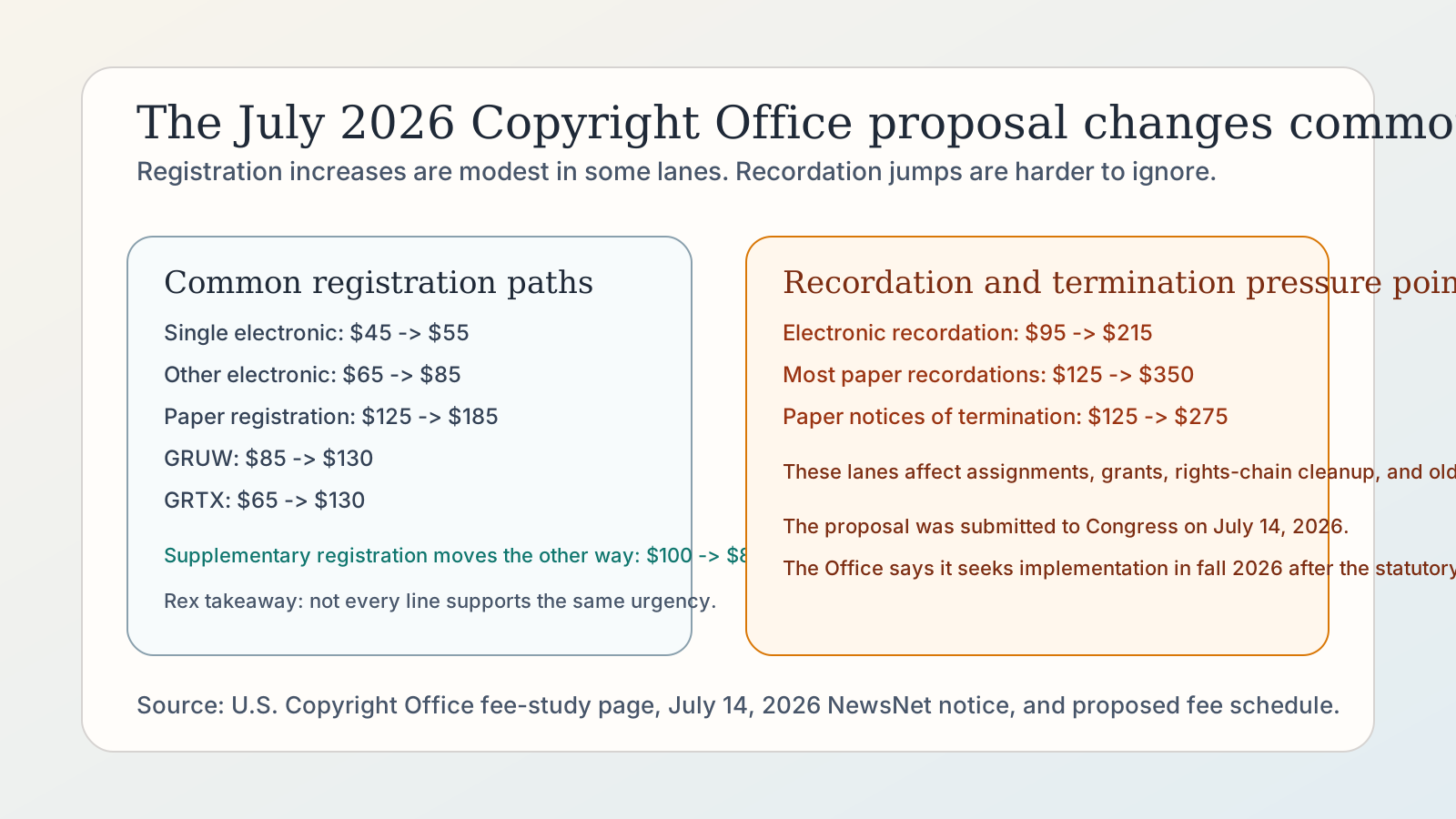
 The U.S. Copyright Office has proposed higher fees for many common registration and recordation filings, but not every line moves the same way. Here is what authors, agents, and small publishing teams should actually triage before fall 2026.
 7/16/2026
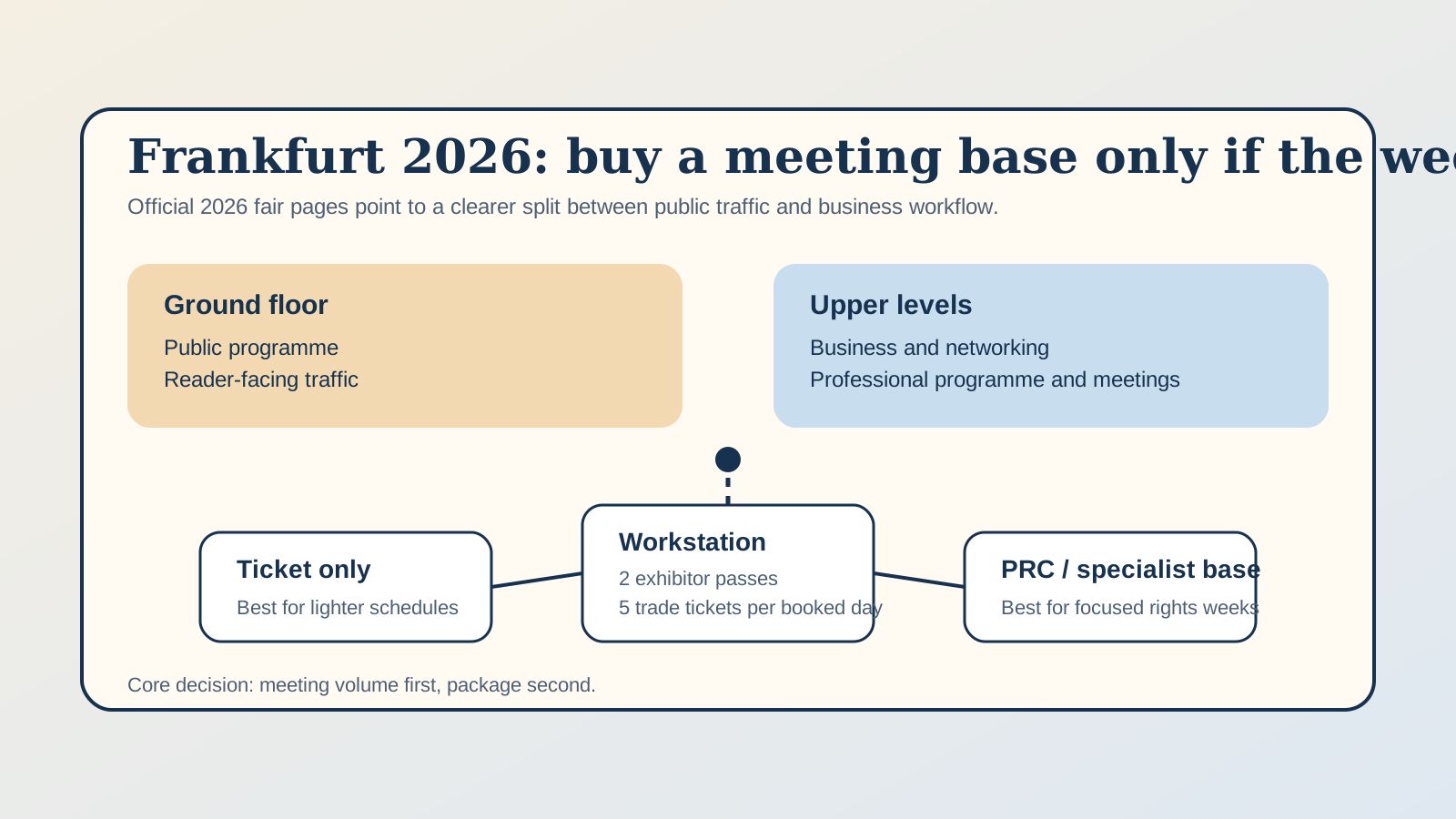
 Frankfurter Buchmesse's current 2026 pages make one practical point clear: business activity is moving to the upper levels, workstation packages are explicitly priced, and smaller rights-facing teams should decide whether they need a real on-site base before October 7-11, 2026.
 7/15/2026
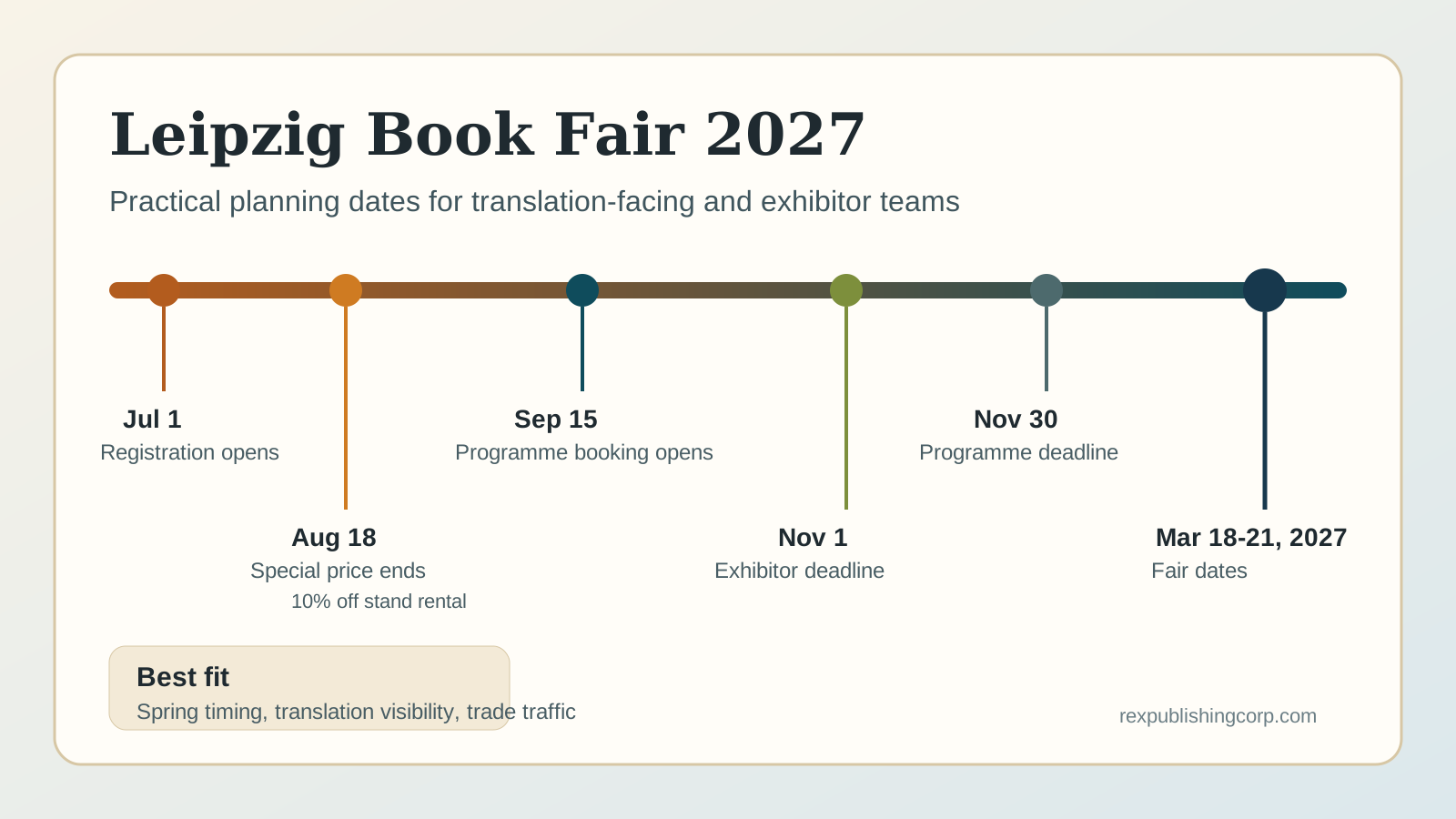
 Leipzig Book Fair's official 2027 pages give publishers, translators, and rights-facing teams a practical planning window now: discounted exhibitor booking through August 18, programme registration from September 15 to November 30, and a fair that is stronger for translation visibility than for all-purpose rights trading.
 7/15/2026
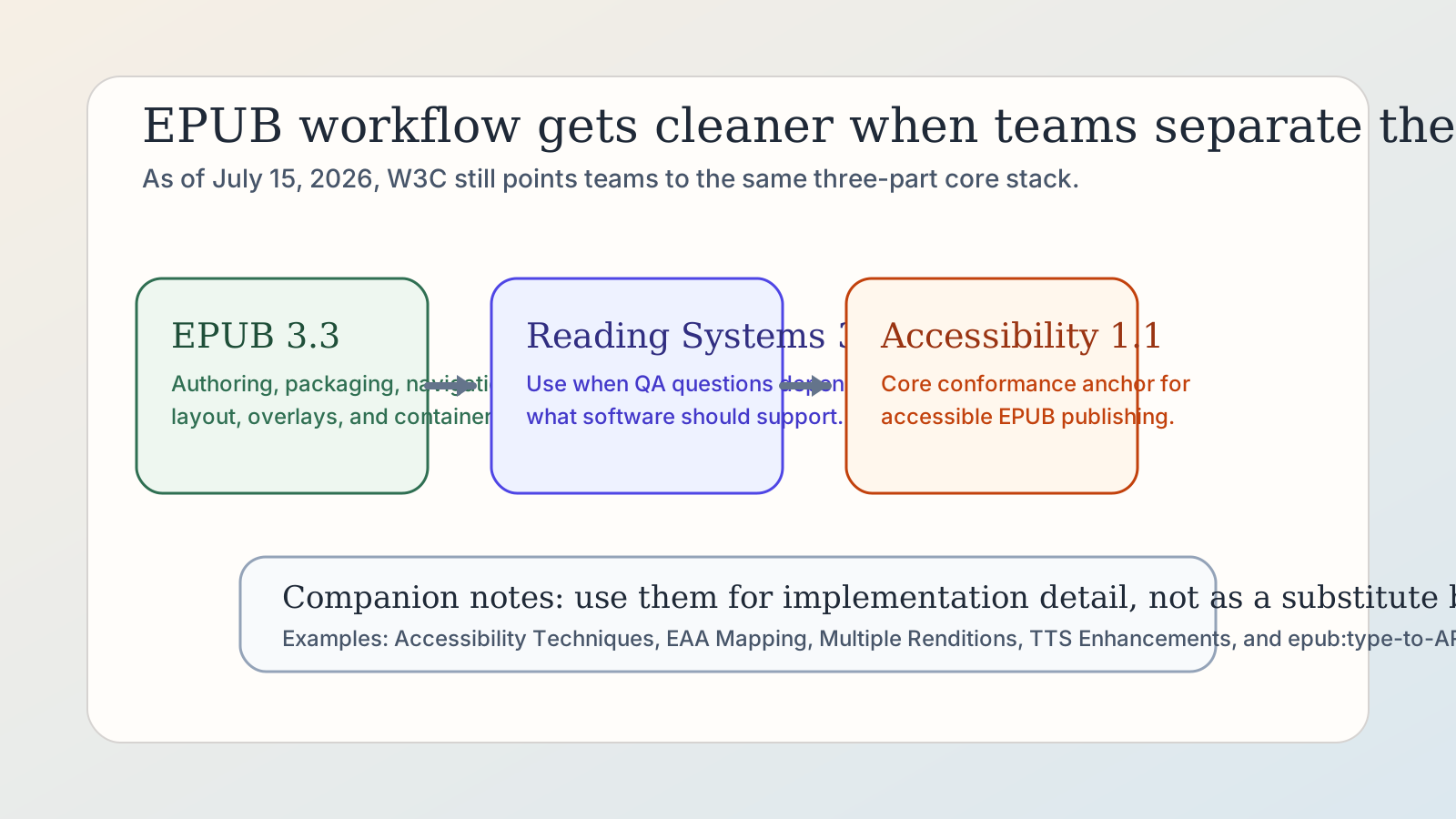
 W3C's current EPUB 3 page, last modified on July 10, 2026, still points publishing teams to the same practical baseline: EPUB 3.3, Reading Systems 3.3, and EPUB Accessibility 1.1, with companion notes used as guidance rather than confused with the core stack.
 7/15/2026
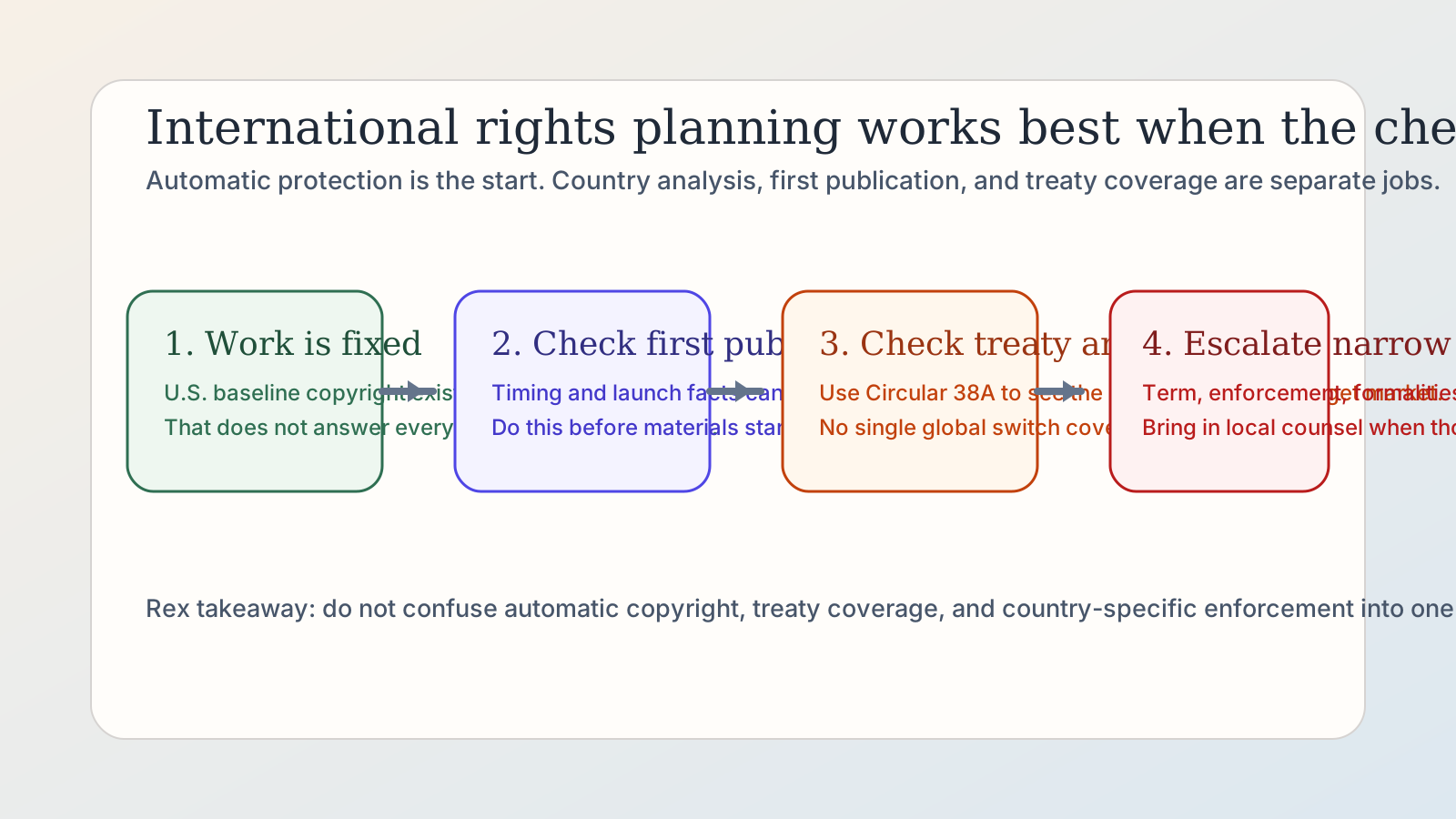
 The U.S. Copyright Office's June 2026 Circular 38A is most useful as a pre-publication and pre-deal checklist: check the country, check the point of attachment, and do not confuse automatic copyright with identical cross-border protection.
 7/14/2026
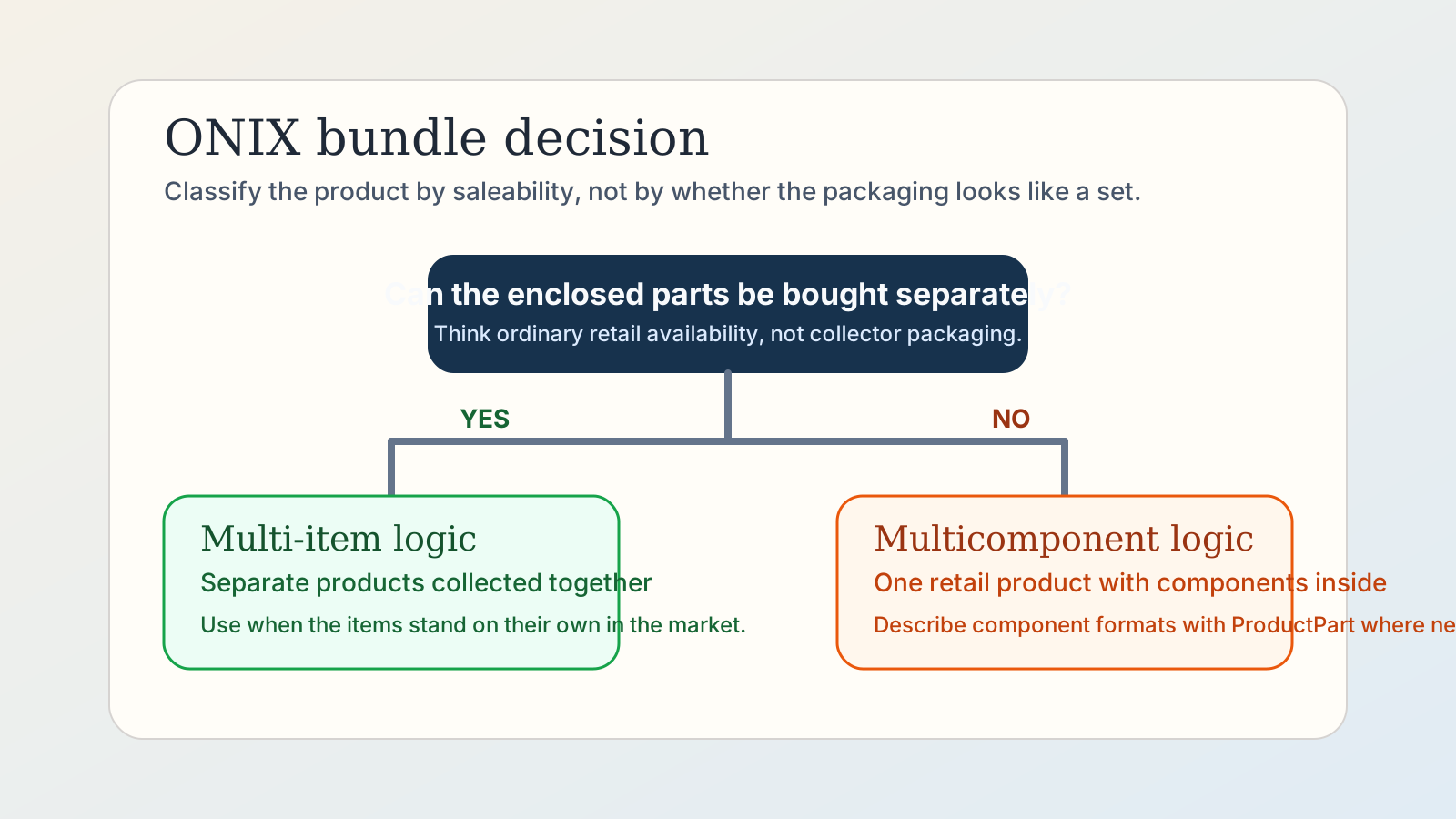
 BookNet Canada's May 22, 2026 explainer and EDItEUR's current ONIX guidance point to a simple workflow rule: decide whether the parts are independently saleable before choosing between multi-item and multicomponent product coding.
7/14/2026 BookNet Canada's July 14, 2026 ebook report shows a market where ebook reading is common, but buying, borrowing, device use, and format preference do not all move together. The practical signal for publishing teams is to plan around pricing pressure, library discovery, and cross-format behaviour rather than a simple digital-only narrative.
 7/14/2026
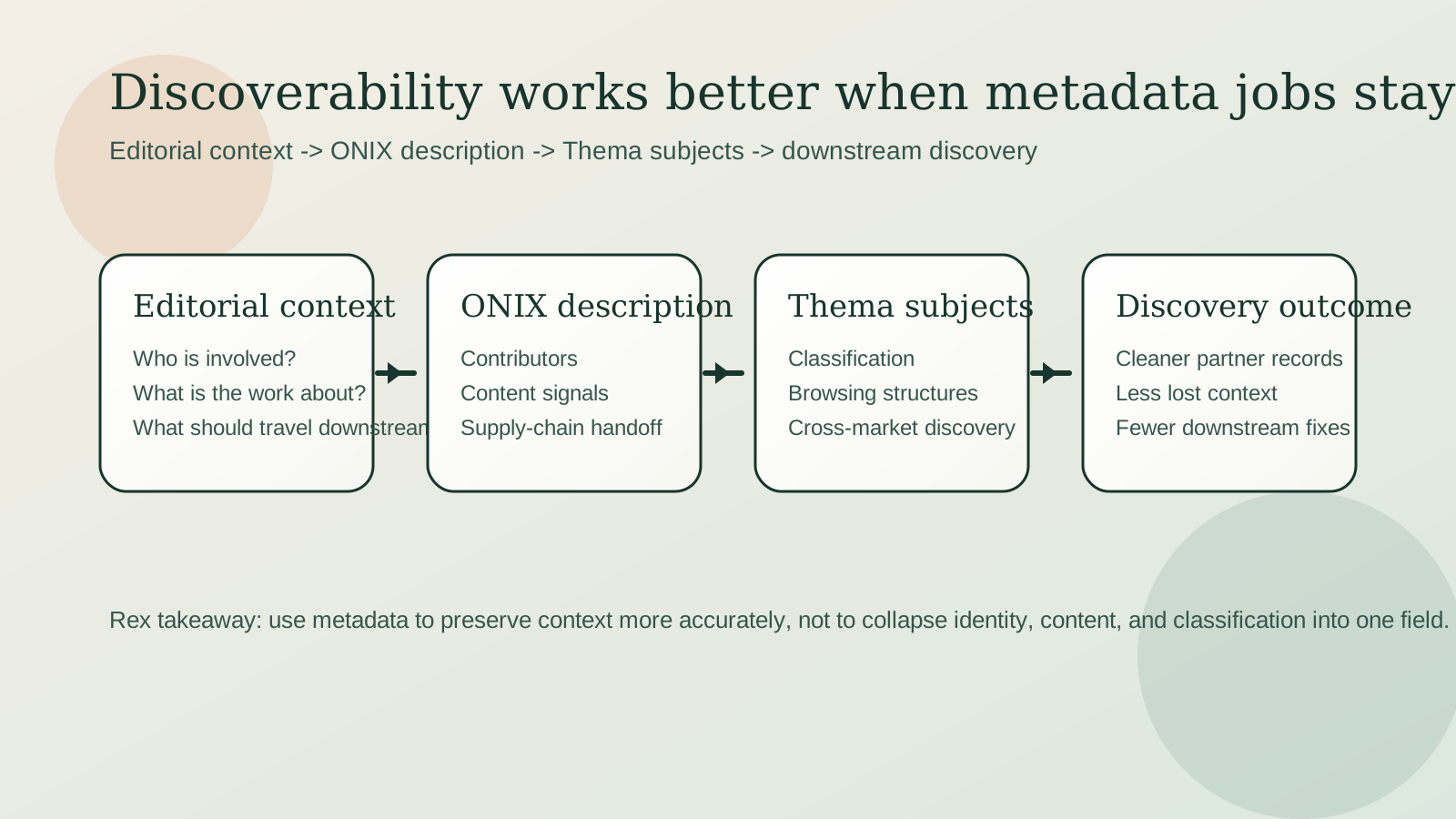
 BookNet Canada's February 20, 2026 metadata explainer and EDItEUR's linked guidance are most useful as a workflow lesson: publishers should separate contributor description, content description, and subject classification so discoverability improves without overloading one field or treating metadata as proof of identity.
7/13/2026 The Publishers Association's 3 June 2026 'Publishing in 2025' release shows UK publishing reaching £7.4 billion in 2025, with export revenue still doing much of the work, digital growing faster than print, audiobooks rising again, and consumer print still dominating the trade market.
7/13/2026 BookNet Canada's July 3, 2026 ISNI explainer, ISNI's publisher-benefits guidance, and Bowker's U.S. registration materials all point to the same practical lesson: a persistent contributor identifier is most useful when teams treat it as upstream workflow hygiene for attribution, discovery, and rights tracing, not as a magic proof-of-ownership badge.
 7/13/2026
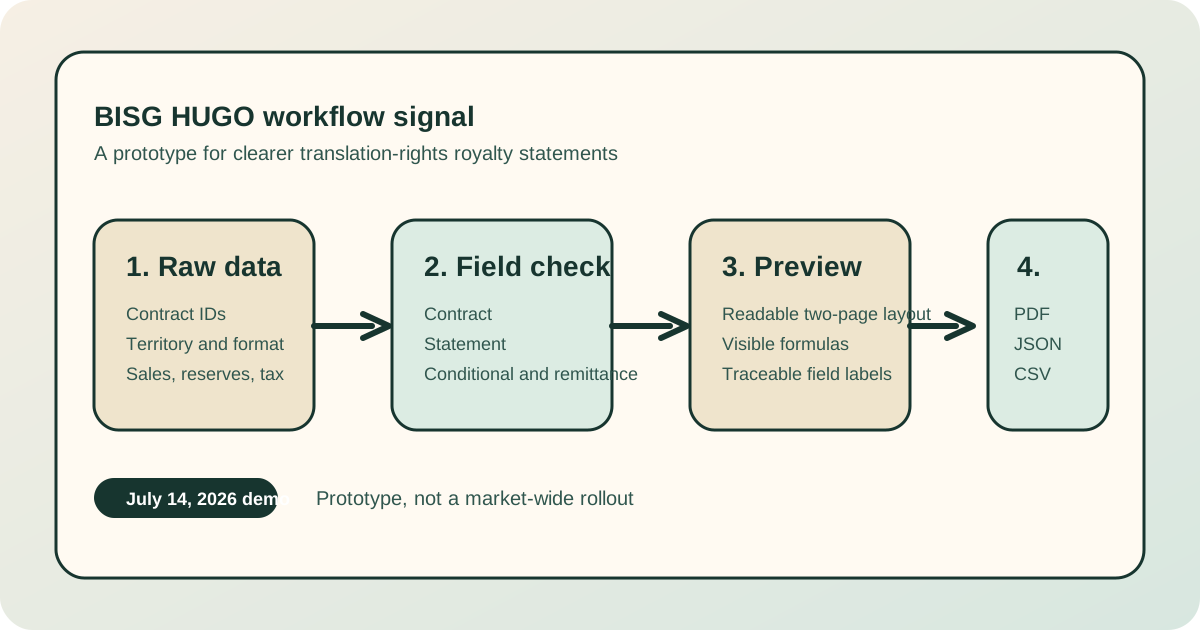
 BISG's scheduled July 14, 2026 HUGO prototype session matters because it turns translation-rights royalty standards into a more practical workflow question: which fields should be present, what real statements often miss, and how publishers or agents could check completeness without pretending one tool has solved the whole problem.
7/10/2026 BookNet Canada's June 1, 2026 ONIX guidance and EDItEUR's standard notes point to the same practical lesson: one metadata source of truth, consistent validation, disciplined updates, and repeatable distribution matter more than raw XML familiarity.
7/9/2026 Eurostat's latest employment and ICT-for-culture figures point to a useful split for publishing teams: broader cultural employment grew in 2024, but publishing employment kept declining, freelance exposure stayed high, and printed books still outpaced ebooks and audiobooks in recent online purchase data.
7/9/2026 The European Commission and the AI Act itself point to a narrow but practical compliance question for authors, editors, and publishing teams: when AI-generated public-interest text needs disclosure, and when documented human review plus editorial responsibility may change the outcome.
7/9/2026 Frankfurter Buchmesse and CzechLit materials show that Czechia's 2026 Guest of Honour push already offers a practical rights-scouting stack: translation grants, a growing German-language release list, and a collective-stand meeting surface for rights talks.
7/8/2026 The Fifth Circuit's January 12, 2026 ruling in Vetter v. Resnik is useful for authors, heirs, and rights teams because it suggests some older worldwide grants can be terminated more broadly than many people assumed, while the U.S. Copyright Office's timing and filing rules still leave no room for sloppy process.
7/8/2026 IFRRO's June 2026 survey is useful because it separates low-risk assistive AI uses inside publishing workflows from the licensing, transparency, and remuneration disputes that still surround model training and large-scale reuse of protected content.
7/8/2026 A July 2, 2026 Authors Guild scam alert and current U.S. Copyright Office guidance point to the same practical rule: verify suspicious registration emails through official channels, but do not ignore legitimate Office correspondence and its deadlines.
7/7/2026 The U.S. Copyright Office’s current writer guidance makes one practical point clear: registration choice depends on whether you are filing one work, a group of unpublished works, or short online literary works.
7/7/2026 The Polish Book Institute's Publishing Proposals programme is a practical model for foreign-rights materials: translation-heavy, tightly scoped, and strict about follow-through after the pitch is made.
7/6/2026 The Swedish Arts Council's current non-Nordic translation grant gives foreign publishers a live 2026 route to support Swedish works in translation, but only if rights, contracts, and distribution plans are already in order.
7/6/2026 The Polish Book Institute's Sample Translations ©Poland programme gives translators and rights-facing teams a practical way to test export potential, show early publisher interest, and move a Polish title closer to a foreign-language pitch.
7/6/2026 The Polish Book Institute's 2025 market report shows a slightly larger market, fewer published titles, a meaningful translation share, and an audiobook segment that is now large enough to matter in adaptation planning.
7/3/2026 The U.S. Copyright Office's January 2026 toolkit and July 15 webinar make one practical point clearer: authors and small publishing teams should match the filing path to the kind of literary work they actually have before licensing, enforcement, or adaptation pressure arrives.
7/1/2026 The official Books From Poland platform connects samples, translator and publisher indexes, catalogues, and funding information. Foreign publishers still need separate rights checks, budget discipline, and market-specific evaluation.
7/1/2026 The Polish Book Institute’s July 2-4 congress in Krakow brings translators, publishers, authors, and literary agents into one Poland-focused export workflow. The practical value is contact-building, not automatic rights access.
6/30/2026 AAP's latest U.S. StatShot numbers suggest paperbacks and digital audio are still gaining ground in 2026, while ebooks and hardbacks are softer. The practical value is in how publishers, authors, and rights teams use that signal.
6/29/2026 Frankfurter Buchmesse’s 2026 Frankfurt Rights Meeting package gives authors, agents, translators, and rights teams a practical preview of the issues likely to shape fair-season rights conversations, from AI workflow questions to French- and English-language market access.
6/26/2026 CEATL’s February 27, 2026 guide gives new literary translators and publishing teams a usable workflow for publisher outreach, work organization, association support, and contract awareness, but it does not replace country-specific legal or tax advice.
6/25/2026 DAISY’s Fido app can speed up PDF conversion, image descriptions, language markup, heading repair, and metadata drafting, but the official guidance makes clear that teams still need review, verification, and EPUB accessibility checking.
6/24/2026 The Polish Book Institute’s live second-call funding window can cover translation, rights purchases, and some print costs, but applicants need contract scans, cost detail, and a real distribution plan ready before they submit.
6/23/2026 Benetech’s workflow guidance is useful because it draws a clean line: conversion vendors can execute file work and add publisher-provided metadata, but the publisher still owns the accessibility claim, specifications, and final review.
6/22/2026 W3C’s June 18, 2026 note is useful because it turns EPUB accessibility from abstract conformance language into practical checks for content, navigation, language, synchronized audio, DRM access, and metadata.
6/22/2026 The 2026 Krakow Book Fair runs 22-25 October, with an official Rights Zone on the first two trade days. Here is how agents, publishers, translators, and rights teams should plan around it.
6/19/2026 EDItEUR’s ONIX-RS standard is a practical model for turning messy rights-discovery work into a structured process for matching, permissions requests, and license responses.
6/18/2026 Frankfurter Buchmesse 2026 runs 7-11 October, but the useful planning work starts earlier if you need rights meetings, Tuesday access, accreditation timing, and a realistic fair-week schedule.
6/18/2026 The Copyright Office’s Recordation System gives authors, agents, and publishing teams a cleaner way to record assignments and exclusive licenses, but recordation is still a workflow choice, not an automatic requirement.
6/18/2026 DAISY’s SMART workflow shows publishers how to move from automated Ace scans into structured manual accessibility testing, clearer checkpoints, and more consistent reporting.
6/17/2026 DAISY, W3C community guidance, and BISG all point to the same workflow lesson: accessibility metadata has to be displayed in reader-friendly language, not left buried in machine-readable fields.
6/17/2026 EDItEUR’s ONIX guidance is a practical reminder that product sales rights are about where a specific edition is for sale, not a shortcut for proving who owns broader publishing rights.
6/17/2026 DAISY’s April 2026 updates are a practical reminder that format conversion gets harder once teams need EPUB, DAISY, braille, speech, or server-based workflows; the real value is in reducing rework, not in pretending QA disappears.
6/16/2026 BISG’s workflow guidance points to a practical selection process: define the publishing problem first, compare tools on cost, integration, and usability, and plan for onboarding before the contract is signed.
6/16/2026 W3C’s EAA mapping and EPUB accessibility guidance show a practical workflow: build an accessible EPUB, attach the right metadata, and stay honest about what storefronts and reading systems still control.
6/16/2026 DAISY’s free WordToEPUB tool is useful for small publishing teams that still start in Word, but the real value comes from source-document discipline, metadata, and EPUB QA after conversion.
6/15/2026 BISG’s revised digital-content guidance and International ISBN Agency rules both point to the same workflow lesson: treat materially distinct language, format, platform, or usage-constrained ebook versions as separately identified products.
6/15/2026 Authors Guild, ATA, and LTAC resources all point to the same operational lesson: translation deals need clear terms on rights, royalties, credit, control, and jurisdiction before work starts.
6/15/2026 EDRLab and the French Publishers Association position Qualebook as an open quality reference, not a standard, which makes it useful as a practical workflow checklist for ebook teams.
6/12/2026 WIPO’s 2024 Contracts in Publishing toolkit gives authors, translators, and publishers a neutral starting point for rights scope, royalties, licensing, accounting, and reversion questions before a deal hardens.
6/11/2026 BISG, DAISY, and EPUB accessibility guidance all point to the same lesson: accessible production work needs matching metadata in ONIX so readers and channels can actually discover it.
6/10/2026 FEP’s latest European publishing figures show higher nominal revenue, weaker volume trends, and a digital mix that matters for rights, translation, and format planning.
6/9/2026 What the fair’s official 2026 fellowship and programme pages show about B2B meetings, market briefings, and Central and Eastern European rights circulation.
6/9/2026 What the EU’s 2026 Creative Europe literary-translation call supports, who can apply, how project sizes work, and what the latest selection round signals for cross-border rights planning.
 6/8/2026
 A practical pre-meeting checklist for authors: confirm ownership, prior grants, territories, formats, metadata, and the materials you need before translation-rights conversations.