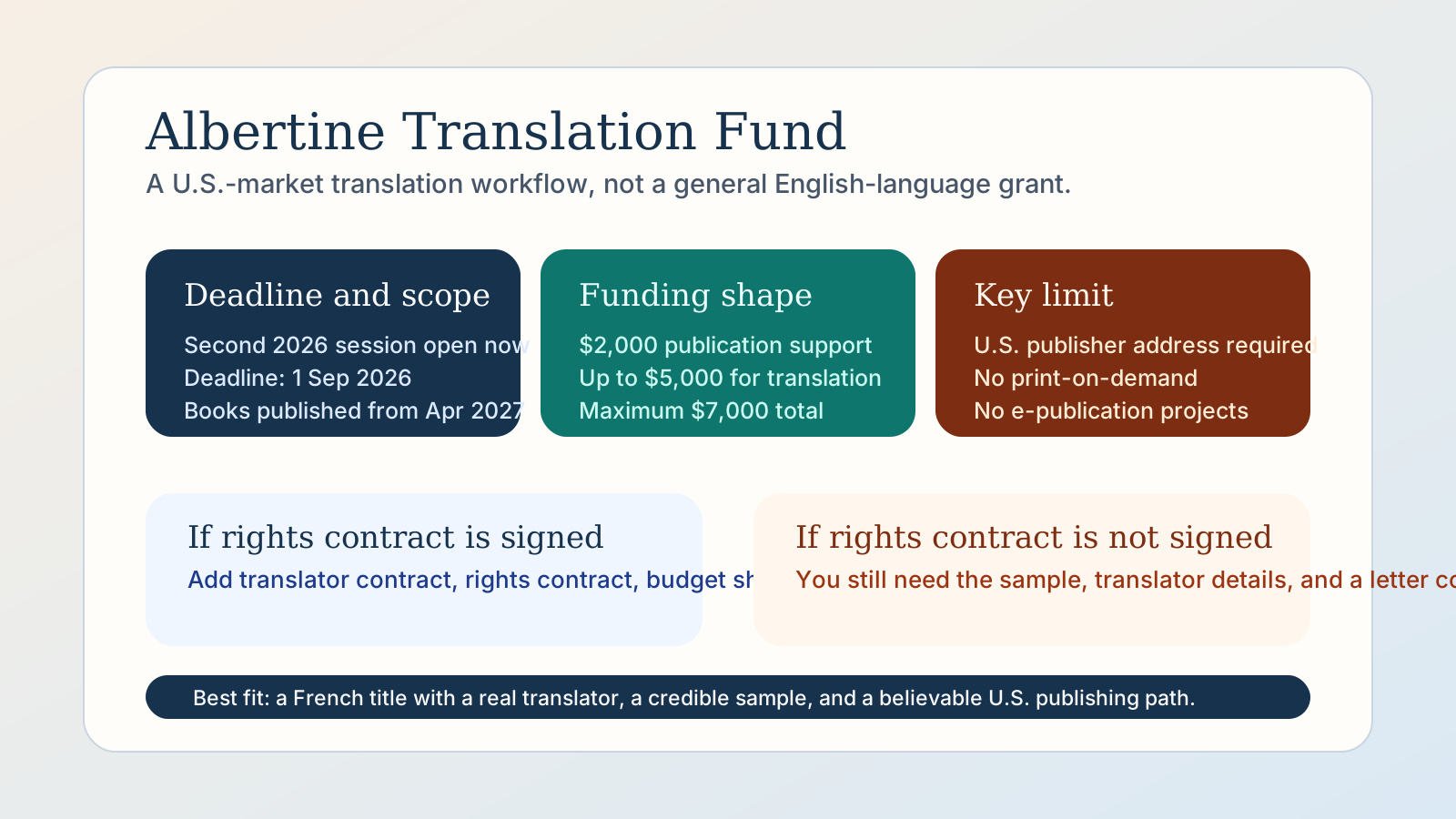
As of Tuesday, August 18, 2026, the Villa Albertine overview page and the Albertine Foundation program page both show the second 2026 Albertine Translation Fund session as live, with applications due by Tuesday, September 1, 2026. For Rex readers, the useful question is not whether French books deserve translation support. It is whether a specific French book already has enough U.S.-market evidence behind it to make this fund worth filing now.
That is the real filter in this program. Albertine says the fund supports English translations of works first published in France and that selected books receive $2,000 toward publication costs plus up to $5,000 covering 50 percent of translation costs, for a maximum of $7,000 per project. That sounds straightforward. It is not casual money. The application rules force the publisher, translator, and rights side to show that the project is already moving toward the American market in a concrete way.
The most unusual feature is that some projects can apply before the U.S. deal is fully signed
Many translation-support programs wait until the rights and publishing contract are fully settled. Albertine leaves a narrower opening. The program page says titles without a U.S. publisher may still be eligible, and Villa Albertine says the French publisher then has one year to secure an American publishing contract for the English translation.
That exception matters, but it should not be read loosely. A book without a U.S. publisher is not automatically ready. The same guidelines still require a serious packet: English and French excerpts, translator information, and proof that the English-language rights are actually available. In practice, the grant can tolerate an incomplete U.S. deal. It does not tolerate a speculative project with no real route into the American market.
Who can apply, and why the U.S. address rule does more work than it first appears to
Albertine says translators, French publishers, U.S. publishers, agents, and authors may apply. But the same page also says the English-language publisher must have a U.S. address to receive the grant, and it says publishers based solely in places such as the UK, Canada, or India are not eligible to receive the funding.
That matters because this is not a general English-language translation fund. It is a U.S.-entry program. If a rights holder already has Commonwealth or broader English plans in motion, those do not substitute for an American publishing path. The practical question is blunt: who is the U.S. publishing home for this translation, or who is close enough to becoming that home within the next year?
The materials list tells you what stage the project really needs to be in
The guidelines page splits applications into two tracks. If the American publisher already has a fully executed acquisition-of-rights contract, the packet must include the translator sample, the matching French excerpt, the translator biography, the translator-publisher contract, the acquisition-of-rights contract, a provisional budget sheet, and two physical copies plus a full PDF of the original French book.
If the rights deal is not yet fully executed, Albertine still requires most of the same editorial material and replaces the rights contract with a copyright letter confirming that English-language rights are available. That is the useful operational lesson. The program is flexible about deal stage, but not about project seriousness. A team still needs a named translator, a credible sample, and a clean rights position before the application has much value.
One caution matters here. The guidelines page still contains an older calendar block referring to a closed first-session call and a later announcement cycle. The live timing should be anchored instead to the current Villa Albertine and Albertine Foundation program pages, which both show the second 2026 session open through September 1, 2026. The packet requirements on the guidelines page are still useful. The date block on that page is not the best current source for the live deadline.
This is best used as a translation-and-rights readiness test, not just a funding chase
Albertine says it prioritizes titles published in France within the past 10 years, while allowing room for one overlooked classic in a cycle. It also excludes print-on-demand and e-publication projects and limits support to unpublished translations. Those boundaries matter because they keep the program tied to a fairly traditional book-publication workflow.
For publishers and rights holders, the clean use of this fund is as a readiness test:
- Check the market lane. The target must be a real U.S. publication path, not a vague English-language ambition.
- Confirm the project stage. The translation sample, translator identity, and source-book materials should already exist.
- Clarify the rights posture. Either the acquisition contract is signed, or the rights holder can document that the English rights are available.
- Keep the budget honest. The fund supports publication costs and part of translation cost. It is not a catch-all export subsidy.
- Use the deadline for sequencing. If the packet is still missing the translator, the U.S. publisher, or the source-book materials, the problem is probably upstream workflow, not grant luck.
For related Rex guidance, see our CNL French translation export grant guide, our Institut francais rights-transfer guide, and our translation contracts baseline guide. If you need help turning a French-language rights opportunity into a cleaner U.S. translation plan, contact Rex Publishing.
The honest takeaway on August 18, 2026 is simple. Albertine's second-session fund is most useful when a French book already has a serious translator, a real sample, and a believable route into the U.S. market before the September 1, 2026 deadline. If those pieces are still soft, the grant is not the problem. The workflow is.