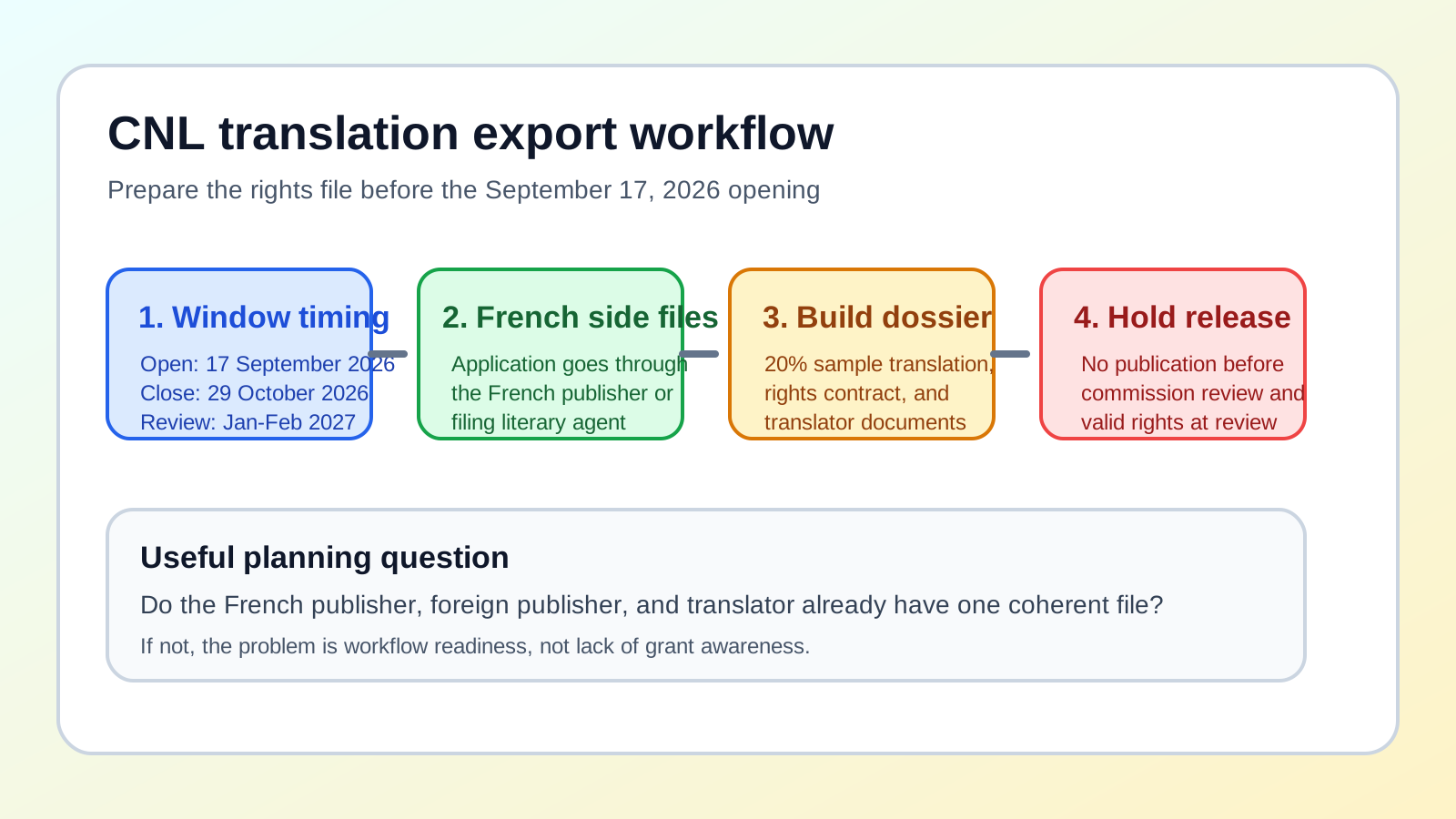
The useful fact for rights teams on Thursday, August 13, 2026 is that the Centre national du livre page for grants supporting translation of French works into foreign languages already lists the next filing window: September 17 to October 29, 2026, with review in January or February 2027. That means the workflow pressure is not on launch day. It is on whether the rights file, translator contract, and sample translation are ready before the portal opens.
This is a practical export-support route, not a general celebration of French books abroad. CNL says the application is filed by the French publisher that transferred rights to the foreign publisher. For Rex readers, that routing point matters more than the headline aid rate because it decides who actually owns the application, who gathers the documents, and where a stalled file will usually break.
The filing route starts with the French publisher, not the foreign edition alone
CNL's page says the request must be deposited by the structure established in France, and that the subsidy is later paid to the French publisher or literary agent that filed the request, which then passes it on to the foreign publisher. CNL also says each foreign publisher may request up to ten grants per session and per commission through one or more French publishers.
That makes this a coordinated rights workflow rather than a standalone foreign-publisher application. A foreign publisher may be doing the commercial planning for the translated edition, but the French-side rights holder is central to the filing path. If those roles are fuzzy, the project is not really ready even when everybody likes the title.
The practical gate is dossier readiness, not only eligibility
CNL says the dossier must include the foreign publisher's profile, detailed distribution information, the complete original text, a sample translation representing 20 percent of the work capped at 20 pages, the matching excerpt from the original, and the relevant contracts. The same page says the applicant must also provide a translator contract, translator CV, and translator bibliography.
That should change how teams schedule the work. This is not a grant you rescue with a thin rights memo a few days before the deadline. If the sample translation is weak, if the translator contract is not in shape, or if the distribution plan for the foreign edition is vague, the file is not just incomplete. It is under-evidenced on the exact points the commission says it examines.
Direct translation and rights validity are non-negotiable mechanics
The CNL page says eligible projects must be translated directly from French or another language of France, not through a relay translation. It also says the work must still be covered by a valid rights-transfer contract at the time of commission review and that the translated edition must not be published before review.
Those three points do a lot of operational work. They tell publishers not to rush a book into print before the grant decision, not to treat an expiring rights agreement as an administrative detail, and not to assume an indirect translation route can be fixed later. If any of those conditions are unstable, the project belongs in repair mode before it belongs in the portal.
The money is real, but the workflow matters more than the headline rate
According to the formal SUB 10 regulation PDF, the grant is calculated from translation costs capped at 38,000 euros. The rules say the normal support rate is 40 percent or 60 percent, the minimum subsidy is 500 euros, and the rate may rise to 80 percent by decision of the CNL president to support the international reach of French culture.
Those figures matter, but they are not the first planning question. The more important question is whether the translation budget, translator pay, and commercial risk logic are already defensible. CNL's own criteria include the quality of the translation sample, the editorial policy of the foreign publisher, the general economics of the project, and the translator's remuneration in local practice. A messy budget usually signals a messy file.
What to do before September 17, 2026
- Confirm who will file. This route runs through the French publisher established in France, not through a loose cross-border email chain.
- Lock the rights paperwork early. The rights-transfer agreement needs to stay valid through review in January or February 2027.
- Commission the sample translation now. A 20 percent extract is substantial enough that waiting for the window to open is late.
- Check the publishing calendar. The translated edition cannot be published before commission review, so release timing has to match the grant path.
- Keep this separate from other French support routes. Do not collapse CNL's French-publisher-filed translation subsidy into Institut francais PAP or the Albertine translation fund.
For related Rex coverage, see our Institut francais PAP guide, our Literature Ireland grant guide, and our translation contracts baseline guide. If you need help turning rights transfers, translation planning, and grant timing into a more workable export workflow, contact Rex Publishing.
The honest takeaway on August 13, 2026 is that the next CNL window is already actionable even though it has not opened yet. The teams most likely to benefit are not the ones waiting for September 17. They are the ones using the next five weeks to make sure the French publisher, foreign publisher, and translator can submit one coherent file on day one.