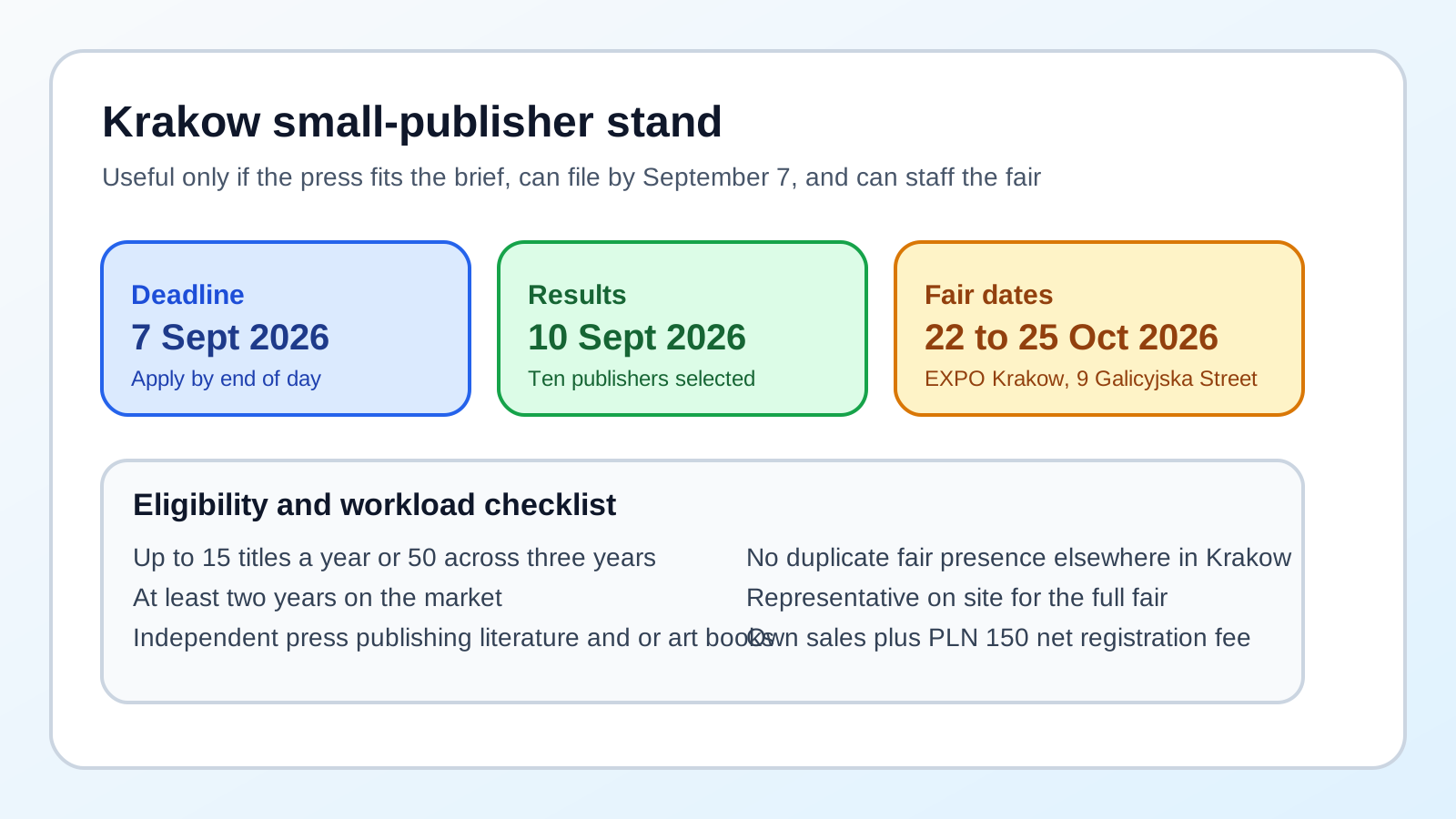
As of Monday, August 31, 2026, Instytut Książki still has a live September 7, 2026 call for ten small publishers to join a collective stand at the 29th International Book Fair in Krakow, which the fair site lists for October 22 to 25, 2026 at EXPO Kraków, 9 Galicyjska Street. For independent presses, that is useful only if the application is treated as an operational decision now, not as a feel-good signal about literary culture.
The Book Institute and Polish Chamber of Books are explicit about the purpose. The stand is for smaller publishers that cannot economically present their offer at their own fair stand. That makes the offer practical, but also narrow. A publisher either fits the brief and can document it, or it does not.
The eligibility test is tighter than a generic small-press label
The Book Institute's call says applicants must be microenterprises that publish up to 15 titles a year or no more than 50 titles across the last three years. They must also have been on the market for at least two years, operate as independent presses publishing literature and or art books, and not present the same publishing offer elsewhere at the Krakow fair.
That last condition matters. This is not a discount route for publishers that already have another Krakow presence. It is a targeted access lane for presses that would otherwise struggle to show up at all.
Because the current date is August 31, 2026, the deadline is no longer abstract. If a press still needs to work out whether it qualifies, the useful move is to check the title count, independence status, and fair-presence conflict now before spending time on promotional language.
Selection is competitive, and the scoring logic is visible
The call says only ten publishers will be admitted. Applications are scored on a 50-point scale across three buckets: publishing potential, the literary or artistic value of the list, and awards or nominations received in the two years before the call.
That is useful because it keeps the piece from turning into vague encouragement. A press is not being asked only whether it wants to be in Krakow. It is being asked to make a short, document-backed case for why its list is serious enough to deserve one of a limited number of places.
The scoring criteria also suggest where weak applications fail. A publisher that cannot explain the shape of its programme, its recent output, and the distinction of the books it wants to present is probably not ready, even if the fair itself sounds attractive.
Accepted publishers still inherit real fair work
The Book Institute's page is clear that acceptance does not hand the whole fair burden back to the organiser. Selected publishers must keep a representative at the stand throughout the event, run their own sales, promote their participation in cooperation with the organisers, and pay a PLN 150 net fair registration fee.
That fee should not be misread as the total cost of participating in Krakow. It is only the registration fee named in the call. Travel, staffing time, stock handling, payment logistics, and any wider commercial preparation still belong to the publisher.
That is why the collective stand is best read as a lower-barrier access route, not as a friction-free one. If a press cannot spare a representative for the full fair or cannot handle direct sales, the application may still be strategically wrong even if it is technically eligible.
The surrounding fair timeline makes the September window real
The fair's organisational information page shows the wider exhibitor workflow is active now, with a September 4, 2026 participation-registration deadline in the exhibitor calendar and later September milestones for co-exhibitors, programme entries, and stand-planning materials. That does not govern the small-publisher call directly, but it does confirm that this is part of a live late-summer planning cycle, not an orphaned announcement.
For applicants, the useful reading is simple. The small-publisher window closes on September 7, 2026, results are promised on September 10, 2026, and the fair itself opens on October 22, 2026. The distance between those dates is short enough that presses should assume any accepted slot turns immediately into staffing, stock, and messaging work.
What a small publisher should check before applying
- Verify the microenterprise threshold exactly. Count titles against the call's annual and three-year limits before drafting anything else.
- Confirm that the list fits the content brief. The call is for independent presses publishing literature and or art books.
- Check for fair-presence conflicts. The same publishing offer cannot already be appearing at another Krakow stand.
- Prepare the packet like an operator. The required materials include a justification, programme and awards information, a proposed publication list, and a declaration on titles issued in the last two years.
- Be honest about staffing and sales. Acceptance creates work on the floor, not just visibility in the catalogue.
For adjacent Rex coverage, see our Krakow Rights' Zone planning guide, our Leipzig exhibitor planning guide, and our Books from Poland scouting toolkit guide. If you need help turning a fair appearance into a cleaner rights, catalogue, or distribution plan, contact Rex Publishing.
The practical takeaway on Monday, August 31, 2026 is narrow by design. Krakow's small-publisher collective stand is worth pursuing only if a press can prove it qualifies, can submit a credible packet before September 7, 2026, and is ready to handle the real workload that follows acceptance.