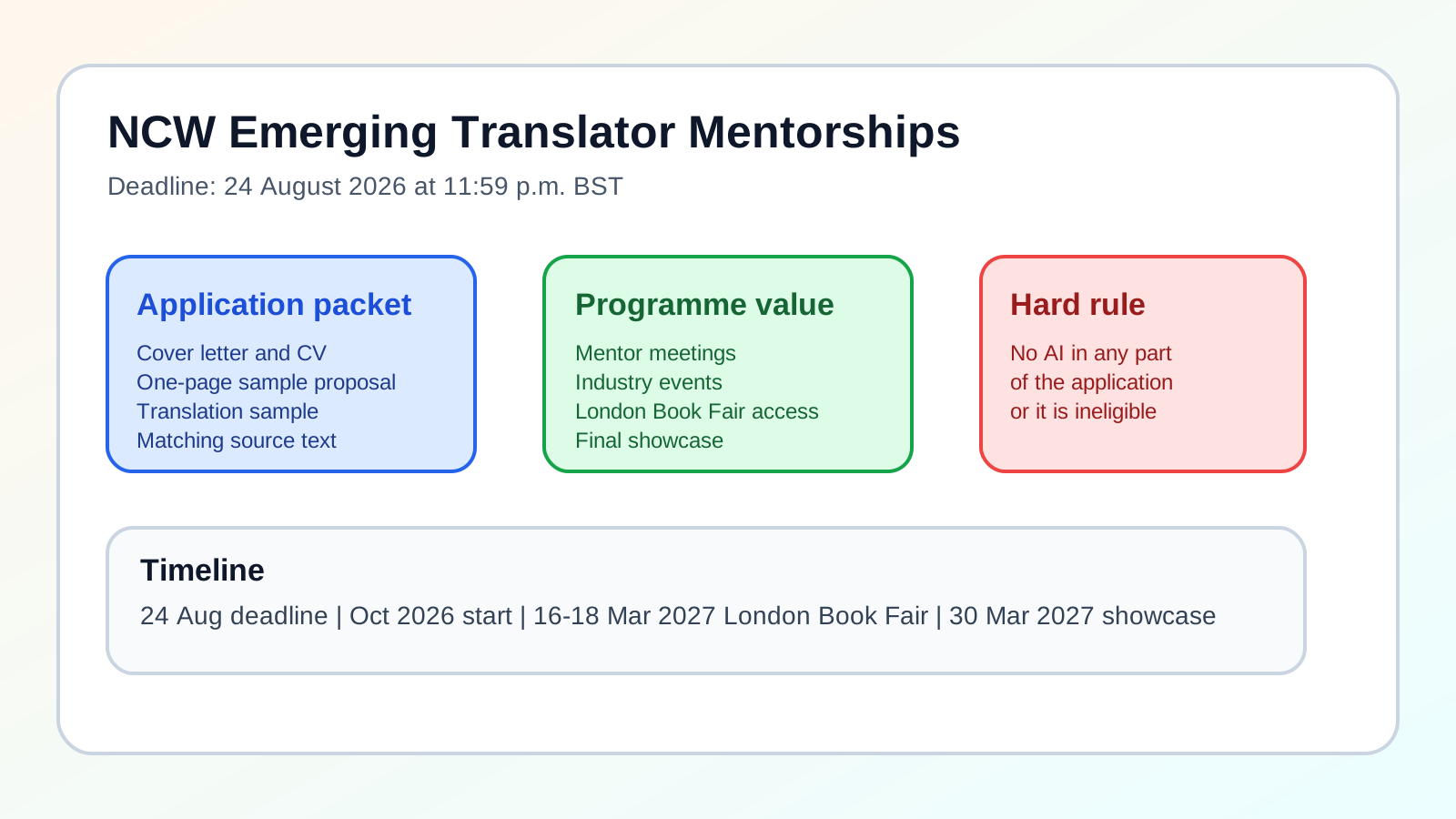
As of Tuesday, August 18, 2026, National Centre for Writing's official application page still shows the 2026/27 Emerging Translator Mentorships open through 11:59 p.m. BST on Monday, August 24, 2026. The useful question for Rex readers is not whether the programme sounds prestigious. It is whether an applicant can already assemble the three things the page makes unavoidable: a credible sample book proposal, a strong translation sample, and a clear argument for why the text belongs in the English-language market.
That framing matters because NCW is not offering a vague creative-development opportunity. The programme is built for literary translators into English, and the application page is explicit that assessment turns on translation strength, proposal quality, and the mentor's fit for the applicant's project. If those pieces are still fuzzy on August 18, the deadline is closer than it looks.
This is a market-facing mentorship, not just a craft programme
NCW's main mentorship page says the scheme was founded in 2010 and is designed to develop new cohorts of literary translators into English, especially for literatures that remain under-represented in English translation. The same page says mentors advise on deadlines, finances, contracts, and professional practice, and also advocate for mentees with publishers looking for literary translators.
That makes the opportunity more operational than many deadline posts suggest. A translator is not simply being asked to submit a nice excerpt. The application asks for a one-page proposal that shows understanding of the text, the author, the source culture, and the likely target readership in English. In other words, NCW wants evidence that the translator can think about publishing context as well as language.
The current round is broad, but not identical across every strand
The official 2026/27 application page lists nine strands: Danish, Dutch, Italian, Korean, Norwegian, Polish, Swiss German, Literature from Taiwan, and Languages of India. That is a strong spread for translators and rights-facing teams tracking where English-language development support is actually available now.
But the strands do not all work the same way. NCW states that the Languages of India mentorship is open only to India-based translators who have not received a Charles Wallace India Trust grant in the last five years, and that participants in that strand must attend London Book Fair. That is exactly the kind of detail that gets flattened in second-hand coverage and then creates preventable application mistakes.
The support is real, but so is the workload
NCW says mentees receive an GBP 800 stipend, plus GBP 300 to support London Book Fair attendance if they attend. The Dutch, Norwegian, Literature from Taiwan, and Languages of India strands also include extra travel support for London Book Fair and in-person meetings. The mentoring period runs from October 2026 through March 2027 and includes at least four mentor meetings, online industry events, the Assembly of Literary Translators, London Book Fair from March 16 to March 18, 2027, and a final showcase on March 30, 2027.
That package is useful precisely because it connects craft to industry exposure. It also means applicants should treat this as a real multi-month commitment rather than a one-off award. The timeline on the application page is busy enough that an applicant who cannot protect time for deadlines, revision, and event participation should be honest about that before filing.
One rule is unusually clear: do not use AI in the application
NCW's application instructions say applicants must not use artificial intelligence for any part of the application, including the sample translation, and that using AI tools will make the application ineligible. That is not a soft preference. It is an eligibility rule on the live application page.
For translators and publishing teams, that should remove any temptation to treat this as a workflow where drafting help can be cleaned up later. The cleaner reading is that NCW wants to evaluate the applicant's own judgment, language handling, and proposal thinking without machine-generated intervention.
What applicants should do before August 24, 2026
- Stress-test the proposal, not just the sample. NCW is asking why this text should be translated and what its appeal is in English now.
- Check the strand-specific rules. Do not assume every language option follows the same travel or residency conditions.
- Plan around the programme calendar. October 2026 through March 2027 is a real commitment, not a symbolic line on a CV.
- Keep the application fully human-authored. The live page says AI use makes the application ineligible.
For related Rex coverage, see our CEATL guide for emerging literary translators, our translation contracts baseline guide, and our Frankfurt workflow coverage. If you need help turning a translation sample, proposal logic, and rights context into a cleaner publishing plan, contact Rex Publishing.
The honest takeaway on August 18, 2026 is simple. NCW's deadline is close, the opportunity is real, and the application is only as strong as the translator's ability to present a book, a sample, and a market case that already hold together under professional scrutiny.