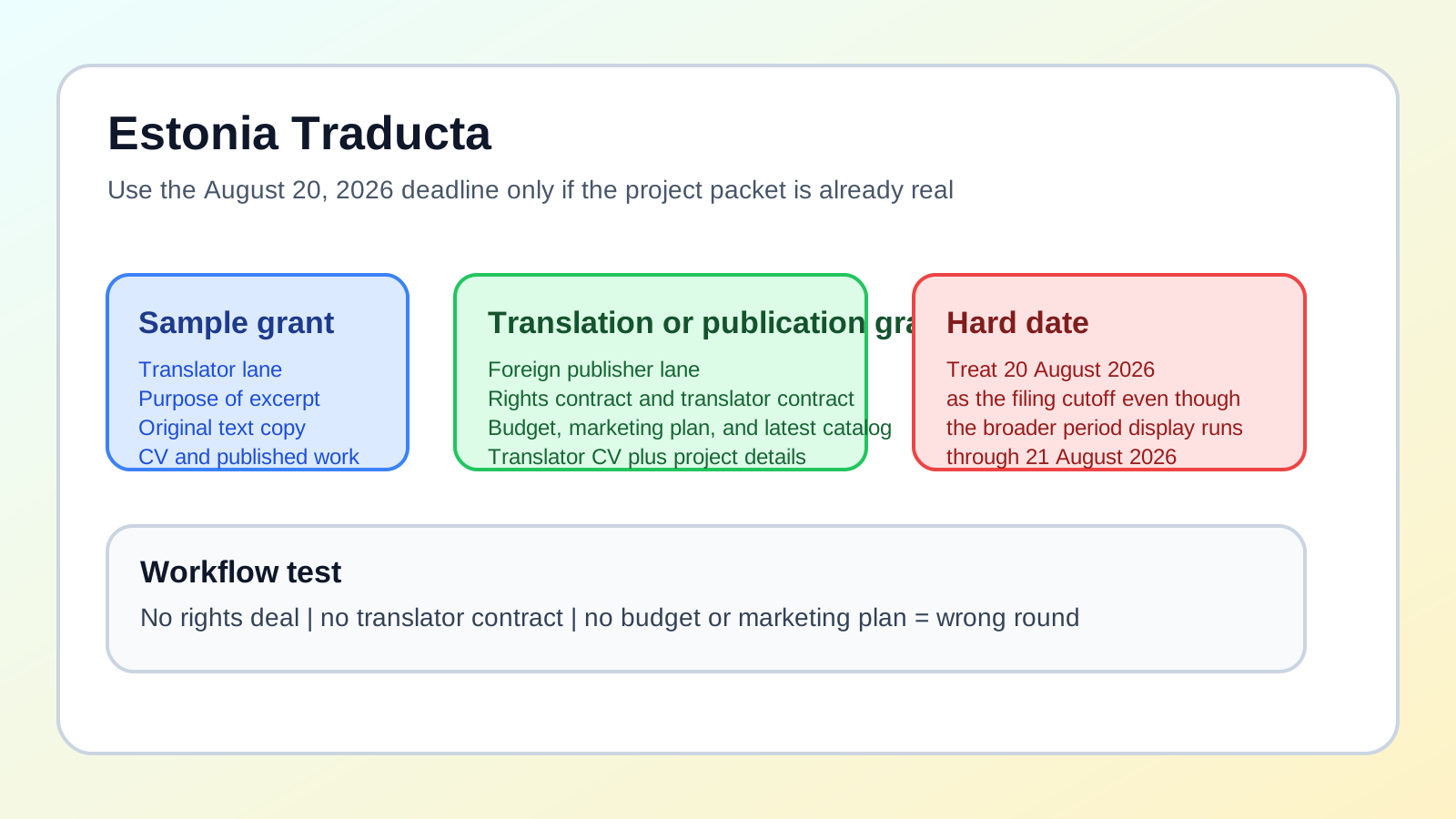
As of Tuesday, August 18, 2026, the Cultural Endowment of Estonia's Traducta application page still says the programme supports translating Estonian authors' works into foreign languages and publishing them outside Estonia, and it still lists August 20, 2026 as the next application deadline. For Rex readers, the real question is not whether the grant exists. It is whether a foreign publisher or translator is already far enough into the workflow to file cleanly in the next two days.
The answer depends on which lane you are actually in. Traducta is not one generic support bucket. The same page says publishers outside Estonia can apply for translation grants and publication grants, while translators can apply for sample translation grants. That split matters because the paperwork, timing pressure, and level of project readiness are not the same.
The headline date is August 20, even though the broader window runs through August 21
Traducta's page shows the current submission period as May 21, 2026 through August 21, 2026. But the detailed requirements section on the same live page lists the actual filing deadlines as February 20, May 20, August 20, and November 20.
That difference should not be hand-waved away. For an article published on August 18, 2026, the safest reading is to anchor the workflow to the explicit August 20 deadline and treat the broader period display as surrounding calendar context, not as permission to file on the twenty-first.
Foreign publishers need a rights-and-production packet, not just interest in Estonian books
This is where Traducta becomes useful operationally. The official requirements say a translation grant application must include the contract between the publisher and the copyright holder, the contract between the publisher and the translator, a translation excerpt of up to 20 pages, the translator's CV and list of published translations, the volume of the work, the publishing budget, the book marketing plan, and the publisher's latest catalogue.
That is an unusually clear signal about readiness. A foreign publisher cannot treat Traducta as speculative money for a title that still has fuzzy rights status, no translator agreement, and no route to market. The programme is built for a project that already looks like a real translated edition in motion.
The publication grant lane is similarly concrete. The same page says it requires the rights contract, the translator contract, the translator's CV and list of published translations, the work's volume, the publishing budget, the marketing plan, and the publisher's latest catalogue. In other words, even where no excerpt is required, the project still has to look commercially and editorially prepared.
The sample-translation lane is lighter, but it is not casual
Traducta's sample translation grant is the cleaner entry point for translators who are not yet attached to a fully assembled publishing deal. The page says that application must include the purpose of using the translation excerpt, a copy of the original, and the translator's CV with a list of published translations. It also says the programme supports translating up to 30 pages.
That does not make the lane minor. It makes it different. A sample grant is most useful when the translator is still building a pitch path, rights conversation, or publisher outreach case. It is much less useful to pretend this lane solves the publisher-side contract and marketing work that the full translation and publication grants require.
The rights-facing context confirms that this is an export workflow
The Estonian Children's Literature Centre's rights page on Traducta points foreign-rights users to the same programme and describes it as a grant route for translators and foreign publishers translating Estonian literature and publishing it abroad. That matters because it confirms the outward-facing purpose without turning the story into promotion for specific titles or publishers.
For Rex readers, that keeps the lesson narrow and practical. Traducta is worth attention when a team is already moving from rights interest toward a real foreign-language edition. It is not a substitute for choosing the right book, negotiating rights, hiring the translator, or deciding how the edition will actually reach readers.
What to do before August 20, 2026
- Use the correct lane. Keep sample translation support separate from the publisher-facing translation and publication grants.
- Treat August 20 as the operative deadline. Do not rely on the broader submission-period display to buy an extra day.
- Stress-test the paperwork now. If the rights contract, translator contract, budget, marketing plan, or catalogue are still missing, the project may not be ready for this round.
- Keep the workflow honest. A sample excerpt can support outreach, but it does not replace the full project packet required for publisher applications.
For related Rex guidance, see our Literature Ireland filing-window guide, our Dutch translation grants guide, and our translation contracts baseline guide. If you need help turning rights status, translator selection, and grant timing into a cleaner cross-border publishing plan, contact Rex Publishing.
The useful takeaway on August 18, 2026 is blunt. Estonia's Traducta programme is still live for this round, but it only helps teams that are already working with real contracts, real documents, and a real publication path before the August 20 cutoff lands.