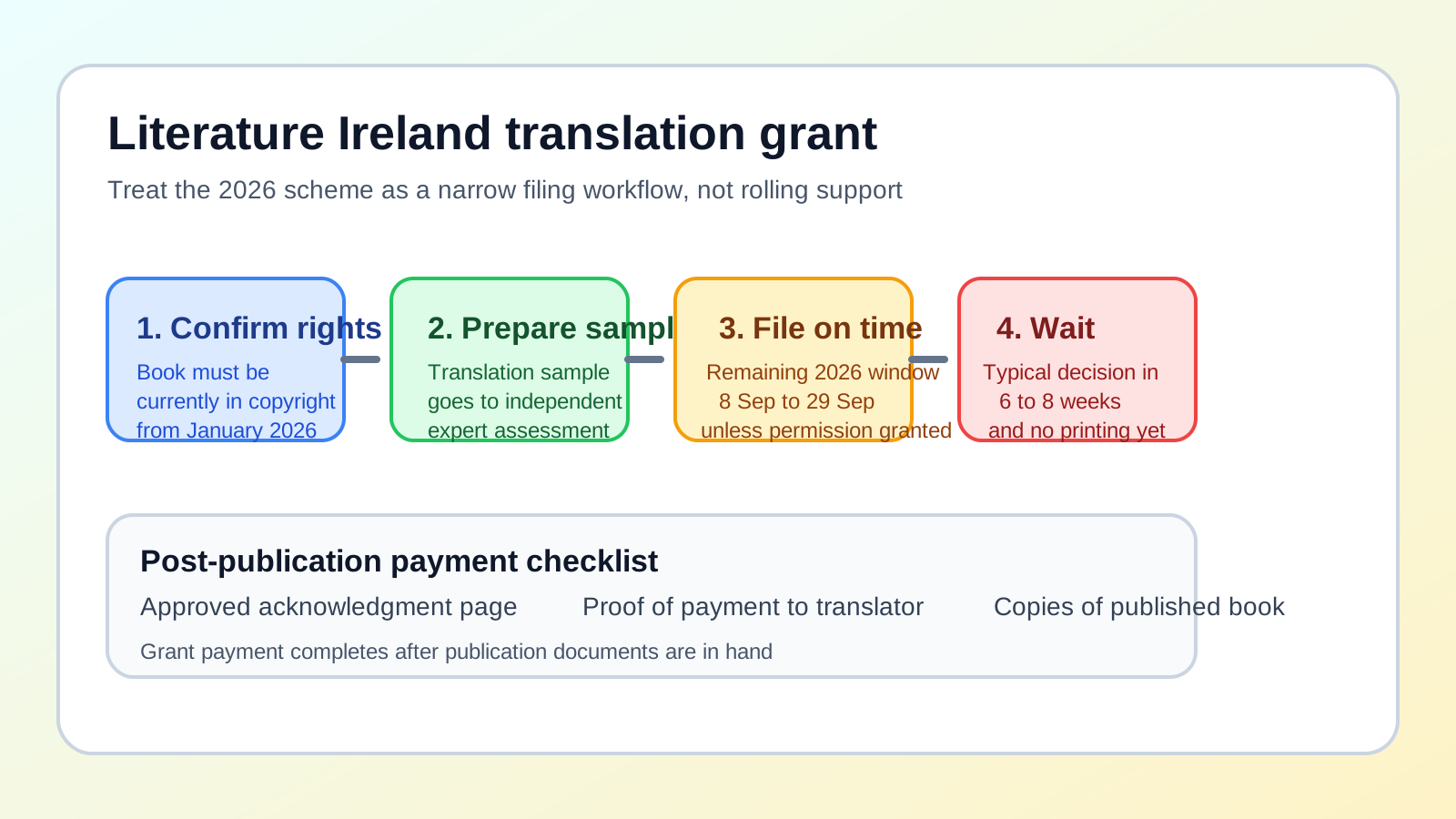
Literature Ireland's live translation-grant page is useful because it removes one common rights-team fantasy: the idea that a translation subsidy can be handled whenever the rest of the deal is ready. As of Friday, July 17, 2026, the page says the 2026 application windows were January 27 to February 17, May 12 to May 27, and September 8 to September 29, 2026, and it adds that only applications made during the relevant window will be accepted unless prior permission is granted.
That means the first two windows are already gone. For anyone licensing Irish literature into another language this summer, the only live 2026 opportunity left is the September 8 to September 29, 2026 window.
For Rex readers, that makes this less of a culture-funding story and more of a workflow story. The real question is not whether the programme exists. The real question is whether the rights deal, translation sample, and publication schedule are ready to survive a system that is explicit about timing, review, and post-publication proof.
The January 2026 rule change matters before you budget the project
The same page now says that from January 2026, eligibility for the Literature Ireland Translation Grant is limited to literary works that are currently in copyright. It also says support for public-domain translation projects will be very limited because of pressure on the current translation-grant budget.
That is a meaningful filter. It does not mean every in-copyright book is a fit, and it does not mean public-domain work is impossible in every case. It does mean teams should stop treating this programme as a broad catch-all for any Irish work they happen to like. Before anyone worries about filing mechanics, they should confirm that the book is an eligible in-copyright project and that the rights path is commercially real.
Why the translation sample is not a minor attachment
Literature Ireland says all applicants must submit a translation sample for independent expert assessment. That is one of the most useful signals on the page because it tells publishers what kind of workflow this really is. This is not a form you complete after a rights deal and a rough budget. It is a programme that expects editorial seriousness early.
For smaller houses, that usually means four things have to happen in order:
- Choose the book early enough to act. A late scouting decision leaves too little room for sample preparation.
- Identify the translator before the filing window opens. A weak or rushed sample is the wrong place to improvise.
- Build the sample into the deal timeline. The sample is part of the application, not a downstream extra.
- Treat the September window as a real deadline. If the packet is not ready by early September, 2026 may be over for this programme.
The page also says decisions are usually communicated within six to eight weeks. That timeline is not long by institutional-funding standards, but it is long enough to break a hurried publication plan.
The no-printing rule is where rushed schedules fail
Literature Ireland states that the book must not go to print before a decision has been made on the translation-grant application. That line matters more than any abstract enthusiasm about supporting Irish literature abroad.
If a foreign publisher is already pushing catalog copy, locking a seasonal print slot, or promising a publication month before the decision window is complete, the grant stops being a helpful support tool and starts becoming a scheduling risk. The September 2026 filing window plus a typical six-to-eight-week decision cycle points many projects toward a late-2026 or early-2027 publication reality, not an impulsive autumn launch.
That does not make the programme slow. It makes it honest. The practical lesson is that the grant should shape the production schedule at the start, not be squeezed into a timetable that was built without it.
Payment finishes after publication, not at the award stage
The page is also clear about what happens after a successful award. Literature Ireland says publishers must provide an approved acknowledgment page, proof of payment to the translator, and copies of the published work before grant payment is completed.
That post-publication sequence matters because it changes how a publisher should model cash flow and internal admin. Winning the grant is not the end of the process. The publisher still has to:
- keep the acknowledgment wording compliant,
- pay the translator in a documentable way,
- deliver the required copies after publication, and
- treat grant payment as a controlled final step rather than instant reimbursement.
For lean teams, that is a useful warning. A translation grant can reduce cost pressure without removing the need for orderly contracts, documentation, and production follow-through.
This is an established export workflow, not a one-off call
Literature Ireland's Monthly Library Update archive adds helpful context. The archive says the programme has housed copies of awarded books for 30 years. That should not be read as nostalgia. It should be read as evidence that publishers are dealing with a longstanding institutional export workflow, not a temporary campaign page.
That stability is useful, but it does not remove the need for precision. The safest reading is simple: the programme is established, the current rules are specific, and the remaining 2026 opening is narrow.
What Rex readers should do now
- Work from the exact remaining 2026 filing window: September 8 to September 29, 2026.
- Confirm the book is currently in copyright before budgeting time around the grant.
- Build the translation sample early enough for serious review, not as a last-minute attachment.
- Do not put the book into print before the grant decision lands.
- Plan for the post-publication paperwork, especially acknowledgment approval and translator-payment proof.
The practical lesson is blunt. Literature Ireland's grant is most useful when a foreign publisher treats it as a narrow, document-heavy rights workflow with one remaining 2026 window, not as rolling support that can be dropped into the schedule whenever the team gets around to it.
For related Rex guidance, see our Dutch translation grants guide, our Swedish translation grants guide, and our translation contracts baseline guide. If you need help turning rights, translation, and grant timing into a cleaner cross-border publishing plan, contact Rex Publishing.