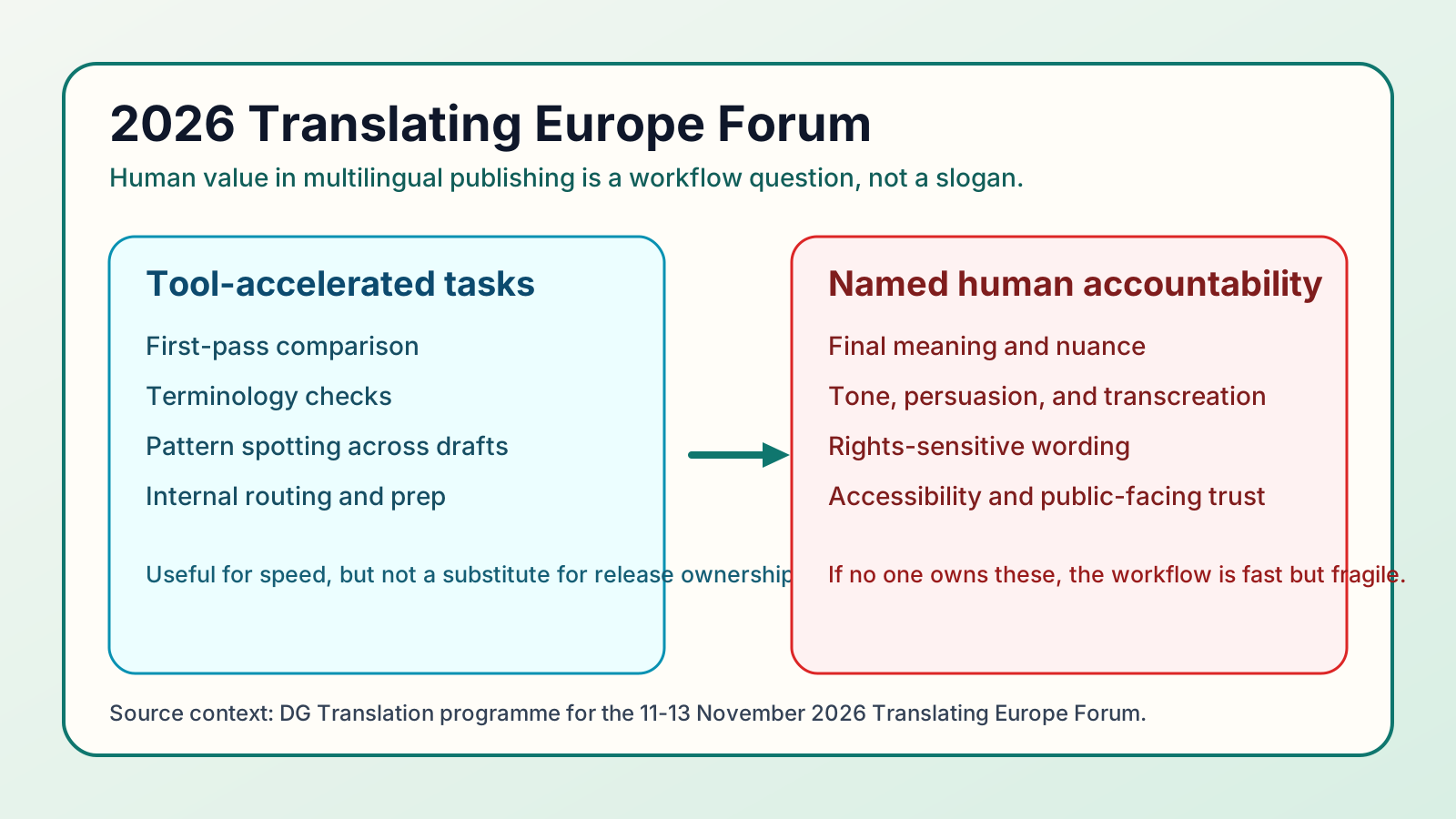
As of Thursday, September 3, 2026, the European Commission's Directorate-General for Translation says the 2026 Translating Europe Forum will run from Wednesday, November 11, 2026 at 14:00 CET through Friday, November 13, 2026 at 17:00 CET in Brussels and online, and that participation is free of charge. For Rex readers, the useful question is not whether another language-industry conference exists. It is whether your multilingual workflow still has clearly named human responsibility where meaning, tone, risk, and publication quality can go wrong.
That is what makes this programme more than a calendar item. DG Translation says the 2026 theme is "Language professionals matter: Adding value in a changing industry". The official programme turns that from a slogan into an operating question. It asks what only language professionals can do, why they still matter, how transcreation works as a hybrid practice, and where AI systems stop and humans come in.
The strongest signal is not anti-AI. It is pro-accountability.
That distinction matters. A lot of weak AI discussion in publishing collapses into two lazy positions: either tools solve everything, or human work is defended in the abstract with no workflow detail. The published TEF programme is more useful than that. Day 1 includes a keynote on what language professionals add that only they can do, followed by a panel asking where humans still make the difference and what machines do better.
For publishers, translators, and rights-facing teams, that is the right framing. The relevant issue is not whether software can accelerate a draft, terminology pass, or internal comparison. The issue is whether someone accountable still owns final meaning, factual nuance, cultural judgment, and release readiness when content is crossing languages, formats, or markets.
Day 2 is where the article becomes directly useful for publishing operations
The second day contains the sessions most relevant to multilingual book and rights work. One talk treats transcreation as a hybrid practice that brings copywriting skills into translation. That matters because many publishing teams still pretend there is a clean line between literal transfer and market-facing adaptation. There usually is not. Jacket copy, campaign language, rights pitches, and sales materials often need accuracy and persuasion at the same time.
The programme also includes an interview titled "Who is responsible? Where do AI systems stop and humans come in?" with a stated focus on what freelance language professionals contribute in terms of accountability and reliability. That is the sharpest practical question in the whole schedule. If a team cannot name the human checkpoint for a translated sample, metadata set, marketing excerpt, or accessibility-sensitive description, the workflow is not mature just because a tool ran quickly.
What Rex readers should actually take from the programme
- Keep a named human owner for final meaning. Machine assistance may speed up drafting or comparison, but multilingual publication still needs a person who can defend the final wording.
- Treat hybrid tasks as real work, not overflow. Transcreation, rights pitching, audience-facing copy, and adaptation notes often need skills from both translation and editorial or marketing practice.
- Build training around judgment, not just tool use. The programme's session on job-ready talent points toward a practical gap: teams need people who can review, contextualize, and escalate, not just operate interfaces.
- Separate efficiency from delegation. A faster workflow is useful only when the accountability chain survives it.
DG Translation's broader forum overview describes TEF as its flagship three-day annual conference and says participants include freelancers, language service providers, institutional teams, students, academics, and language-technology companies. That mix matters because it makes the event less useful as a pure publishing-market signal and more useful as a workflow signal. It shows where translation professionals think the responsibility lines are moving.
That is why the event can still matter to book publishing even though it is not a rights fair or a trade-book conference. When books move across languages and formats, the same underlying problems keep showing up: unclear review ownership, overconfident automation, weak handoffs between translator and editor, and vague responsibility for public-facing text. A programme built around human value and AI boundaries is relevant precisely because those failures are operational, not ideological.
For related Rex coverage, see our ALTA mentorship guide, our EU AI-content transparency guide, and our translation contracts baseline guide. If you need help deciding which multilingual tasks can be accelerated, which still need accountable human review, and how to document that boundary before publication, contact Rex Publishing.
The practical takeaway on Thursday, September 3, 2026 is simple. The 2026 Translating Europe Forum is worth attention only if it helps your team answer one uncomfortable but necessary question before November: when AI enters a multilingual workflow, who still owns the meaning when it is time to publish?