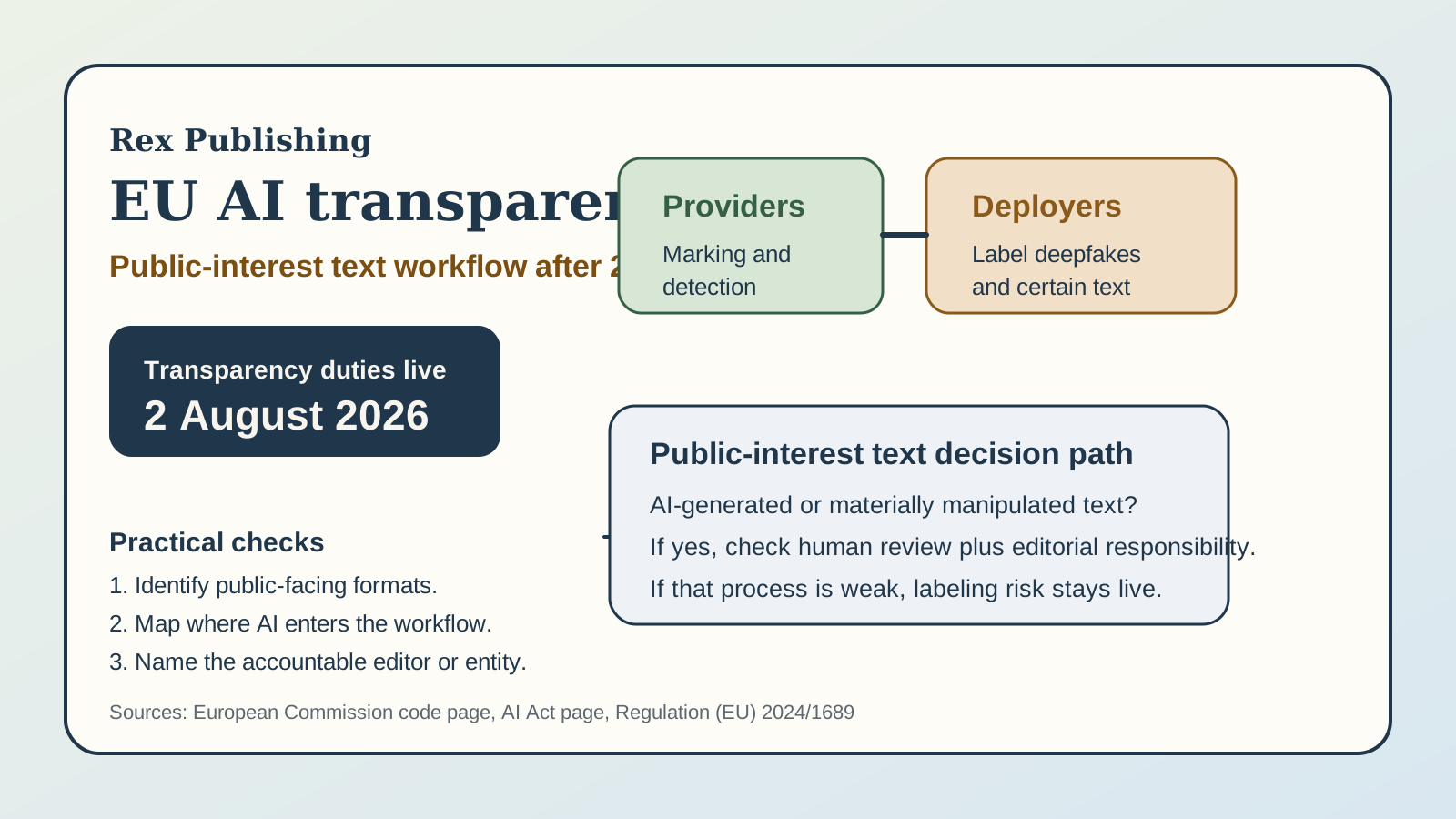
The useful question for editors, translators, rights teams, and publishing operations leads on Thursday, August 13, 2026 is not whether the European Union has "new AI rules." It does. The useful question is how your real publishing workflow now handles AI-generated public-interest text after the AI Act's transparency duties became applicable on August 2, 2026.
On its official Code of Practice on Transparency of AI-generated Content page, the European Commission says the obligations under Article 50 are applicable from August 2, 2026. The same page says those obligations concern the marking and detection of AI-generated content and the labelling of deepfakes and certain AI-generated publications. It also makes two points that publishing teams should keep together rather than treat separately: the code is a voluntary practical framework, but the underlying transparency duties are legal obligations.
That distinction matters because some teams will overread the code as if it were the law itself, while others will dismiss it because it is voluntary. The cleaner reading is operational. The AI Act is the legal baseline. The code is the Commission-backed workflow tool that shows providers and deployers one way to demonstrate compliance.
Start with the provider-deployer split before you argue about labels
The Commission's code page says the final code has two sections: Section 1 for providers and Section 2 for deployers. The provider side is about marking and detection of AI-generated and manipulated content. The deployer side is about labelling deepfakes and AI-generated and manipulated text.
That split is more useful than the generic claim that "AI content must be labeled." Publishing teams often act as deployers in the workflow they actually control, even when the underlying model comes from somebody else. So the first job is not to debate policy in the abstract. It is to ask which party is building the model-side marking capability and which party is making the publication decision on the public-facing text.
If a newsroom, author-services team, or publishing business is using a generative AI system to produce or materially manipulate text that it then publishes for readers, the practical pressure is usually on the deployer side. That is where the labeling question gets real.
The public-interest text category is narrower than "all AI writing" and broader than many teams assume
The Commission's AI Act overview page says providers of generative AI have to ensure AI-generated content is identifiable and that certain AI-generated content should be clearly and visibly labelled, including text published with the purpose of informing the public on matters of public interest. The code page uses nearly the same frame when it says deployers must label AI-generated or AI-manipulated text publications informing the public on matters of public interest, unless the publication has undergone human review and is subject to editorial responsibility.
That wording is narrower than "every sentence touched by AI." It does not turn internal drafting, private brainstorming, or unpublished support work into the same compliance event as a public article. But it is also broader than the comfortable assumption that only politics desks or hard-news outlets need to care.
For publishing businesses, the category can easily touch public explainers, compliance notes, market analysis, educational posts, trade guidance, and other text meant to inform readers. The safest mistake is not panic. It is pretending the category is too narrow to matter and never mapping which of your formats may actually fall inside it.
Human review and editorial responsibility are the real workflow hinge
The Commission's code page says AI-generated or AI-manipulated public-interest text is in scope unless the publication has undergone human review and is subject to editorial responsibility. The AI Act itself says essentially the same thing. In recital language and in Regulation (EU) 2024/1689, the text points to an exception where AI-generated content has undergone human review or editorial control and where a natural or legal person holds editorial responsibility for publication.
The operational point is that this is not a magic phrase you paste into policy. It is a workflow threshold. If a team wants to rely on human review and editorial responsibility rather than a public label, it should be able to show that a real editor or accountable organization reviewed the publishable text, exercised actual control over what went live, and owns the publication decision.
That means superficial cleanup after a machine draft is a weak place to build certainty. A stronger process names the responsible editor, defines what review means, and separates assistive AI use from text that is effectively being published as generated or materially manipulated output.
What publishing teams should check now
- List the public-facing formats that may count as public-interest text. Blog explainers, market commentary, educational newsletters, and compliance guides should be reviewed format by format.
- Mark where generative AI enters the workflow. Drafting, summarising, restructuring, translation support, and headline generation create different risk and review questions.
- Decide where you are acting as deployer. The practical labeling duty sits with the party using the AI system in publication practice, not with an abstract "AI ecosystem."
- Define the review threshold before publish day. If you plan to rely on human review plus editorial responsibility, make that a documented process rather than an assumption.
- Keep the code and the law in the right order. The code is a Commission-backed compliance framework; it does not replace the AI Act or broader legal advice.
For related Rex coverage, see our pre-applicability EU AI Act text-labeling guide and our IFRRO AI licensing and rights-management guide. If your team needs help turning AI-era editorial rules into a workflow people can actually follow, contact Rex Publishing.
The honest takeaway on August 13, 2026 is not that the Commission's transparency code created a brand-new law last week. It is that the law is already live, and the code is now most useful as a practical test of whether your publishing operation can explain who is responsible for the text, when labeling applies, and what counts as real editorial control.