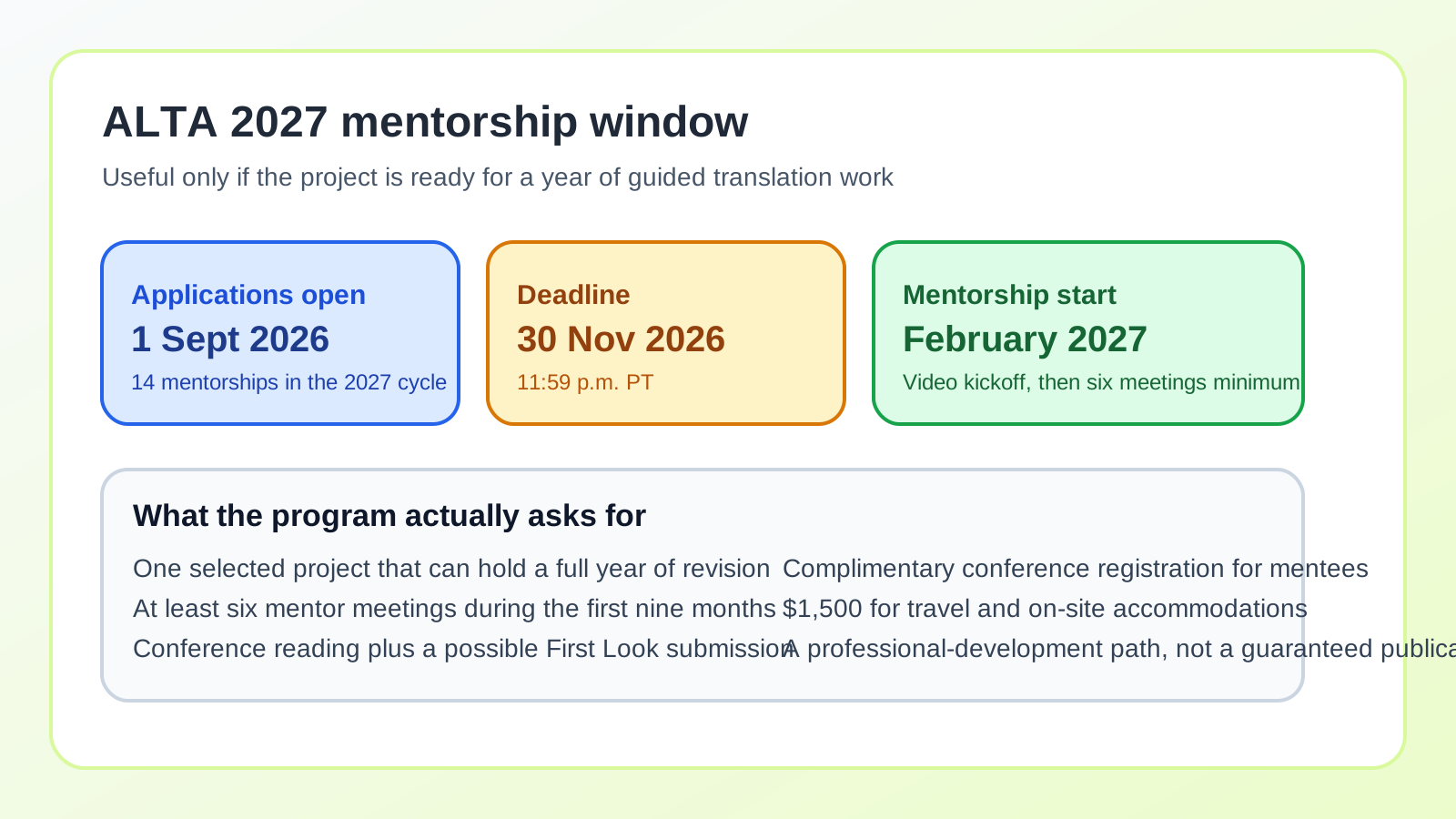
As of Wednesday, September 2, 2026, the American Literary Translators Association's September 1 application notice says submissions are open for the 2027 Emerging Translator Mentorship Program through November 30, 2026 at 11:59 p.m. PT. For Rex readers, the useful question is not whether the programme looks prestigious. It is whether an emerging translator already has a book-length project, a sample, and a working relationship plan strong enough to hold up through a full year of mentor review.
That framing matters because ALTA is explicit about the structure. The programme pairs an emerging translator with an experienced translator on a project chosen by the applicant, begins with a cohort video meeting in February 2027, and expects at least six meetings during the first nine months. This is not a symbolic award. It is guided project development with real expectations about continuity, revision, and professional follow-through.
The opportunity is development-focused, but it still faces the publishing market
ALTA's announcement says the mentorship ends with two outward-facing steps: a reading at the annual ALTA conference and the opportunity to submit work to the First Look programme for possible publication. That does not mean publication is guaranteed. It does mean the programme is designed to move beyond private craft coaching and toward work that can be presented in a professional setting.
For translators, that is the real value. A mentorship can help sharpen the translation itself, but it can also force clarity about scope, pacing, and whether the chosen project is mature enough to sustain a year of attention. For publishers, scouts, and rights-facing readers, that matters because stronger samples and better-supported translators make later cross-border acquisition conversations easier to evaluate.
The calendar is generous only if the project is already real
The window looks broad on paper: applications opened on September 1, 2026 and close on November 30, 2026. But ALTA's standing mentorship page makes clear that the programme is not just a form submission. It is a sustained one-on-one relationship, followed by conference participation and travel support for the mentee.
If an applicant still has not chosen the project, cannot explain why that text deserves English-language attention, or does not yet have a workable sample, the extra weeks can disappear quickly. A long deadline is only useful when the underlying project is already coherent.
Fourteen mentorships is meaningful access, but not a casual shot
ALTA says 14 mentorships are available in the 2027 cycle. That is a meaningful cohort size, and it is more concrete than vague "opportunity" language often used around translator development. It still does not make the programme casual. The same announcement describes a year-long mentorship built around one selected project, which suggests applicants should treat fit and readiness as seriously as timing.
ALTA's awards page adds that mentees receive complimentary conference registration and a $1,500 stipend for travel and on-site accommodations. That support is useful, but it should be read as a way to complete the programme properly, not as the primary reason to apply.
What an applicant should check before November 30, 2026
- Choose a project that can survive a year of work. ALTA says the mentorship lasts one year and stays focused on the applicant's selected project.
- Plan for sustained contact. The live notice says the cohort starts in February 2027 and expects at least six meetings during the first nine months.
- Keep publication claims modest. The stated endpoint is a conference reading and a possible First Look submission, not a guaranteed deal.
- Treat the deadline as operational, not inspirational. If the project packet is still vague in late autumn, the strongest move may be to wait for a future cycle rather than file weakly.
For related Rex coverage, see our NCW mentorship guide, our CEATL guide for emerging literary translators, and our translation contracts baseline guide. If you need help turning a translation sample, rights context, and market logic into a cleaner publishing plan, contact Rex Publishing.
The practical takeaway on Wednesday, September 2, 2026 is simple. ALTA's 2027 mentorship window is real and useful, but it is best treated as a test of project readiness, editorial stamina, and professional discipline rather than as a prestige badge to chase at the last minute.