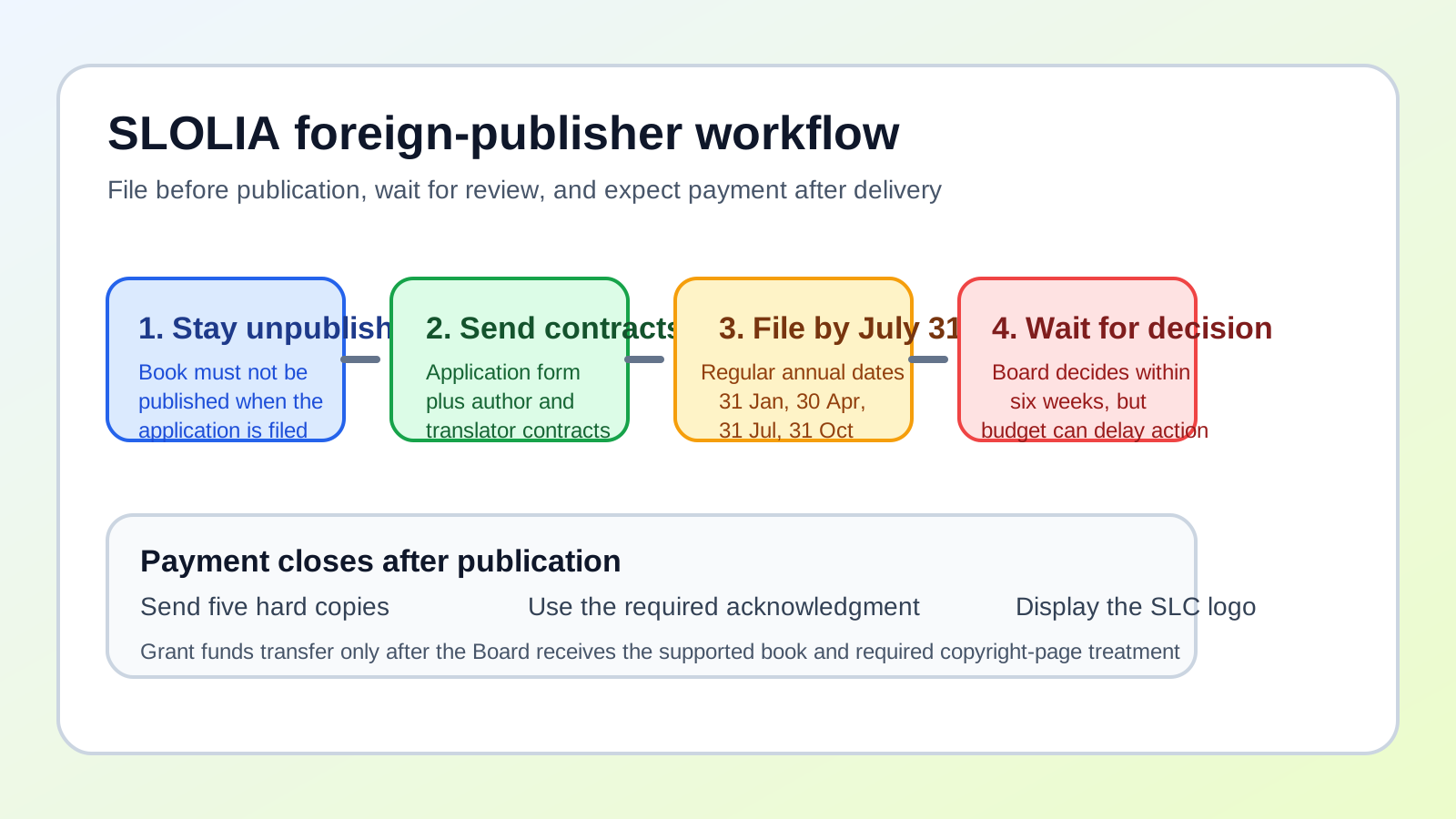
The SLOLIA page at the Slovak Literary Centre is useful because it strips away one common grant illusion: the idea that a foreign publisher can finish the translation plan first and sort out funding later. As of Friday, July 17, 2026, the Centre says SLOLIA accepts applications on January 31, April 30, July 31, and October 31, and it says support is only available for books that have not yet been published at the time of application.
That puts the immediate pressure on the July 31, 2026 deadline. For foreign publishers already holding a Slovak title under consideration, the real question is not whether SLOLIA exists. It is whether the rights deal, translator agreement, and publication schedule are disciplined enough to fit a grant system that is explicit about timing, paperwork, and post-publication proof.
The unpublished-status rule changes the whole schedule
The main SLOLIA overview page says the committee can award grants only for books that have not yet been published when the application is filed. That sounds simple, but it has real planning consequences.
If a publisher is already treating the project as a locked publication, SLOLIA may already be too late. The cleaner use case is a project that still has room for funding review before print and before the team starts acting as if the budget is settled.
That is why the July 31 deadline matters more than the existence of the programme itself. A house that wants to use SLOLIA well should decide early whether the book is serious enough to file, rather than treating the grant as something to revisit after the schedule is already fixed.
The application packet is narrow, but it is not optional admin
The Centre's grant-process page says foreign publishers should send the application form together with copies of the author's contract and the translator's contract to the SLOLIA office.
That requirement is more useful than it first appears because it tells publishers what SLOLIA assumes about readiness. This is not a casual expression-of-interest stage. The rights side and the translator side both need to be concrete enough to document.
For smaller teams, that usually means four things have to be true before filing:
- The rights position is settled enough to contract.
- The translator is chosen early enough to sign on real terms.
- The budget does not rely on automatic full coverage.
- The project timeline still leaves space for grant review.
The same page says SLOLIA grants should fully or partly cover translation costs, the author's fee, and in justified cases printing and promotional costs. The useful phrase there is "in justified cases." Foreign publishers should read printing and promotion support as conditional, not as a standard add-on.
The six-week decision window is fast enough to matter and slow enough to break a rushed launch
The Slovak Literary Centre says the SLOLIA Board will make a decision on funding within six weeks of the deadline. That is reasonably quick by public-funding standards, but it is still long enough to expose weak planning.
A publisher filing on July 31, 2026 should assume the decision may land around early or mid-September, not the next business day. If the project was already counting on a fixed August print date, the grant workflow and the production workflow are already fighting each other.
The same page also says the Board may defer a decision into the following year if the annual budget for supporting Slovak literature abroad has already been exhausted. That caveat matters. It means even a valid application can run into timing pressure if the budget year is tight.
Payment comes after publication and delivery, not at approval
This is the part many teams underestimate. The grant-process page says the approved sum is transferred only when the SLOLIA Board receives five hard copies of the supported book. The page also says the copyright page must include the prescribed acknowledgment text and display the SLC logo.
That post-publication structure changes the cash-flow picture. Approval is important, but it is not the end of the workflow. A publisher still has to:
- publish the book within two years of approval,
- keep the acknowledgment language compliant,
- deliver five hard copies to the Board, and
- treat grant payment as a final step rather than immediate reimbursement.
That is a useful discipline for rights-facing teams. SLOLIA can reduce cost pressure, but it does not remove the need for orderly contracts, realistic scheduling, and clean delivery after publication.
What Rex readers should do before July 31
- Work from the exact next deadline: July 31, 2026.
- Do not file a book that has already been published.
- Make sure both the author contract and translator contract are ready to send with the application.
- Keep printing and promotional support framed as conditional, not automatic.
- Plan around a six-week decision period and the possibility of budget-driven deferral.
- Model payment as a post-publication step that closes only after five hard copies and the required acknowledgment are in place.
The practical lesson is blunt. SLOLIA works best when a foreign publisher treats it as a contract-backed, unpublished-project workflow with a real July 31 deadline, not as flexible money that can be added after the production plan is already locked.
For related Rex guidance, see our Literature Ireland grant guide, our Dutch translation grants guide, and our translation contracts baseline guide. If you need help turning rights, translation, and grant timing into a cleaner publishing plan, contact Rex Publishing.