For book businesses shipping into Europe, the useful question on Wednesday, August 12, 2026 is not whether packaging rules are now "a thing." They are. The useful question is where the responsibility sits in your actual workflow.
The trigger is the EU's Packaging and Packaging Waste Regulation, Regulation (EU) 2025/40. The European Commission said on August 11, 2026 that the regulation's rules begin to apply on a phased basis from August 12, 2026. BISG's August 11 guide for the book industry translates that into the packaging publishing teams actually touch: shrink wrap, cartons, pallets, pallet wrap, and e-commerce packaging.
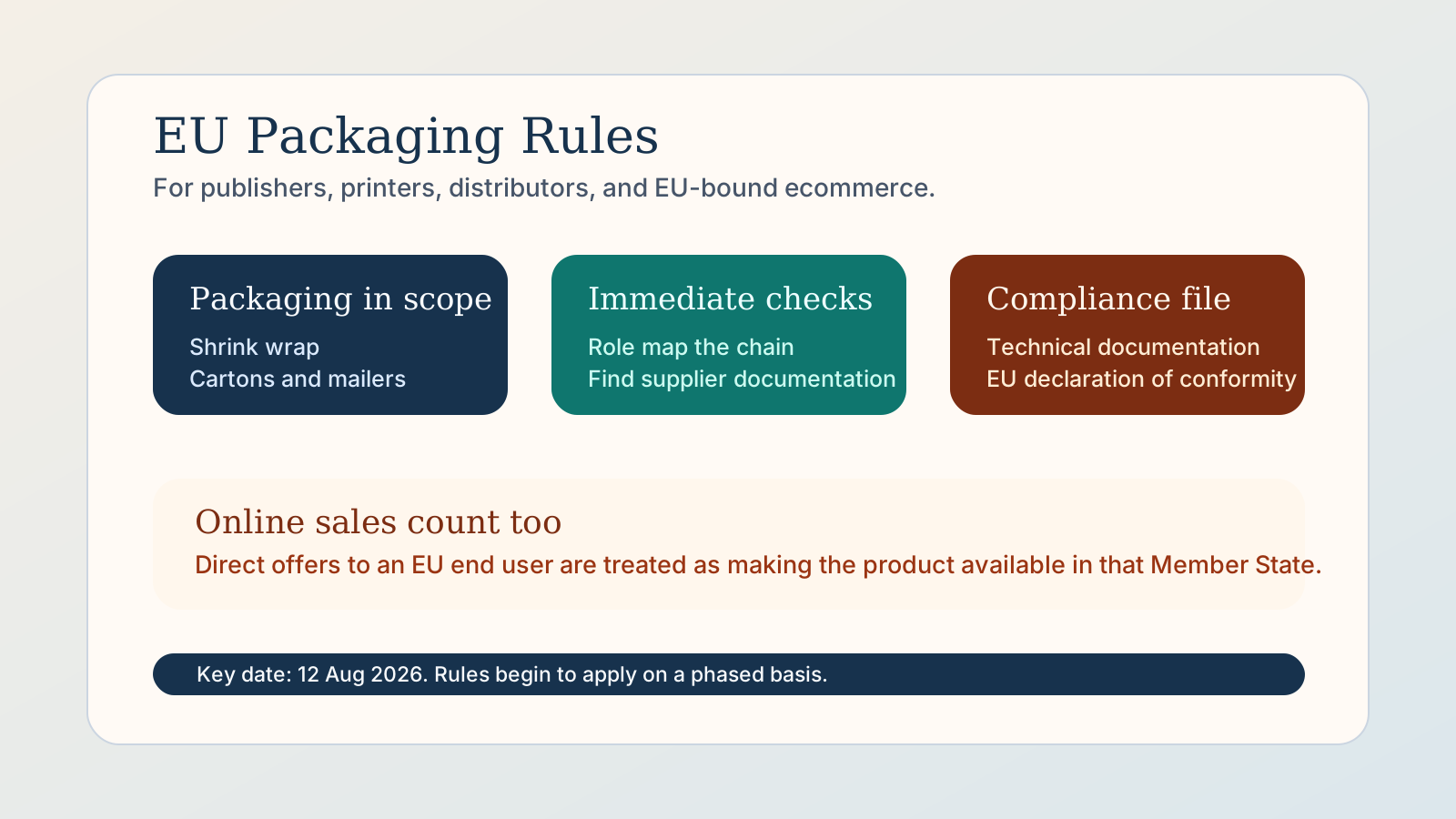
That matters because the regulation is broad. Its text says it applies to all packaging placed on the market in the Union and to all packaging waste, regardless of material. The Commission's June 10, 2026 guidance notice also makes a point many non-EU sellers will care about: in online sales, offering a product directly to an end user counts as making it available on the market in the Member State of that end user. In plain terms, selling into the EU through a web shop is not a clean escape hatch.
The first job is to map roles, not to guess at one universal obligation
The fastest way to misread this regulation is to act as if every publisher or distributor inherits the same duties in the same way on day one. The official texts do not support that.
BISG says organizations may have responsibilities even if they do not directly place goods on the EU market, and that printers, publishers, distributors, warehouses, and booksellers may need to gather or exchange packaging information. The regulation and Commission guidance point in the same direction: obligations depend on whether an organization is acting as a manufacturer, importer, distributor, filler, or direct seller to the end user in a given chain.
That means the immediate compliance question is operational, not rhetorical: which entity in your chain is first making a specific packaging unit or packaged product available in the relevant Member State, and who holds the documentation that supports it?
Documentation is where the book trade will feel this fastest
The regulation's text puts real weight on conformity paperwork. It says manufacturers must establish technical documentation, draw up a written declaration of conformity, and keep that declaration with the technical documentation at the disposal of national authorities for years after placement on the market. The Commission guidance is similarly blunt that the obligated party must carry out the conformity assessment and draft the technical documentation and EU declaration of conformity for the packaging.
That does not mean every publisher suddenly becomes a packaging engineer. It does mean publishers and distributors should stop assuming the paperwork lives somewhere else unless they know exactly where it lives. If cartons, wraps, mailers, or other packaging elements come from third-party suppliers, someone should now be able to answer basic questions about specifications, compliance evidence, and who can provide supporting documents on request.
Distributors are not outside the frame either. The regulation says distributors must act with due care, verify that required compliance steps were taken, and provide relevant information to authorities when asked. So even if another party is formally drawing up the declaration, distribution and warehousing teams still need a retrieval path for the underlying information.
Phased application matters because not every design change lands today
The Commission's August 11 news item says the rules start to apply on a phased basis, and the regulation itself pushes some design and recyclability requirements further out. That is an important brake on overstatement.
The practical takeaway is not "redesign every packaging format immediately." It is closer to this: today is the start of the live compliance era, not the day every future threshold fully matures. Teams should separate immediate role, documentation, and supplier-governance work from later-stage redesign requirements that come with their own later dates.
That distinction matters for publishing businesses because a sloppy summary can waste time. If a team treats every later recyclability milestone as if it changed on August 12, 2026, it may miss the narrower work that actually matters this week: role assignment, supplier data, declarations, and cross-border selling exposure.
What publishing teams should check this week
- Role map the chain. Identify who is acting as manufacturer, importer, distributor, warehouse operator, or direct seller for each packaging flow that reaches EU customers.
- List the packaging types you actually use. Include shrink wrap, cartons, pallet wrap, pallets, void fill, and e-commerce packaging rather than focusing only on consumer-facing outer packs.
- Locate the technical file owners. Confirm which supplier or internal team holds the technical documentation and whether it can be produced quickly if challenged.
- Check declaration-of-conformity workflow. Determine where an EU declaration of conformity is required, who drafts it, and how it is version-controlled.
- Review direct-to-EU online sales. If a web shop offers packaged products directly to end users in an EU Member State, treat that route as a real compliance lane.
- Separate today's obligations from later thresholds. Do not let long-range recyclability or design milestones blur the immediate documentation and governance work.
For adjacent Rex guidance, see our EU AI Act text-labeling guide and our EPUB accessibility and EU Accessibility Act workflow guide. If your team needs help turning cross-border rules into a workable publishing process, contact Rex Publishing.
The honest headline on August 12, 2026 is not that every packaging detail changed overnight in the same way. It is that EU packaging compliance is now a live supply-chain responsibility, and book businesses that ship into Europe need clearer role ownership, cleaner supplier documentation, and a better answer to who can prove what.