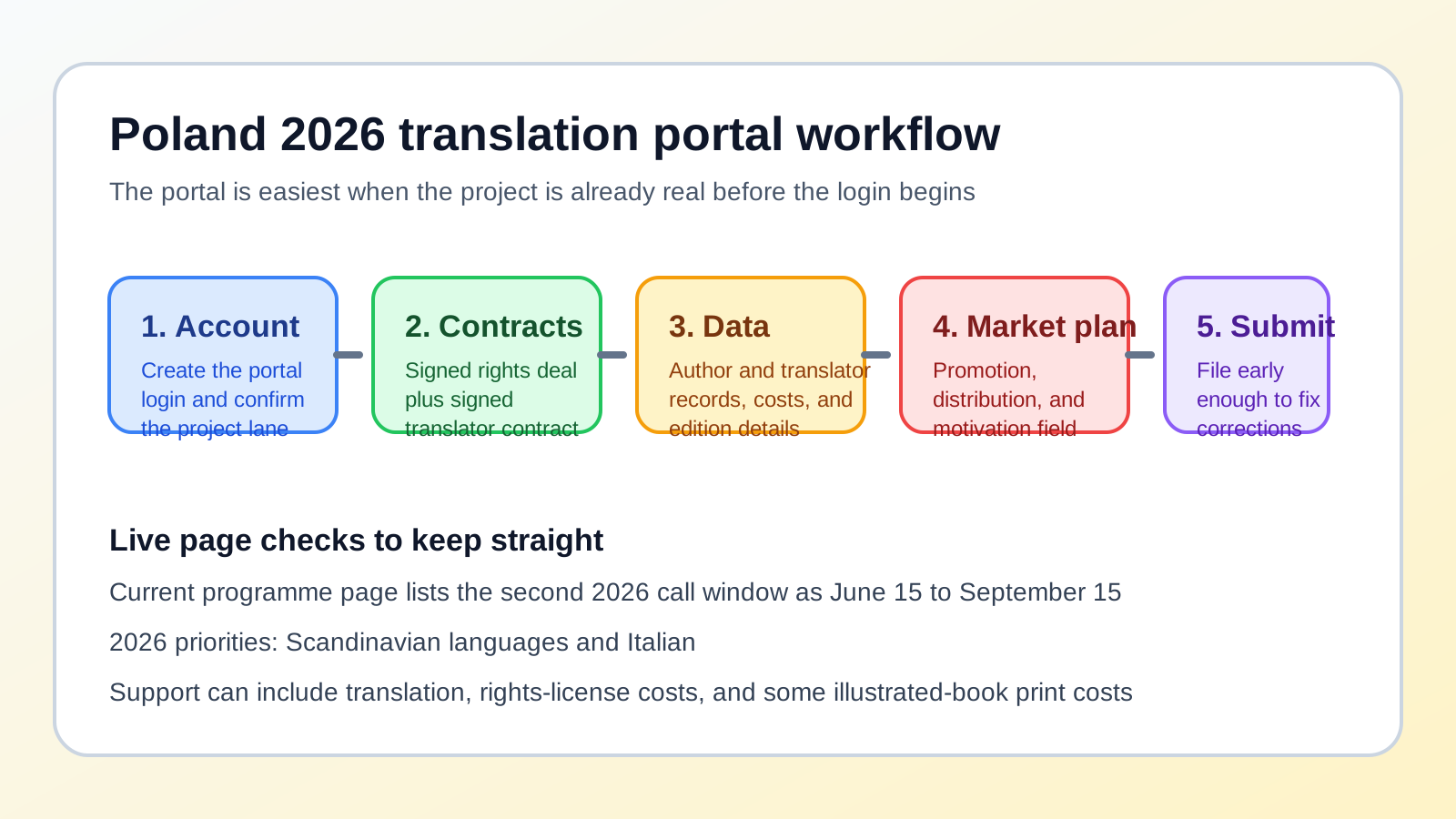
The Polish Book Institute's live ©POLAND Translation Programme page is more useful in late July 2026 than the older June call notices because it shows the current application window and the paperwork the portal expects. As of Monday, July 27, 2026, that page lists the second 2026 call window as June 15, 2026 through September 15, 2026.
For Rex readers, that shifts the question. This is no longer mainly a deadline-watch item. It is a workflow question for foreign publishers, scouts, and rights managers: can you package the rights deal, the translator, and the market plan cleanly enough to survive the portal without correction loops?
What the programme covers now
The current programme page still frames ©POLAND as outward-translation infrastructure, not as a general cultural-promotion note. It says the scheme is for foreign and Polish publishers publishing Polish books in other languages, including print, ebook, and audiobook editions distributed outside Poland.
That matters because the cost support is broader than many translation-fund headlines suggest. The programme materials say support can include:
- Translation costs for the work itself.
- Copyright-license costs tied to the rights agreement.
- Print costs for children's books, comics, graphic novels, and other richly illustrated works.
The same live page identifies Scandinavian languages and Italian as 2026 priorities. That should be read as a selection signal, not as a claim that other target languages are excluded.
The portal is better, but it is less forgiving of vague prep
The Book Institute's related Books From Poland notice about the 2026 IT system explains what changed in practical terms. Applicants now create an account, complete the application inside the portal, and can receive notifications when corrections or additional information are needed.
That is an improvement, but it also means weak preparation is easier to spot. The same notice says the form now uses an author and translator database, adds a short motivation field explaining why the publisher wants to publish the book, and asks for extra justification when the project is a reprint.
In other words, the portal does not merely collect attachments. It forces the publisher to show that the project already has editorial intent, translator clarity, and basic market logic.
What publishers should have ready before opening the form
The fastest way to turn this into avoidable back-and-forth is to treat the application as the beginning of the project. The public programme materials point the other way. Before logging in, a serious applicant should already have:
- A signed rights contract. The programme page asks for a signed contract with the copyright owner, not a half-settled rights conversation.
- A signed translator contract. The translator is not a placeholder field. The application expects a real translator arrangement.
- Publisher and title information that will survive review. The profile, catalogue material, title data, and translator details need to match the actual project.
- Cost detail that makes commercial sense. Translation, rights, and print-cost figures should line up with the signed paperwork and the edition type.
- A promotion and distribution plan. The Institute explicitly asks how the book will be promoted and distributed, which means the panel is reading for market seriousness, not only literary merit.
- A short motivation that sounds like a publisher, not a brochure. The new field is an argument for why this book belongs in that market.
That package is why the scheme works best for projects that are already real. If the rights are still drifting, the translator is not chosen, or the target-market plan is still generic, the portal will expose that quickly.
Why the new window changes the practical advice
Rex already covered the broader ©POLAND second-call funding lane in June. The more useful July update is narrower. If the live programme page now keeps the window open until September 15, 2026, the pressure point is no longer simply "file fast." It is use the extra time to tighten the package instead of filing a mess earlier.
That is especially relevant for small publishers working across languages and formats. A few additional weeks only help if they are used to clean up contracts, lock translator details, check print-cost eligibility for illustrated categories, and write a distribution plan that matches the target territory.
The older Books From Poland post is still useful for the portal mechanics, but it is not the safer place to anchor the live deadline. For deadline-sensitive decisions, the current Book Institute programme page should carry more weight than a dated news post.
The practical takeaway
The best use of Poland's 2026 translation portal is not to discover whether a project exists. It is to package a project that is already contractually and commercially coherent. The rights agreement, translator contract, cost logic, and market plan should already be strong enough that the portal simply records them.
If that foundation is in place, the programme can support a real foreign-language edition workflow across translation, rights, and in some cases print. If it is not, the new portal will mostly help the panel identify what is missing.
For related Rex guidance, see our sample-translations rights-pitch guide, our translation contracts baseline guide, and our earlier June ©POLAND call guide. If you need help tightening rights, translation, or distribution workflow before filing, contact Rex Publishing.