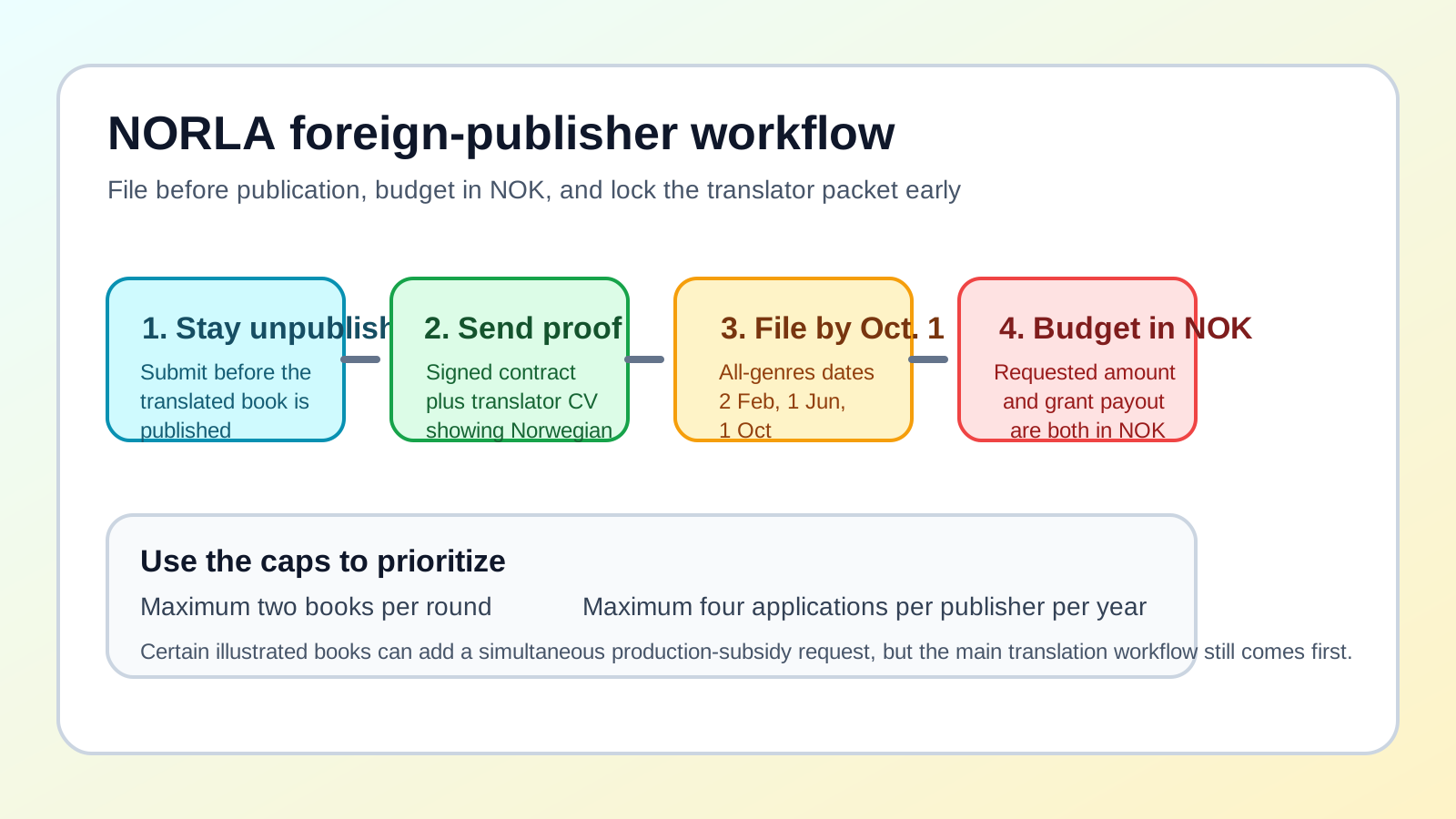
NORLA's live translation-subsidy page is useful because it strips away one common export-funding fantasy: the idea that a foreign publisher can sort out the translator and paperwork after the money plan is already in motion. As of Friday, July 17, 2026, NORLA says the all-genres deadlines are February 2, June 1, and October 1, and it says applications are considered about two weeks after the deadline.
That means the only all-genres round left in 2026 is October 1, 2026. For Rex readers, this is less a Norway-interest story than a rights-discipline story. The useful question is not whether the subsidy exists. It is whether the rights deal, translator contract, and budget are orderly enough to fit a grant system that is explicit about timing, currency, and pre-publication readiness.
The unpublished-before-filing rule should shape the whole schedule
NORLA's criteria say the text must be published in book form, but the application must be submitted before publication. That sounds straightforward, yet it changes the workflow more than many teams expect.
If a foreign publisher is already acting as if the edition is locked, the subsidy may already be too late to use well. The cleaner case is a project that still has enough room for grant review before publication decisions harden into a fixed schedule.
That is why the October 1, 2026 date matters more than the existence of the scheme itself. A house that wants to use NORLA properly should decide early whether the project is serious enough to file, instead of treating the subsidy as money to chase after the production plan is already settled.
The translator paperwork is the real readiness test
NORLA's criteria also say that all applications must include a signed contract between the rightsholder and translator, and that the translator's CV must be attached to show command of Norwegian.
That is the most useful line on the page because it reveals what NORLA assumes about project maturity. This is not a casual expression-of-interest phase. The publisher is expected to have the rights position organized enough to contract and the translator relationship concrete enough to document.
For smaller teams, that usually means four things need to be true before filing:
- The translation rights are settled early enough to support a real filing.
- The translator is chosen before the deadline, not after grant approval.
- The translator can document direct competence from Norwegian.
- The publication plan still leaves room for grant review before release.
NORLA does allow exceptions in special circumstances, including some situations where there is a lack of qualified translators from Norwegian, but the default rule is still clear: the contract and CV belong in the application packet, not in a later clean-up phase.
The new portal and NOK-only payment detail matter before you budget
The same page says NORLA's old online application is no longer in use and that applications now go through the Norwegian Arts Abroad Application Portal. It also says the requested amount must be stated in Norwegian kroner because grants are paid only in NOK.
That is not cosmetic admin. It changes how a foreign publisher should prepare the file. Teams budgeting in euros, dollars, or pounds still need an internal method for handling NOK-denominated support and the exchange-rate assumptions that sit behind it.
The practical lesson is simple: do not wait until the form is open in the browser to decide how the grant request will be translated into your internal budget. The portal change and NOK-only payout rule are both signals that the finance side should be orderly before the application is filed.
NORLA's caps are useful because they force prioritization
NORLA says its expert committees can award subsidies for up to four applications per publisher per year, and that publishers can apply for subsidies for a maximum of two books per application round.
That matters because it prevents a sloppy filing strategy. A publisher with multiple Norwegian projects cannot treat the scheme as unlimited overflow support. The safer approach is to choose the projects that are most contract-ready, most translation-ready, and most likely to stay coherent through publication.
The page also notes that certain illustrated books can be considered for production subsidies at the same time as the translation-subsidy application. That can be useful, but it should be read as a narrow additional path, not as a reason to blur the main workflow into a general promotion piece about Norwegian titles.
The broader NORLA context is export infrastructure, not title marketing
NORLA's publisher-facing subsidies overview says the goal of the translation-subsidy criteria is to increase the number of Norwegian books that are translated, published, and distributed abroad. The same overview also keeps the Sami-language rule narrow: support for translations from Sami languages is available for markets outside the Nordic region when the original carries a Norwegian ISBN.
That broader context is helpful because it shows what the subsidy is for and what it is not for. It is export infrastructure for translation and distribution. It is not a shortcut for rights clearance, and it is not evidence that any particular book is commercially validated just because support exists.
What Rex readers should do before October 1
- Work from the exact remaining all-genres deadline: October 1, 2026.
- Do not file after publication; NORLA's default rule is pre-publication submission.
- Make sure the translator contract and translator CV are ready before the application is opened.
- Budget the request in NOK, not as a vague foreign-currency estimate.
- Use the per-round and per-year caps to prioritize the most deal-ready projects.
- Keep illustrated-book production support separate and precise rather than treating it as a blanket add-on.
The practical lesson is blunt. NORLA's subsidy works best when a foreign publisher treats it as a pre-publication rights-and-translator workflow with a real October 1, 2026 deadline, not as flexible export money that can be figured out after the edition is already moving.
For related Rex guidance, see our Literature Ireland grant guide, our Dutch translation grants guide, and our translation contracts baseline guide. If you need help turning rights, translation, and grant timing into a cleaner cross-border publishing plan, contact Rex Publishing.