Rights-event preparation · Published and updated
A confirmed rights meeting and permission to enter the meeting area are different things. If you are an author, translator or small rights team heading to London’s International Rights Centre (IRC), prepare for both before building your day around the appointment.
The London Book Fair’s venue page lists March 16–18, 2027 at Excel London. Its IRC access page places the tables in the ICC Maritime Suite and sets out a verification route for scheduled visitors without an IRC badge. This guide separates that policy from Rex preparation advice; it is not an admission guarantee.
Which access route applies?
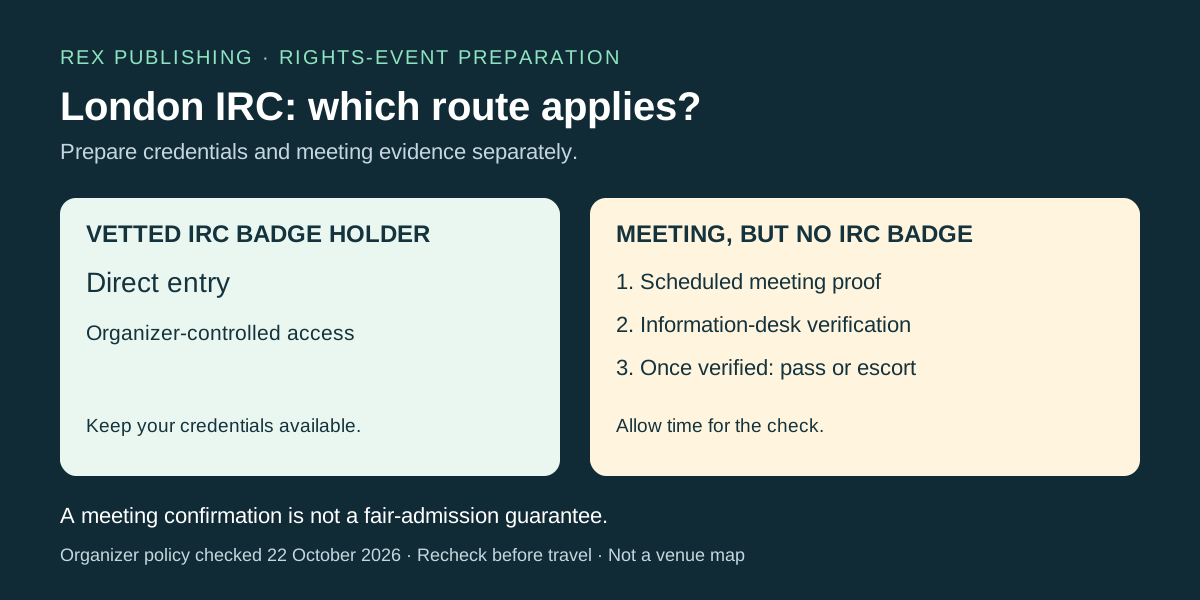
According to the organizer, vetted IRC badge holders can enter directly. For someone with a scheduled meeting but no IRC badge, the published process is to visit the information desk and show meeting proof. After verification, the organizer describes a temporary pass or an escort to the meeting. It advises arriving early for that check. Read the current IRC rules.
That route concerns an existing appointment, not a way to obtain one at the entrance. The exhibitor directory’s notice says the IRC is closed to all but pre-arranged rights meetings and that the fair does not organize or facilitate them.
Make your confirmation useful before travelling
The following is Rex’s suggested preparation record, not an organizer-mandated form or a list of accepted documents. Ask your host to resolve gaps in the appointment before you arrive.
| Preparation check | What to keep together | Why it helps |
|---|---|---|
| Appointment | Date, agreed local meeting time, host’s name and organization | Avoids relying on a vague invitation to meet sometime during the fair |
| Meeting destination | Table or meeting details confirmed by the host | Gives you a specific appointment to clarify if plans change |
| Confirmation | The correspondence confirming that appointment | Keeps the meeting evidence separate from your fair credentials |
| Contact | A way to reach the host and a backup colleague if agreed | Gives you someone to notify if verification delays the meeting |
| Status | What you have confirmed about your own credentials, and what still needs an organizer answer | Stops an unresolved access question disappearing inside a busy schedule |
Save a retrievable copy of the confirmation rather than relying on a colleague’s inbox. If an assistant arranges the meeting, check that the appointment identifies the people actually attending. These are practical precautions, not claims about what the desk will accept.
For example, “let’s catch up at London” leaves several questions open. Reply with a proposed time and ask the host to confirm the appointment and meeting details. Do not treat a general expression of interest as a completed booking.
Keep credentials and meeting evidence separate
Use two entries in your trip checklist: credentials and confirmed meeting. Tick each only when you know its status. The meeting-verification procedure does not, by itself, establish your fair-admission entitlement or what ticket you need.
This guide does not specify an accepted proof format, an information-desk position, a queue duration, prices or available tickets. Ask the organizer about unresolved access requirements before committing to travel; check its current pages again near the event. Do not infer eligibility from a colleague’s badge or table booking.
Leave room between appointments for verification and movement, without assuming a particular wait. Agree how you will notify the host if delayed. A short message to a named contact is more useful than a packed calendar with no recovery plan.
Prepare the meeting, not just the entrance
Once the appointment and access questions are settled, write down what the conversation should achieve: an introduction, a request for a sample, clarification of available rights or a follow-up decision. Choose material for that purpose instead of assuming every meeting needs a full manuscript.
Our translation-rights checklist covers the ownership and scope questions to prepare beforehand. If the conversation leads to a file request, use the separate manuscript-sharing checks before sending it. Entry to a meeting is not evidence that a proposed recipient or deal has been vetted.
The practical next step is small: confirm the appointment, collect the evidence, resolve your credential questions and name the person you will contact if plans slip. That leaves the meeting itself for the rights discussion.
Organizer pages checked October 22, 2026. No firsthand admission test was performed. Policies may change before the fair.