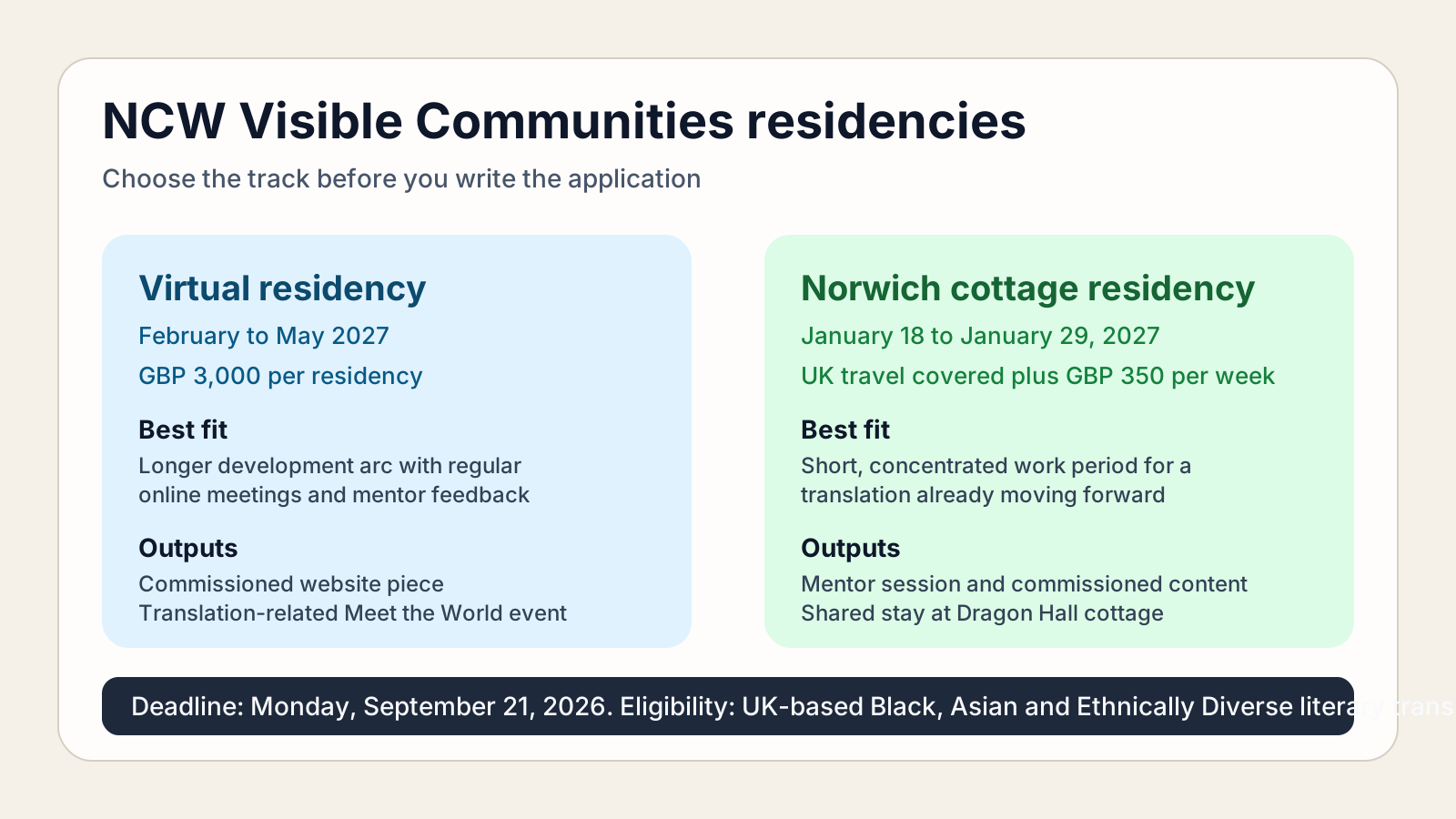
As of Monday, August 24, 2026, National Centre for Writing's live Visible Communities application page still says applications are open until Monday, September 21, 2026 for two different 2027 residency routes. One is a virtual residency running from February to May 2027. The other is a Norwich cottage residency running from Monday, January 18 to Friday, January 29, 2027. For Rex readers, the useful question is not whether the programme sounds admirable. It is whether the applicant actually fits the rules and knows which of those two tracks suits the translation work in front of them.
The call is narrow in ways that matter operationally. NCW says the residencies are for UK-based Black, Asian and Ethnically Diverse literary translators working from any language into English. That means this is not a general international translator opportunity, and it is not one programme that every eligible applicant should approach in the same way. The virtual and Norwich tracks have different calendars, different support structures, and different expected outputs.
The first filter is eligibility, not enthusiasm
NCW's main Visible Communities programme page says the project exists to diversify access routes into literary translation, strengthen links with UK diaspora communities, contribute to decolonising-translation debate, and expand the range of literature published in translation in the UK. That explains why the eligibility language is specific.
For translators, agents, and rights-facing cultural teams, the practical lesson is simple. If the applicant is not UK-based, if the work is not literary translation into English, or if the applicant does not fall within the cohort NCW names in the call, the opportunity is not a near miss. It is outside scope. That sounds obvious, but deadline coverage often blurs exactly the details that determine whether an application is viable.
The virtual residencies behave more like a public-facing development track
NCW says the virtual residencies run from February through May 2027 and pay GBP 3,000 per residency. The call also says virtual residents will write a commissioned piece for the Visible Communities section of the NCW website and curate a translation-related Meet the World event. NCW adds that residents will have regular online meetings with the other translators in residence and a mentoring session with an experienced literary translator.
That package is useful when the translator needs time, structure, and a public-facing frame for the work. It is less like a silent retreat and more like a supported development track that expects the resident to produce outward-facing editorial and event work as well as translation progress. If an applicant wants protected solitary translation time above all else, this route may not be the cleanest fit even if the fee is attractive.
The Norwich cottage residencies are shorter, quieter, and built around concentrated work time
The cottage residencies are more compressed. NCW says they run from January 18 to January 29, 2027, include UK travel to Norwich, and provide a GBP 350 per week stipend. The call says the translators in residence will share the cottage at Dragon Hall and will have the opportunity to meet other writers and translators in Norwich, hold a Zoom meeting with a mentor, and produce commissioned content for NCW's digital platforms.
That makes the Norwich option a different kind of decision. The stipend is lower than the virtual residency fee, but the residency offers concentrated on-site time much earlier in the calendar. For some translators, especially those who need a short burst of focused work on a manuscript already underway, that may be more useful than a multi-month virtual structure. The point is not that one track is better. It is that the two tracks solve different workflow problems.
Both tracks still ask for a real translation case, not vague interest
The application instructions on the call page make that clear. NCW asks virtual-residency applicants for a cover letter explaining what they will bring to the programme, the issues they want to explore during the residency, ideas for a translation-related Meet the World event, and their relevant experience. It also asks for a CV and a translation sample of up to 2,000 words.
The cottage-residency track asks for a description of the manuscript or project, a covering letter explaining why the applicant wants to take part and what support they want from the mentor, plus the same CV and translation sample. That is why this should be read as a practical translation-workflow opportunity rather than a symbolic diversity announcement. The application still depends on the applicant having a real project, a usable sample, and a clear sense of what the residency time is for.
What to do before Monday, September 21, 2026
- Check scope first. This is for UK-based Black, Asian and Ethnically Diverse literary translators working into English, not a global open call.
- Choose the track before drafting the application. The virtual residency and the Norwich cottage residency have different timelines, support, and outputs.
- Prepare the sample as a professional test. Up to 2,000 words is enough to show whether the translation is ready for scrutiny.
- Be concrete about the project. NCW is asking what the residency will help you do, not whether literary translation matters in the abstract.
- Match the route to the workflow need. Use the virtual track for longer development and public-facing programming, or the Norwich track for concentrated early-2027 work time.
For related Rex coverage, see our NCW emerging translator mentorship guide, our CEATL guide for emerging literary translators, and our translation contracts baseline guide. If you need help turning a translation sample, rights context, and target-market plan into a cleaner cross-border publishing workflow, contact Rex Publishing.
The honest takeaway on August 24, 2026 is that NCW's Visible Communities residencies are live and potentially valuable, but only when applicants stop treating them as one generic opportunity. The real decision is whether the applicant fits the exact UK-based brief and whether the virtual or Norwich track better matches the translation work that needs to move next.