Translation-event preparation · Published and updated
ALTA49 is underway, so the useful question is no longer when to catch an early offer. It is what you can still confirm, what you want to learn and how you will use the conversations afterward. This guide is for literary translators and small publishing teams already attending or considering an onsite visit—not a report from the conference floor.
Check access before making plans
The American Literary Translators Association’s registration page lists October 21–24, 2026 in Portland, with sessions October 22–24. It describes an in-person conference without virtual sessions or recordings. Online registration closed October 7; the page separately describes onsite tickets. That published policy is not a check of remaining availability. Confirm your options with ALTA before committing to travel.
ALTA says registration excludes meals, travel and lodging, requires card payment and is nonrefundable and nontransferable. Check the current terms for your situation rather than assuming a colleague’s arrangements apply to you.
The venue page identifies the Portland Marriott Downtown Waterfront and gives September 30 as the room-block cutoff. Do not build a new budget around that expired offer. Current rooms and rates have not been verified for this guide.
Likewise, Wayfinders, ALTA’s pairing programme for first-time and experienced participants, lists an October 7 signup deadline. A surviving form link does not establish late eligibility. Neither that programme nor a hotel booking should be treated as conference registration.
Give the remaining time a specific purpose
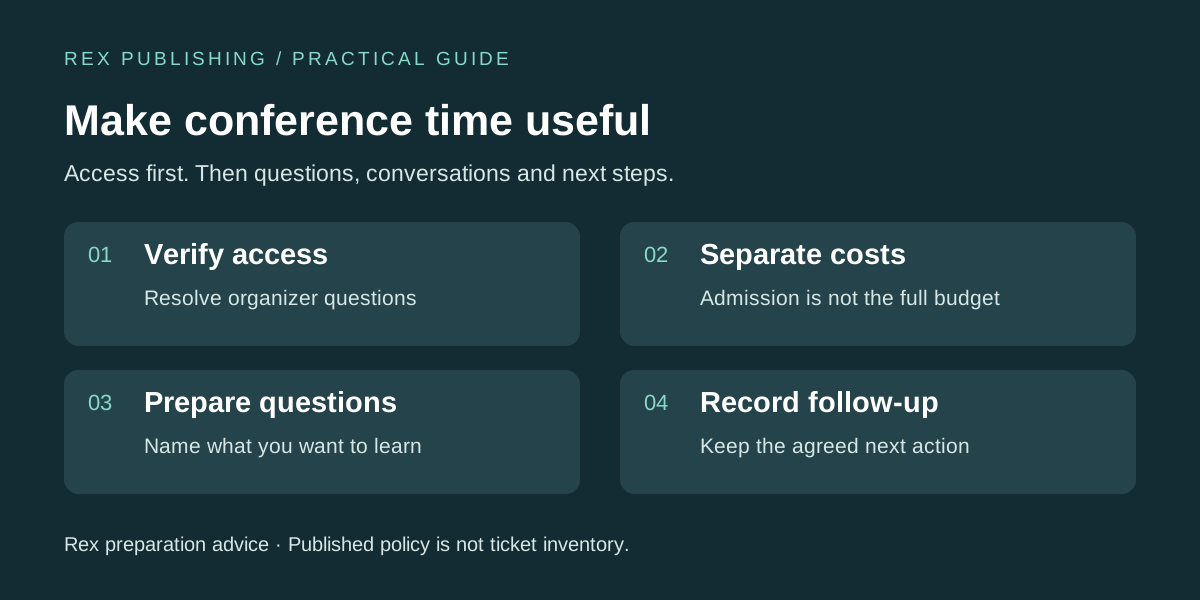
The following checklist is Rex’s suggested preparation workflow, not an ALTA requirement or a promise of introductions, pitching access or business results.
| Decision | Write down | Useful stopping point |
|---|---|---|
| Access | Your registration status and any unanswered organizer question | You know what remains unconfirmed before spending more |
| Budget | Admission, transport, accommodation and meals as separate lines | You can see the full cost, not just a ticket figure |
| Learning | Two translation or project questions you want to investigate | You can choose relevant conversations rather than collect contacts indiscriminately |
| Follow-up | A named next action for each substantive conversation | You leave with a manageable record, not an unexplained list of names |
If you are already registered, start with learning and follow-up. Pick a question that fits your current work: how to discuss a sample with an editor, how to describe a difficult stylistic choice, or what information a potential collaborator needs before considering a project. A focused question gives the other person something concrete to answer.
If you are still deciding whether to attend, separate professional fit from urgency. Would a short visit answer a defined question? Which costs would you incur even if no useful introduction resulted? If access remains unresolved or the trip only works with an expired discount, pause the spending decision. An event being underway is not, by itself, a reason to go.
Prepare a project introduction, not a document dump
For an informal introduction, try three sentences: the language pair you work in, the kind of text or project you are developing, and the question you hope to discuss. This is a conversation aid, not an official submission format.
For example: “I translate Polish nonfiction into English. I am developing a sample of a narrative-history project. I would value advice on presenting its voice to an English-language editor.” Adapt the example to your actual work; do not imply that rights are available or cleared unless you know that they are.
Keep a short project note ready, but ask whether someone wants material before sending it. Our translation-rights checklist covers ownership and scope questions. The separate manuscript-sharing guide helps assess a recipient and a file request. A friendly meeting does not settle either issue.
Record what was actually agreed
After a useful conversation, note the person’s role, the topic, any material requested and the next step you agreed. Distinguish “send a short sample” from “interested in the project”: the latter does not establish an offer or a commission.
A concise follow-up can thank the person, identify the conversation and deliver only the agreed item. If no next step was agreed, ask before adding someone to a mailing list or sending substantial files. The practical goal is a clear professional exchange, not a claim that attendance guarantees a publishing opportunity.
Organizer pages checked October 22, 2026. No onsite attendance, purchase, ticket-inventory or hotel-availability test was performed. Expired offers are not current calls to action.