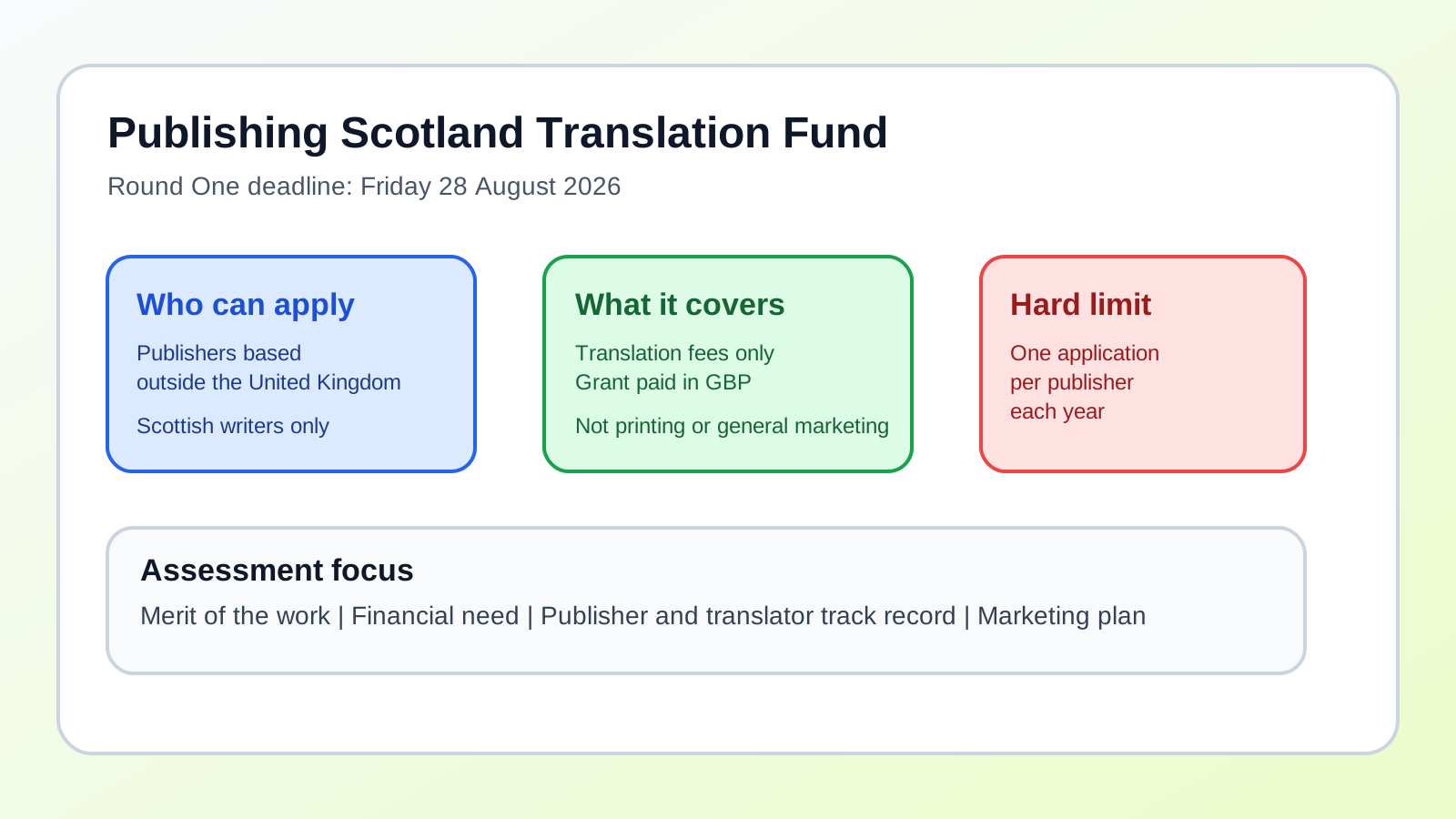
As of Wednesday, August 19, 2026, Publishing Scotland's live Translation Support and Funding page and the current home page both show the 2026 Translation Fund open through Friday, August 28, 2026. For Rex readers, the useful question is not whether Scottish writing travels well. It is whether a publisher outside the UK can already show a credible rights path, a believable translator case, and a practical market plan before the window closes.
That distinction matters because Publishing Scotland is clear about what this fund is and is not. The page says the programme is administered on behalf of Creative Scotland, is aimed at publishers based outside the United Kingdom, and covers translation fees only, paid as a grant in pound sterling. It is not a broad export subsidy. It is a narrow translation-cost tool for publishers who already know which Scottish work they want, why it fits their list, and how they plan to move it into another language market.
The first filter is geography, but the harder filter is project maturity
Publishing Scotland says the fund exists to help publishers based outside the UK buy rights from Scottish and UK publishers and agents by assisting with the cost of translating contemporary Scottish writers. That sounds simple, but the assessment criteria tell a stricter story. The panel looks at the merit of the work, the financial need of the publisher, the track record of the publisher and translator, and the proposed marketing plan.
In practice, that means a publisher should not treat August 28 as a discovery deadline. It is a filing deadline for projects that already have a plausible commercial and editorial shape. If the translator is still undecided, the rights situation is still vague, or the marketing logic is still generic, the problem is probably upstream preparation rather than missing one more funding form.
The translation-only rule is the detail most likely to be blurred
The official page says the grant is for translation costs only. That matters because the same page also says the panel reviews the publisher's proposed marketing plan. Those are not the same thing. The fund does not become marketing money, printing money, or a general international-launch budget just because the panel wants evidence that the translated edition has a route into readers' hands.
The cleaner reading is that Publishing Scotland wants to see whether the translation project will be used well once it exists. A strong application therefore needs two kinds of discipline at once: a budget that stays exact about translation fees, and a plan that shows the publisher knows how the finished book will be positioned in its own market.
One annual application changes the sequencing pressure
Publishing Scotland says a publisher may apply only once a year. That rule raises the cost of a weak filing. If a house sends a half-ready project into the August 28, 2026 round, it is not just risking a rejection on one title. It may also be using up its annual shot before a better-prepared project is ready.
That makes sequencing more important than optimism. Publishers should ask four direct questions before they file:
- Is the rights lane real? Know which Scottish or UK rights holder controls the translation rights and whether the deal is genuinely moving.
- Is the translator choice defensible? The official criteria explicitly consider translator track record, so this cannot be an afterthought.
- Is the list fit clear? The application should show why this Scottish work belongs with the publisher's existing catalogue and readership.
- Is this the best annual use of the fund? Because only one application is allowed each year, weaker projects should not crowd out stronger ones.
The awards page shows continuity, not a promise
Publishing Scotland's Grants Awarded page says the Translation Fund is designed to encourage international publishers to translate works by Scottish writers, and it lists recent rounds across multiple destination languages. That is useful because it confirms the programme is active and established rather than experimental.
It should not be read as a guarantee that any eligible project will clear. The stronger lesson is narrower: this is a functioning translation-support mechanism with visible precedent, so publishers can treat it as part of a serious rights-and-translation workflow. But the live application page still controls the current round, the current deadline, and the current rules.
What should happen before Friday, August 28, 2026
- Lock the rights conversation. Do not file while the source-rights position is still fuzzy.
- Stress-test the translator case. The panel reviews track record, so the choice needs a clean rationale.
- Separate funded and unfunded costs. Keep the application exact that the grant is for translation fees only.
- Write the market plan like an operator. Show how the edition will be published and sold, not just why the book is admirable.
- Use the one-shot rule honestly. If the project is not ready enough for a defensible August 28 filing, that is a workflow signal.
For related Rex guidance, see our NORLA October-round guide, our Literature Ireland grant windows guide, and our translation contracts baseline guide. If you need help turning a live translation opportunity into a cleaner rights, sample, and launch plan, contact Rex Publishing.
The honest takeaway on August 19, 2026 is simple. Publishing Scotland's August 28 deadline is useful only when a non-UK publisher already has the book, the translator, and the market logic far enough along to justify using its one annual application on this project now.