The useful question for publishers and booksellers looking at the European Union Prize for Literature's new events call is not whether translated literature needs more visibility. It does. The useful question is whether you already have the translated title, the event partner, and the timeline discipline to use this programme properly.
The programme is called Bookshop Events for Translated EUPL Authors. EUPL says it will invite publishers and bookshops to propose events and activities that increase the visibility of translated EUPL authors and foster connections between authors, translators, booksellers, and readers. The official announcement also says three calls will run across 2026 and 2027, with the first call opening on September 1, 2026.
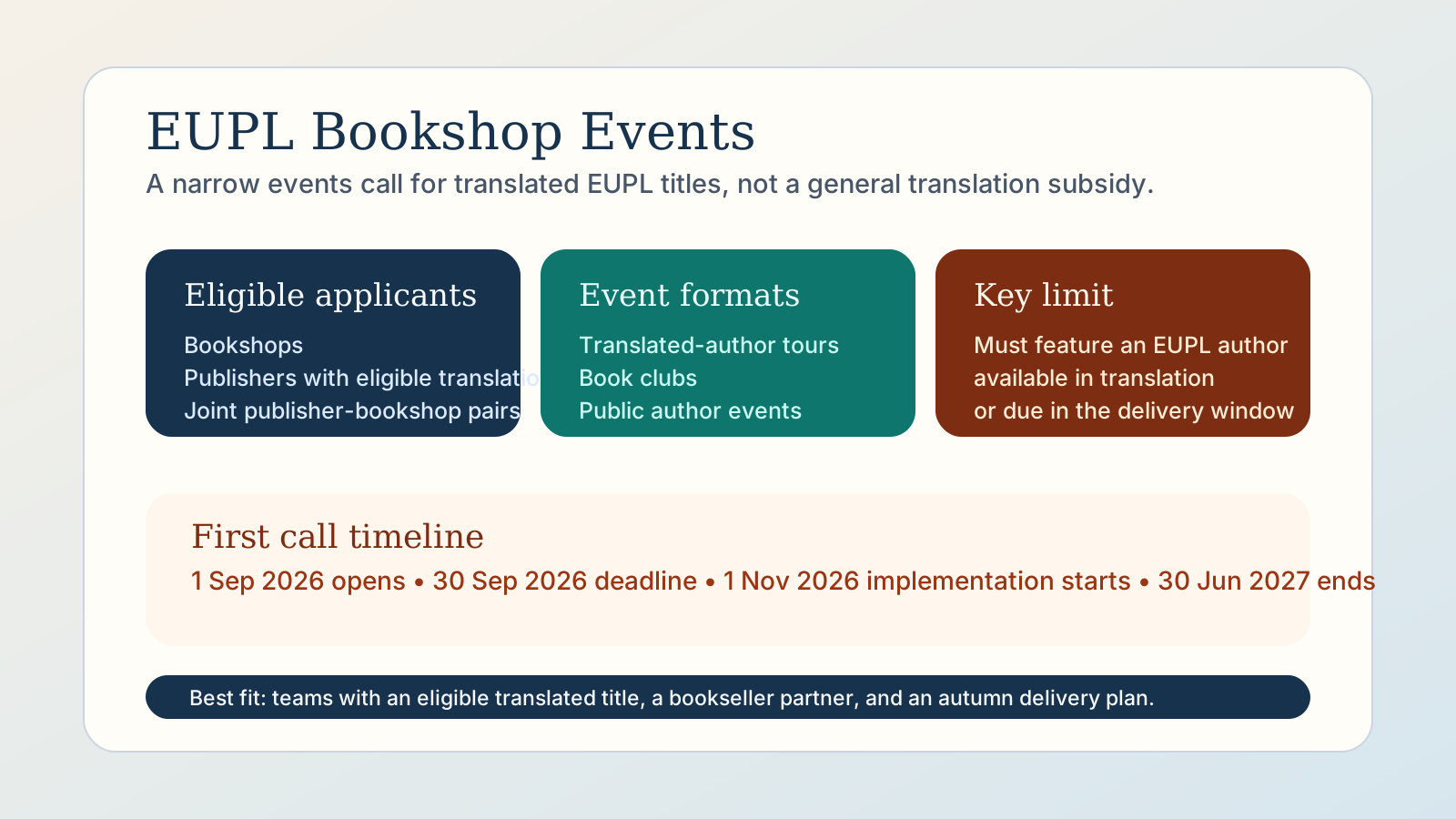
The most important limit is scope. This is not a general support scheme for any translated fiction title. The official call PDF says activities must feature an EUPL author whose work is already available in translation or scheduled to become available in translation during the implementation period.
Who can apply, and what the first window actually covers
The call document says eligible applicants include bookshops, publishers that have published or plan to publish translations of EUPL works within the implementation period, and joint publisher-bookshop applications. That structure matters because the programme is clearly built around market activation, not just rights acquisition or translation funding.
The first call runs from September 1, 2026 through September 30, 2026. The same call document says the first implementation period runs from November 1, 2026 through June 30, 2027. In practice, that gives applicants a short filing window followed by a longer delivery window for reader-facing programming.
If your translation is still hypothetical, your bookseller relationship is loose, or your autumn schedule is already fixed, that timing is the real constraint. This is better understood as an execution programme than a discovery programme.
The eligible event formats are practical, but they still require planning
The call materials point to formats that book and rights teams can actually use: translated-author tours, book clubs, and author events. EUPL's framing is consistent with that. The point is to create visible, local reader contact around translated books rather than leaving support at the prize, rights, or subsidy level.
That makes this potentially useful for teams that already know which translated EUPL title they want to push and which market they want to push it in. It is less useful for organizations hoping the programme itself will decide the editorial or commercial plan for them.
The operational questions are straightforward:
- Is the title eligible? Confirm that the book is by an EUPL author and will be available in translation during the implementation period.
- Who owns the application? Decide whether the filing lead is the publisher, the bookshop, or a joint pair.
- What is the event shape? Build the proposal around a concrete format such as a tour, a book-club sequence, or a public author event.
- Can the delivery window work? The first implementation period starts on November 1, 2026, so venue, travel, translator, and publicity timing should be real before the application goes in.
Why this matters beyond one call
The European Commission's EUPL overview says the prize exists to promote publication, translation, sales, and reading across Europe. The consortium structure explains why this events call looks the way it does: the prize is organised by the Federation of European Publishers and the European and International Booksellers Federation, which puts both publishing and bookselling logic inside the mechanism.
For Rex readers, the practical value is that it shows how translation support can extend past contract and production work into reader-facing market activation. That is the real story here. If a translated title is already moving toward publication, this call gives publishers and bookshops a narrow official route to turn that translation into visible in-market programming.
For adjacent workflow reading, see our Literature Ireland translation-grant windows guide and our Poland translation portal workflow guide. If your team needs help turning a cross-border publishing opportunity into a workable launch plan, contact Rex Publishing.
The clean takeaway on Wednesday, August 12, 2026 is simple: this EUPL call is most useful for teams that already have an eligible translated title and can pair it with a real bookselling event plan before the September 1, 2026 opening.