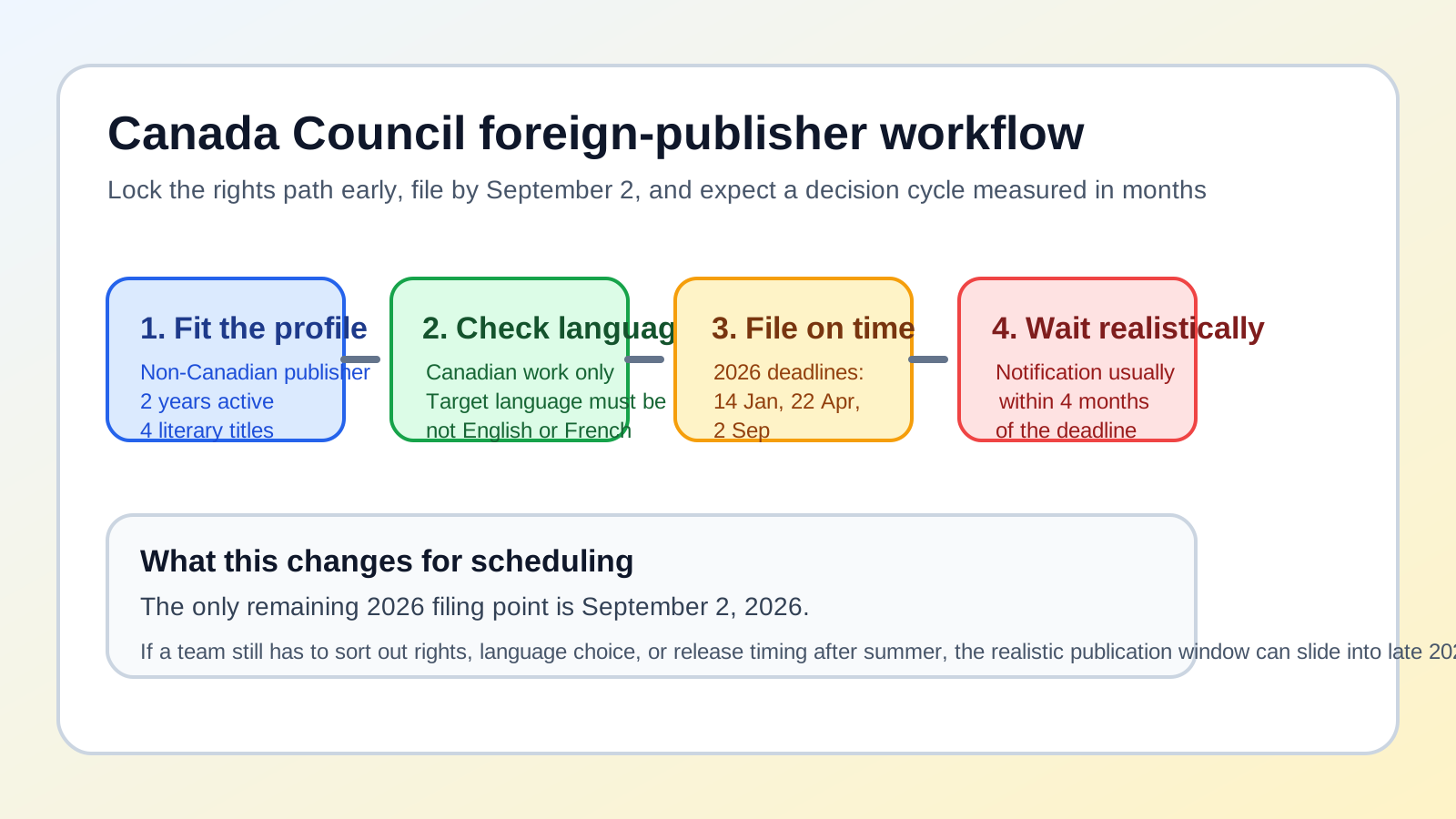
As of Friday, August 21, 2026, the Canada Council for the Arts still makes one part of its translation funding unusually clear. On its Arts Across Canada and Abroad page, the Council lists International Translation with deadlines of January 14, 2026, April 22, 2026, and September 2, 2026. That means September 2, 2026 is the only remaining 2026 filing point for this lane.
That matters because this is not a broad cultural-export page that leaves foreign publishers guessing where they fit. The same programme page says International Translation supports the translation of literary works or dramatic works from Canada for international presentation or publication and is awarded to organizations, groups and collectives or international literary publishers.
For Rex readers, the practical question is narrower: whether a foreign publisher still has enough time to line up the rights, the target language, and the release schedule before the September deadline passes and the decision clock pushes the project well beyond autumn.
This lane is useful only if the foreign-publisher fit is real
The Council's profile eligibility criteria page is where the key restriction appears. Under the Foreign publisher or theatre profile, the Council says the profile is for non-Canadian publishers of literary books and non-Canadian theatre organizations. It also says a literary book publisher must be an incorporated organization headquartered outside Canada, must have been active for at least 2 years, and must have published at least 4 literary titles for general distribution.
Then comes the line that matters most for rights planning: the Council says support to foreign publishers and theatres is limited to the translation of Canadian literary or dramatic works into languages other than English or French.
That rules out one common misread. A foreign publisher cannot treat this as a general subsidy for moving Canadian books into any market and any language. The public eligibility page points to a more exact use case: a non-Canadian publisher with a real publishing track record, handling a Canadian work, for a target language that is not English and not French.
The calendar matters because the decision window is not quick enough for a rushed 2026 release
The Council's Deadlines and notifications page repeats the International Translation dates and adds the operational timing that too many teams forget to model: notification is usually within 4 months of the application deadline.
If a publisher files on or near September 2, 2026, the public timeline points toward a decision around the end of 2026 or early January 2027. That does not make the programme slow. It makes it incompatible with a casual "we will sort out funding after Frankfurt" mindset.
For smaller foreign-rights teams, that usually means the translation funding decision should be treated as part of the acquisition schedule, not as a late-stage add-on after contracts, catalogues, and print expectations have already hardened.
What the programme is really good for
The clean value here is not hype about Canadian literature. It is workflow clarity. The public Canada Council pages give foreign publishers three useful signals:
- The lane exists and is active now. The remaining 2026 deadline is visible on the public grant pages.
- The foreign-publisher use case is explicit. The eligibility page says exactly how non-Canadian publishers fit and where the language restriction sits.
- The decision lag is public. A team can model the filing-to-notification gap before it makes promises to sales, production, or rights partners.
That makes this programme most useful when a publisher already has a candidate Canadian work in view, already knows the target non-English or non-French language, and is still early enough in the schedule to wait for the Council's decision cycle without breaking the publication plan.
What Rex readers should do before September 2
- Confirm that the applicant really fits the foreign publisher profile, not a domestic Canadian translation route.
- Check that the work is a Canadian literary or dramatic work and that the target language is neither English nor French.
- Treat September 2, 2026 as the remaining live 2026 deadline, not as a flexible marker.
- Model the decision timing as usually within 4 months of filing.
- Build the funding timeline into the rights and release plan before anyone assumes a fast autumn turnaround.
The practical lesson on Friday, August 21, 2026 is simple. Canada Council's International Translation programme is useful for foreign publishers because the public rules are narrow enough to plan around. But that only helps if the team already knows the rights path, the target language, and the likely production calendar before the September 2, 2026 deadline closes the year.
For related Rex guidance, see our Literature Ireland translation-grant guide, our Dutch translation grants guide, and our sample-translations rights-pitch guide. If you need help turning rights timing, translation planning, and international publishing deadlines into a workable release plan, contact Rex Publishing.