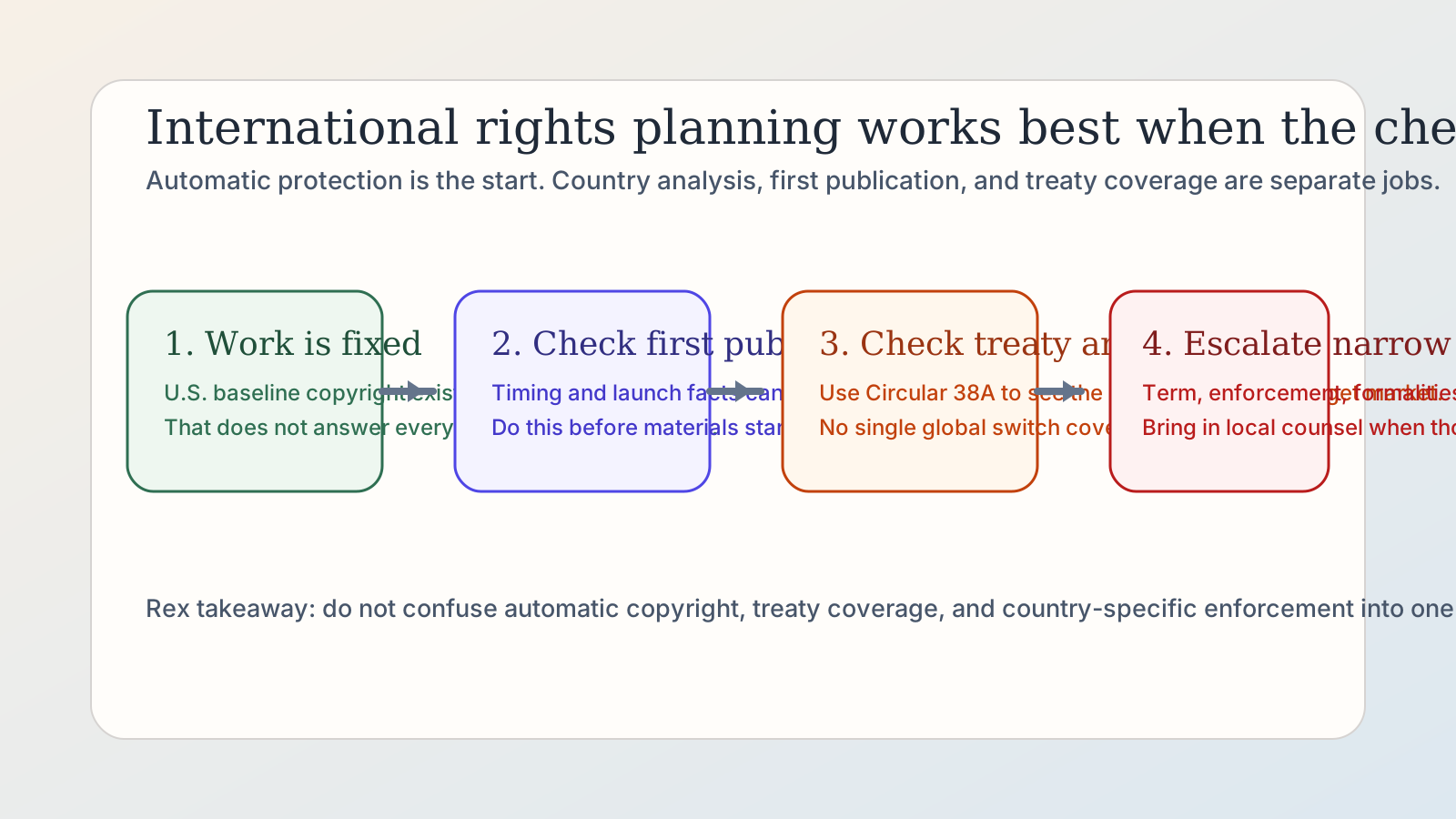
Cross-border rights work goes sideways early when teams assume that copyright protection works like one worldwide toggle. It does not. The U.S. Copyright Office's June 2026 edition of Circular 38A starts with the blunt point Rex readers need most: there is no single international copyright that automatically protects a work everywhere.
That matters before a translation sample is sent, before a foreign edition is announced, and before an adaptation pitch starts moving across borders. The practical question is not whether copyright exists in the abstract. The practical question is which country's law applies, what treaty hook or other point of attachment is doing the work, and whether first-publication facts are being handled carefully enough before launch.
What Circular 38A actually helps you check
Circular 38A says protection against unauthorized use in a particular country depends on that country's national law, even though international treaties simplify many of the conditions for protecting foreign works. It also says authors should determine the relevant points of attachment, such as nationality or the place of first publication, before publication when possible because protection may depend on the facts that exist at first publication.
That turns the circular into a workflow tool, not just a reference list. If a U.S.-based author or rights team is preparing a translation deal, co-edition, audiobook release, or international submission, there are three checks worth doing early:
- Check the country, not the slogan. Ask which jurisdiction matters for the next step in the plan instead of relying on generic talk about international protection.
- Check the point of attachment. Nationality, first publication, and treaty membership can all matter, but not always in the same way.
- Check timing before publication. If first-publication facts are going to matter, sloppy sequencing can create avoidable confusion later.
The June 2026 circular is useful precisely because it documents country participation in multilateral copyright agreements and bilateral relationships with the United States as of June 2026. That makes it more than evergreen theory. It is a current operating reference for country-by-country checking.
Why automatic copyright is only part of the answer
The second mistake Rex readers make is treating automatic protection and cross-border planning as if they were the same issue. They are not. The Copyright Office's Circular 1 says U.S. copyright exists automatically once an original work is fixed in a tangible medium of expression. That is the baseline. It is real, and it matters.
But the same circular also explains why registration still has practical value in the United States, including litigation and evidentiary advantages. In other words, automatic protection does not mean every later enforcement, licensing, customs, or cross-border question solves itself. It only means the work is not born unprotected in the United States.
WIPO makes the same distinction from the treaty side. On its current copyright overview page, WIPO says that in the majority of countries, and under the Berne Convention, protection is obtained automatically without registration or other formalities. It also warns that some countries maintain voluntary registration systems and that unofficial registration services do not create international recognition.
The clean takeaway is simple: automatic copyright answers one question, not all of them. It tells you a work can be protected without a filing ritual. It does not tell you that every foreign market will handle ownership disputes, formalities, remedies, recordation, or enforcement the same way.
Why the treaty stack is still changing
This is also a bad area for frozen mental models. WIPO's 2026 new edition of its Guide to the Copyright and Related Rights Treaties Administered by WIPO says the edition replaces the 2003 publication and incorporates the Beijing and Marrakesh Treaties. That matters for publishing teams because the treaty environment now reaches more clearly into audiovisual adaptation and accessible-format questions than older cheat sheets often suggest.
Rex readers do not need to become treaty specialists to use that fact well. They only need the operational lesson: if a deal touches translation, audiobook, screen adaptation, or accessible-format distribution, do not assume an old one-page summary still describes the live framework accurately.
What to do before a foreign-rights plan leaves draft stage
- Identify the first countries that actually matter for the release, submission, or deal.
- Use Circular 38A to check the relevant relationship and treaty context for those countries as of June 2026.
- Lock down first-publication facts before launch materials, files, and announcements start circulating.
- Separate U.S. registration strategy from foreign-market assumptions instead of blending them into one rights story.
- Escalate to qualified local counsel when contract interpretation, enforcement, term, or country-specific procedure becomes material.
The useful posture here is procedural, not dramatic. Most cross-border rights mistakes do not begin with bad intent. They begin with teams moving too fast from "copyright exists" to "the international position is covered." Circular 38A is a good antidote because it forces the next question: covered where, and on what basis?
For related Rex guidance, see our U.S. literary-works registration guide, our translation-rights checklist for authors, and our WIPO publishing-contracts toolkit guide. If you need help tightening translation, rights, or release workflow before a cross-border plan gets expensive, contact Rex Publishing.