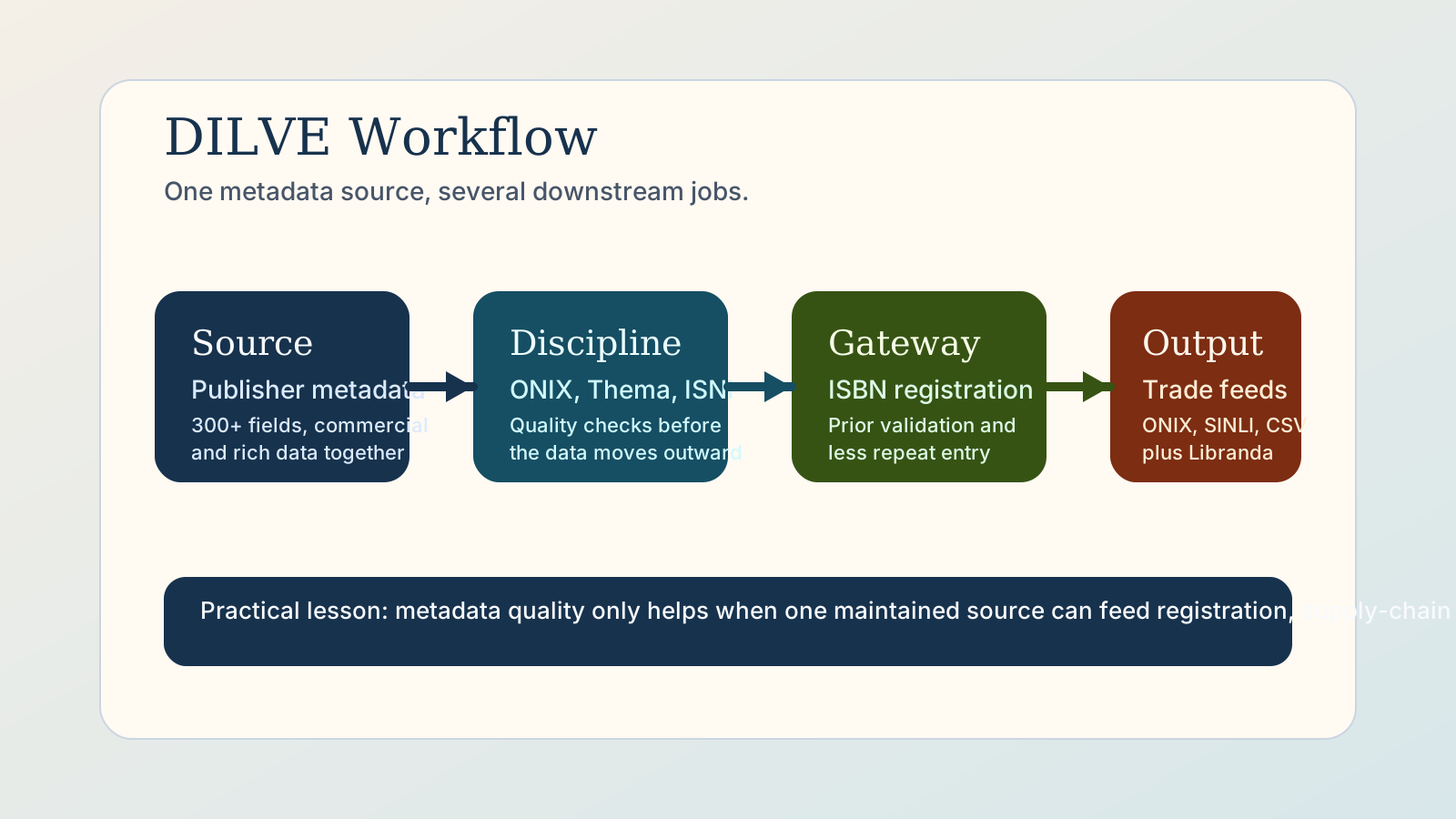
Spain's DILVE is worth studying because it handles a real operational problem that many publishing teams never solve cleanly. Book metadata is often entered more than once, corrected too late, and pushed downstream in different shapes for different partners. DILVE's value is not that it makes metadata glamorous. It is that it tries to keep one structured source moving across ISBN registration, commercial distribution, and digital-book feeds without forcing teams to start over each time.
As of Tuesday, August 25, 2026, that matters for Rex readers because DILVE's own live materials still describe the platform as a centralized manager and distributor of book metadata for the commercial chain, built around standards and automated reuse. The timing is current, not archival. Liber 2026 has a professional session scheduled for September 29, 2026 on the new DILVE user experience for publishers, which makes this a live workflow topic rather than background infrastructure no one is touching.
What DILVE actually does
DILVE presents itself as a metadata platform for books on sale, not just a static catalogue. Its publisher-facing materials say editorial users can work with more than 300 metadata elements, distribute data in formats including XML-ONIX, SINLI, and CSV, and set up periodic extracts on a daily, weekly, or fortnightly basis. The same materials frame the system around ONIX, Thema, and ISNI, which is important because the platform is not only about storage. It is about structured interchange.
That distinction matters. Plenty of teams can say they have metadata somewhere. The harder question is whether that metadata is organized well enough to travel between editorial, sales, distribution, and registration systems without fresh manual intervention every time. DILVE's publisher documentation says the platform centralizes dispersed information in one database, lets publishers maintain rich and commercial data together, and supports automated extraction for downstream partners that need different outputs.
DILVE also says distributors, booksellers, online stores, libraries, and developers in 25 countries can receive the data they need from the system. The useful lesson for Rex readers is not that every market needs DILVE itself. It is that one market has built real infrastructure around the idea that metadata should be entered once, validated early, and reused many times.
Why the ISBN link is more important than it sounds
The most practical feature in the packet is the DILVE connection to Spain's ISBN workflow. DILVE says subscribed publishers can request ISBN registration from within the platform, and its FAQ says the ISBN gateway reuses metadata already loaded in DILVE. The same FAQ also says the gateway performs prior validations to reduce rejections and that publishers can automate sends to the ISBN register from new book records created inside DILVE.
That is a stronger operational claim than a generic "integration" label. It means the metadata record is not being treated as a marketing afterthought that gets cleaned up after registration. It is part of the registration path itself. If your internal workflow still treats ISBN registration, sales metadata, and downstream partner feeds as separate chores owned by different people with different spreadsheets, DILVE's model shows a better order of operations.
It also clarifies what automation can and cannot do. Automation helps when the source record is already disciplined. It does not rescue weak source data. DILVE's own quality materials are explicit that good metadata needs to be timely, standards-compliant, complete, and updated. That is closer to editorial operations than to software magic.
The quality layer is the real story
The strongest part of DILVE's public documentation is not the acronym stack. It is the insistence that metadata quality needs active maintenance. The platform's quality pages say DILVE works with ONIX, Thema or iBIC, and ISNI, and that it provides tools and automated checks so publishers can detect problems in their metadata. The publisher page adds that participating houses receive annual quality feedback and can use platform checks to review the health of their catalogues over time.
That matters because publishing teams often treat metadata standards as if they end with field mapping. In practice, the harder work is keeping the record current after prices change, rights change, publication dates move, or new distribution paths appear. DILVE's workflow is useful because it keeps the quality conversation attached to the commercial chain rather than isolating it inside a standards document.
For small presses, author-publishers, and rights-facing teams, the broader lesson is simple. If a metadata record is going to drive discoverability, registration, supply-chain communication, and digital distribution, then review discipline has to happen before the record moves outward, not after problems show up in retailer feeds or partner inboxes.
Why the Libranda and export mechanics matter
DILVE's FAQ says the platform can also send digital-book metadata automatically to Libranda. Combined with the publisher page's explanation of scheduled exports in ONIX, SINLI, and CSV, that makes DILVE more than an ISBN bridge. It acts as a routing point between publisher metadata creation and multiple downstream recipients with different technical needs.
That is where the system becomes interesting even outside Spain. Many publishing organizations know they should improve metadata, but they frame the problem too narrowly as retailer discoverability or website cleanup. DILVE's public materials frame the issue more usefully. Metadata becomes infrastructure when one source can feed ISBN administration, distributor extracts, bookseller data, digital-book channels, and internal reporting with less duplicate entry.
The caveat is just as important. This is still Spain-specific infrastructure. It should not be treated as proof that every national market has a comparable central platform or that every partner flow is identical. The transferable lesson is architectural, not jurisdictional.
Why Liber 2026 makes this timely now
The upcoming September 29, 2026 Liber session on the new DILVE user experience gives the story a current trade hook. But that session should be read carefully. It is a freshness signal, not the evidence base for the whole article. The evidence base remains DILVE's own live documentation about standards, quality checks, export formats, and ISBN or ebook gateways.
That said, the Liber listing does matter. It shows that the platform is still active enough to warrant a dedicated professional-session slot in late 2026. For Rex readers, that is a sign the workflow is still being refined and discussed in the market, not simply maintained in the background.
How publishers and rights teams can use the lesson
- Keep one authoritative metadata source. If ISBN filing, sales feeds, and distribution exports all start from different copies, your process is already fragile.
- Put validation before submission. DILVE's ISBN gateway is useful because it aims to catch problems before rejection, not after.
- Treat standards as operating tools. ONIX, Thema, and ISNI matter most when they reduce ambiguity across teams and partners.
- Plan for multiple outputs. If partners need ONIX, SINLI, CSV, or API-based access, build the source record so those outputs can be generated without hand editing.
- Do not confuse automation with governance. Scheduled extracts and automated sends help only when publication dates, prices, rights, and availability are being maintained reliably upstream.
The practical takeaway is narrow and useful. DILVE matters because it shows how a publishing market can connect metadata quality, ISBN registration, and downstream trade distribution in one operating workflow. The right lesson is not to romanticize a platform. It is to ask whether your own metadata process is structured well enough to support reuse, validation, and cleaner movement through the supply chain.
For related Rex context, see our ONIX Codelist 74 guide, our ONIX creation and distribution workflow guide, and our ISNI identity guide. If you need help cleaning up a metadata workflow before it reaches distributors, retailers, or rights partners, contact Rex Publishing.